
Last updated September 22, 2026
Level 1 sweep and inspection to the NFPA 211 annual standard - flue, crown, cap, and flashing checked and photographed
Chimney sweep logs do not sweep chimneys. They loosen some creosote - which then falls where a brush and vacuum still have to collect it.
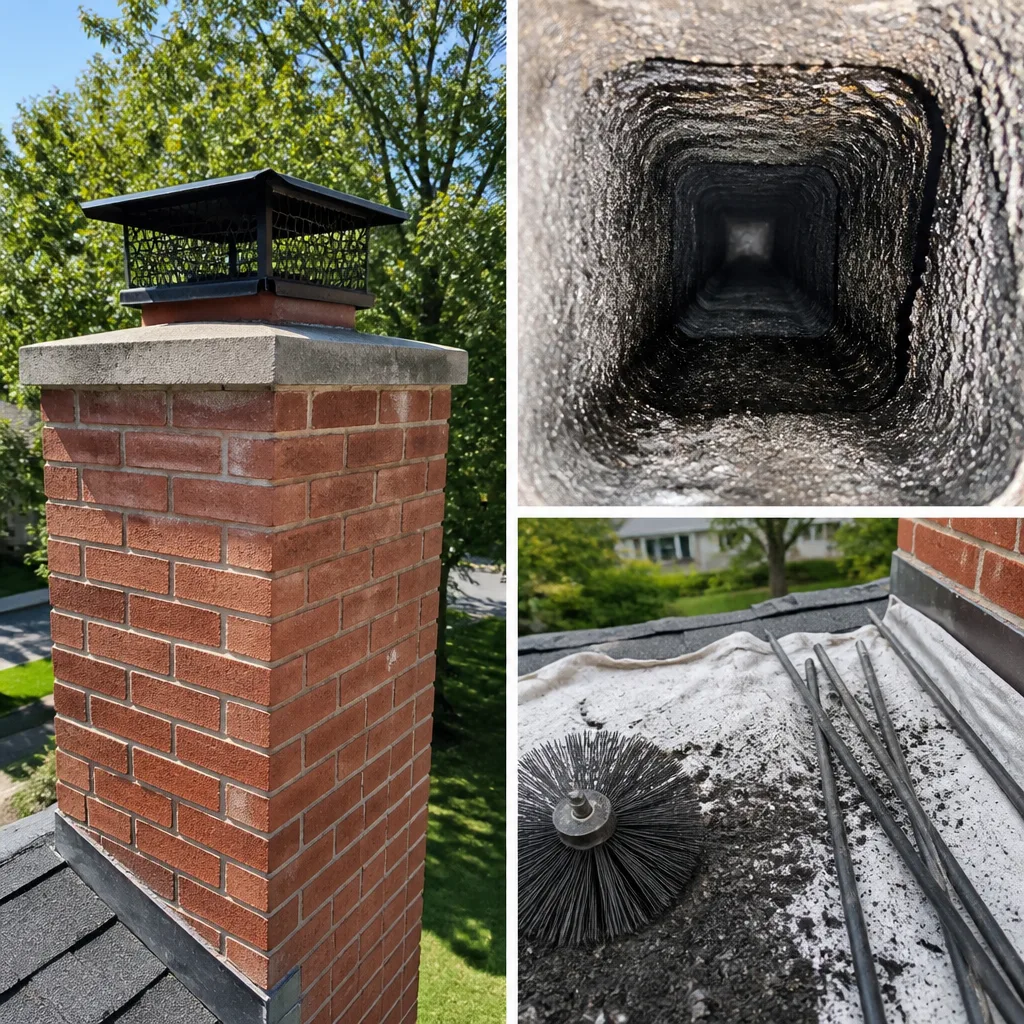
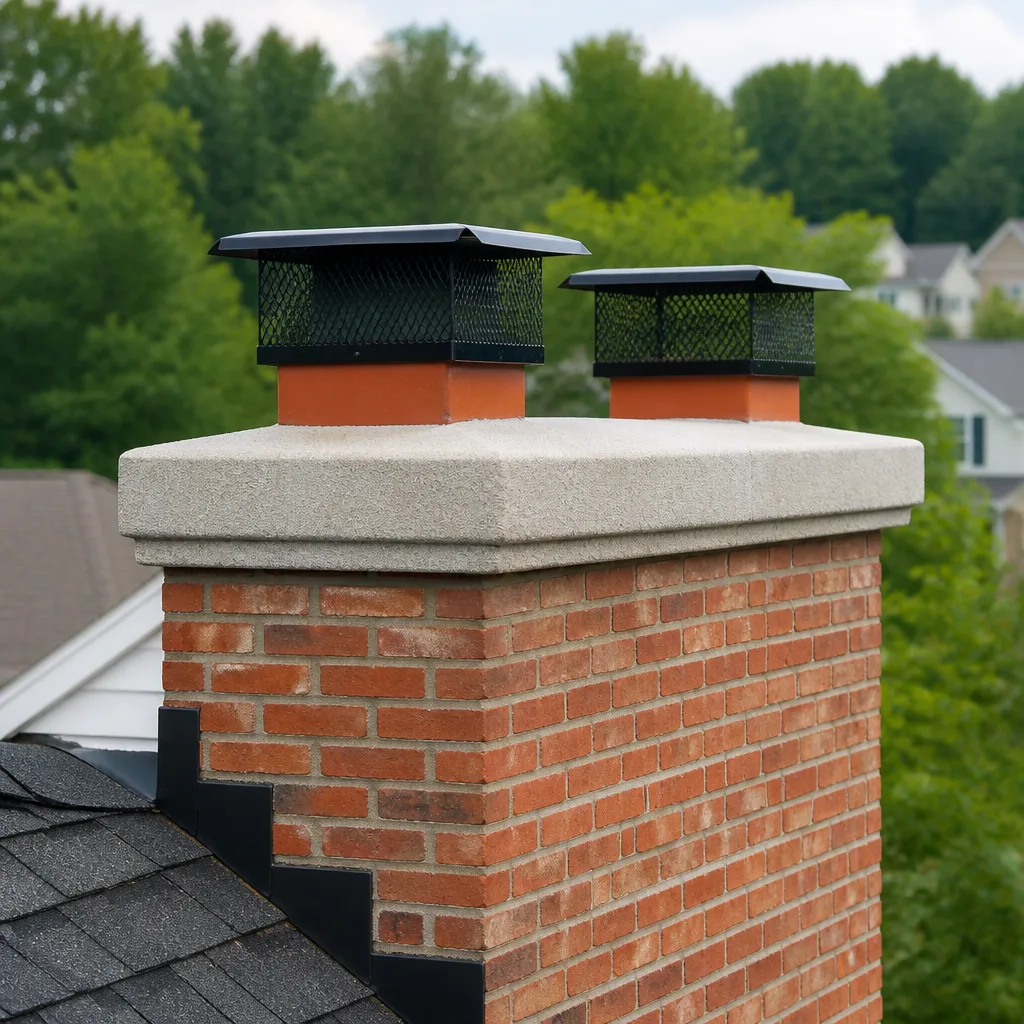
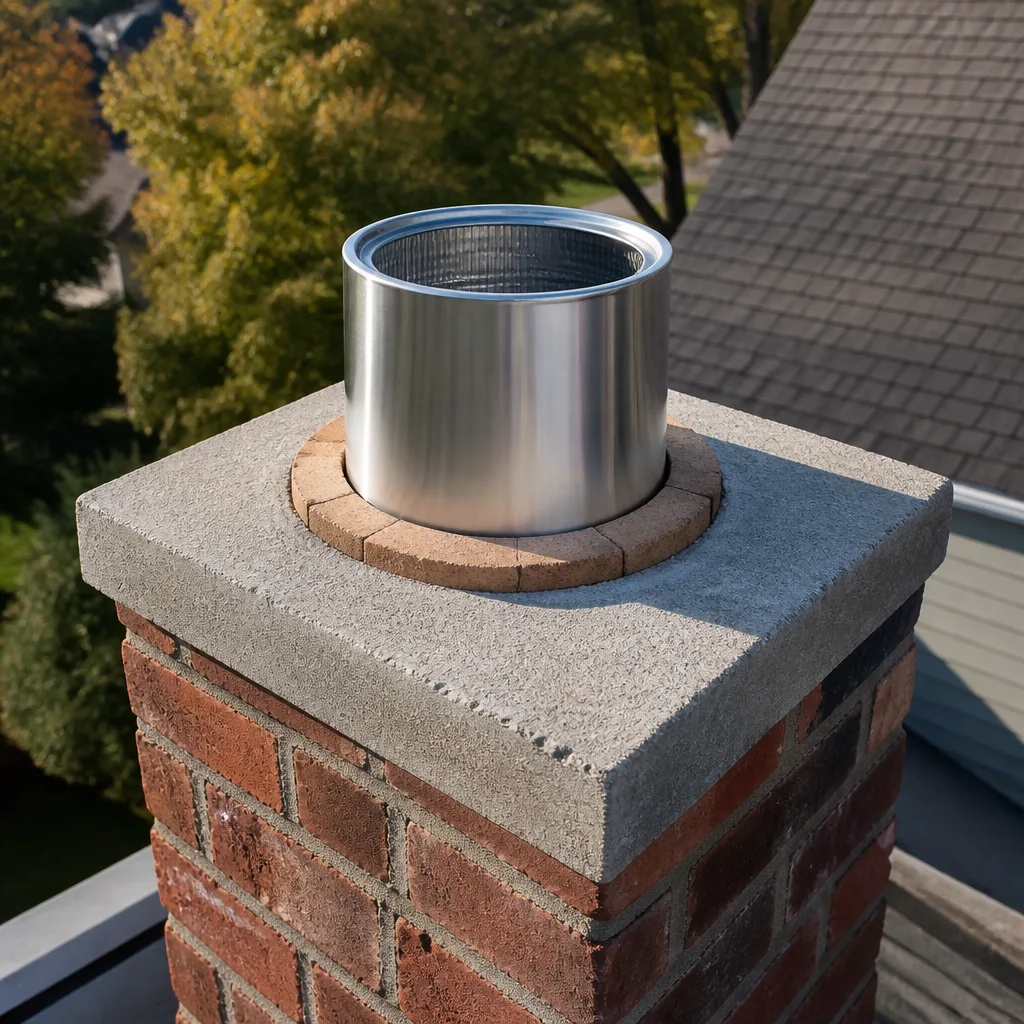
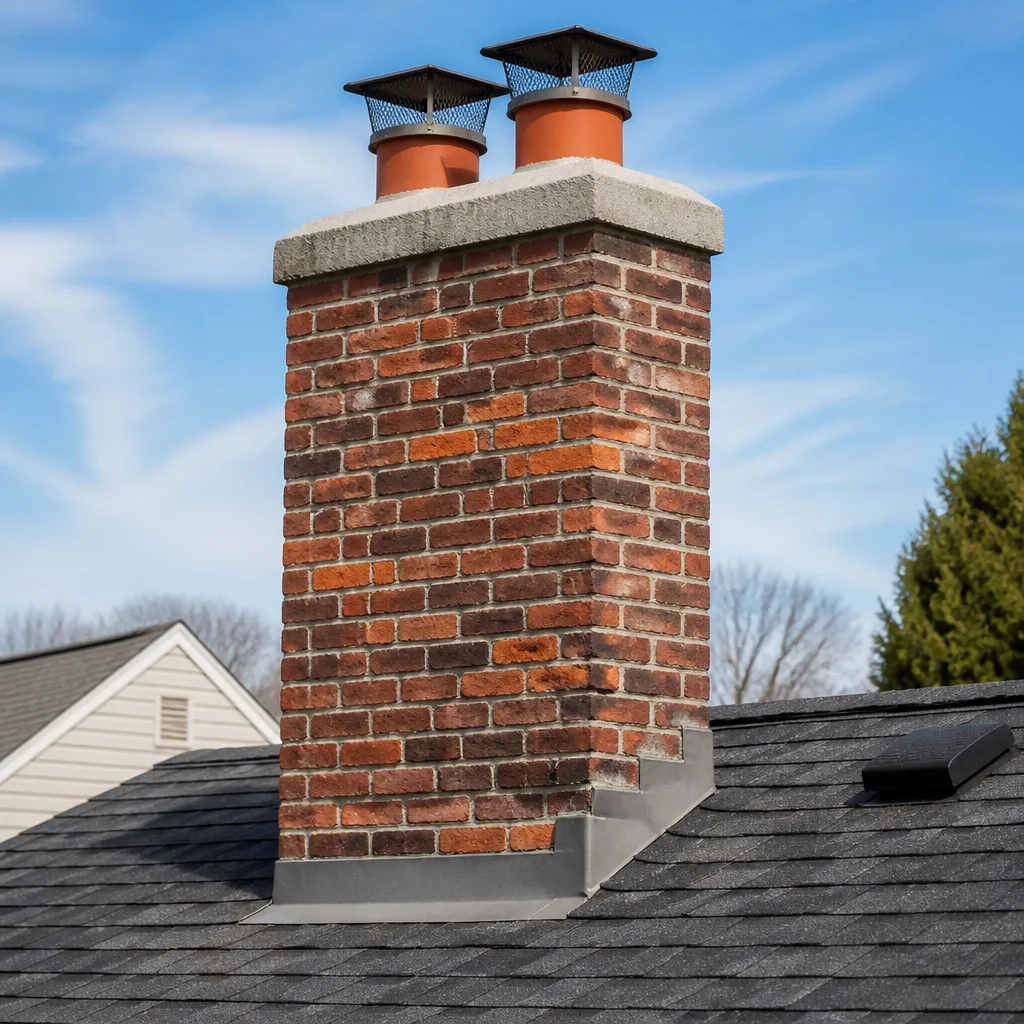
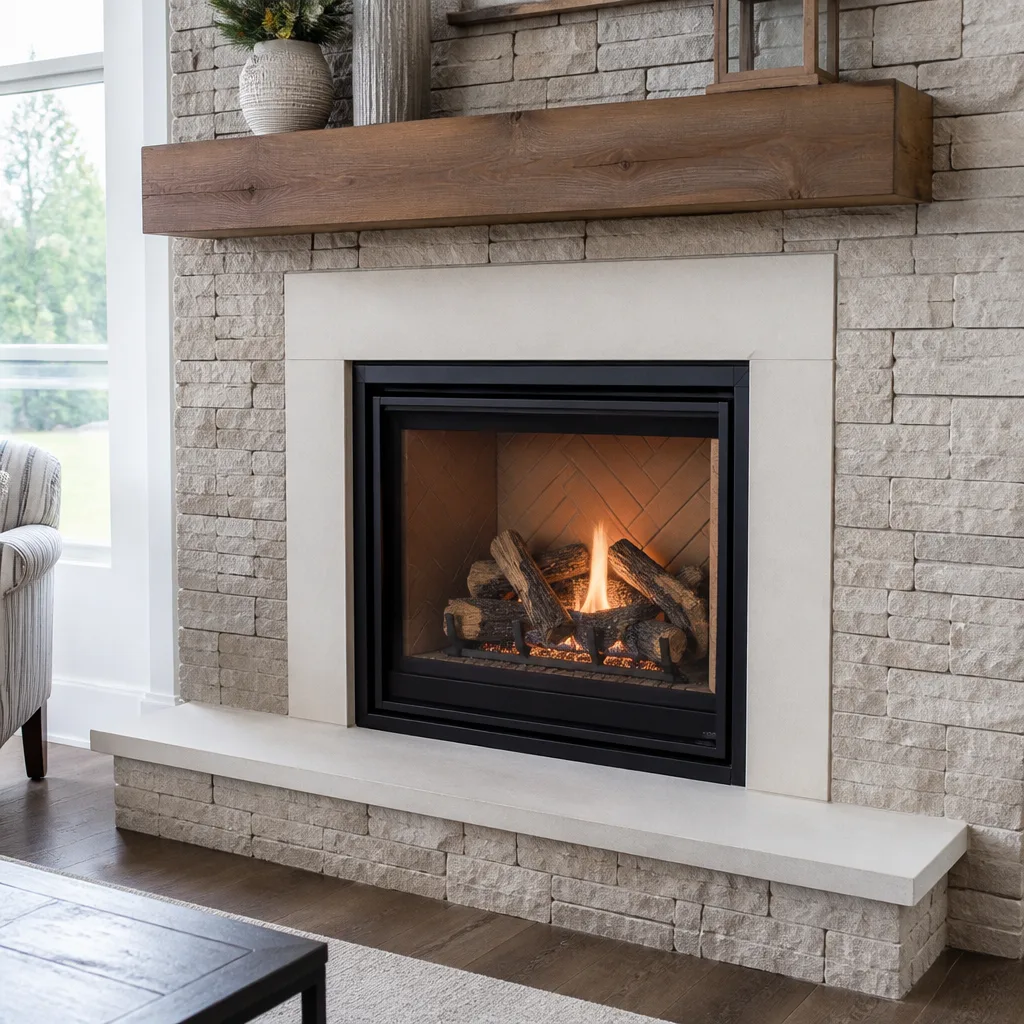
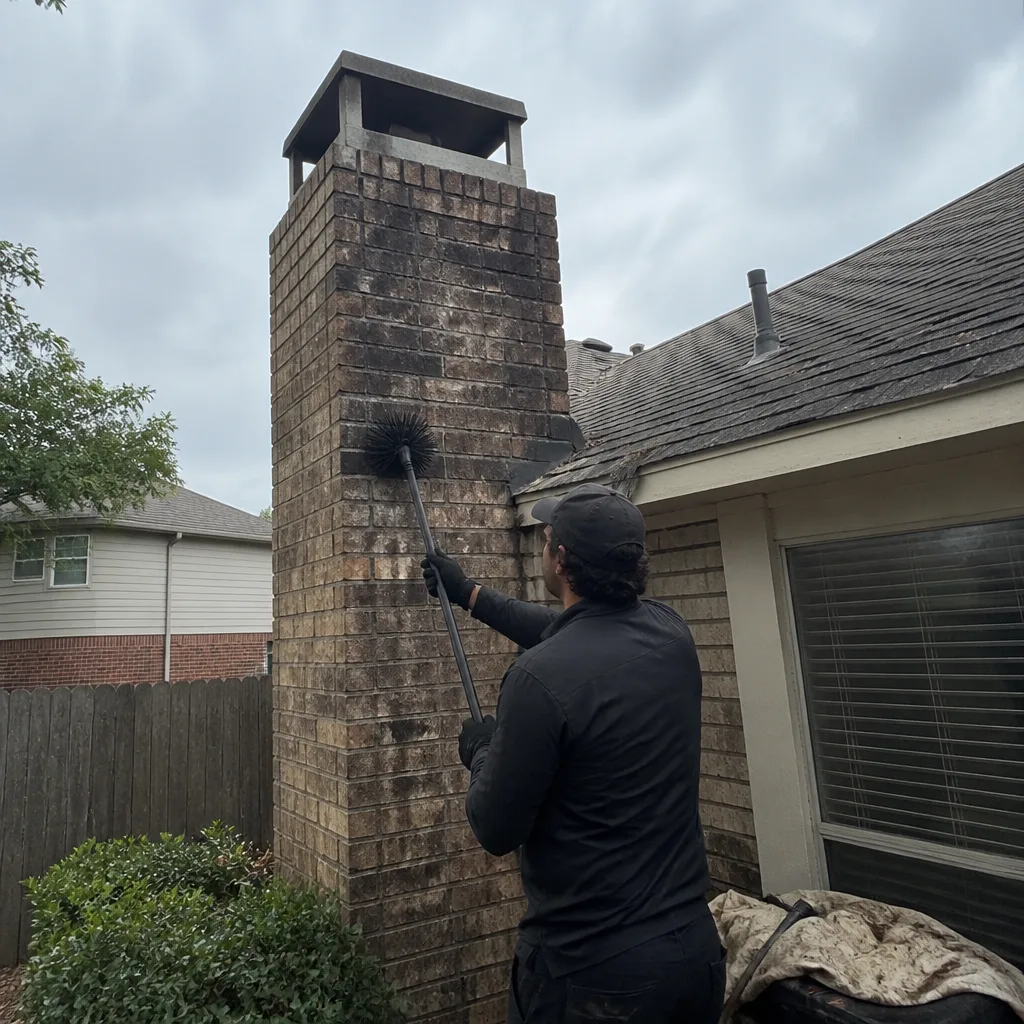 Before
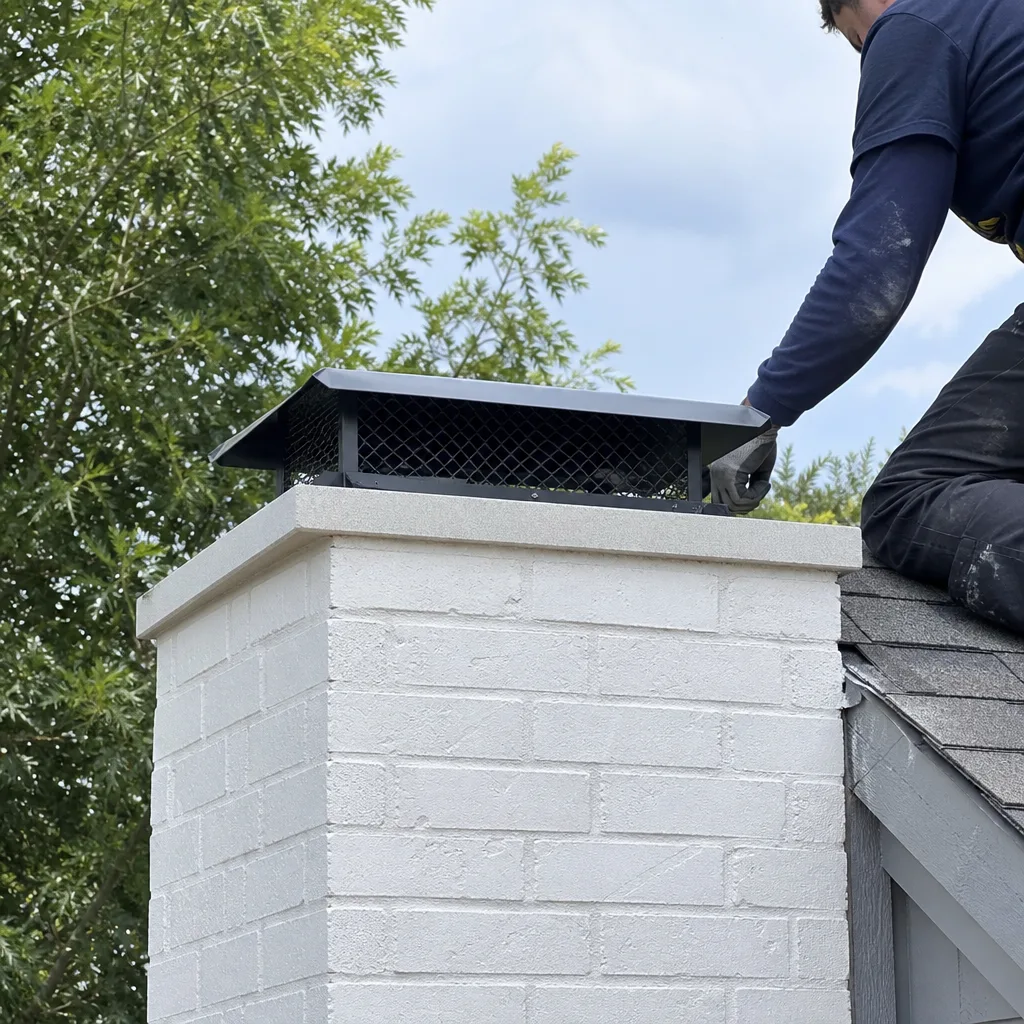 After
After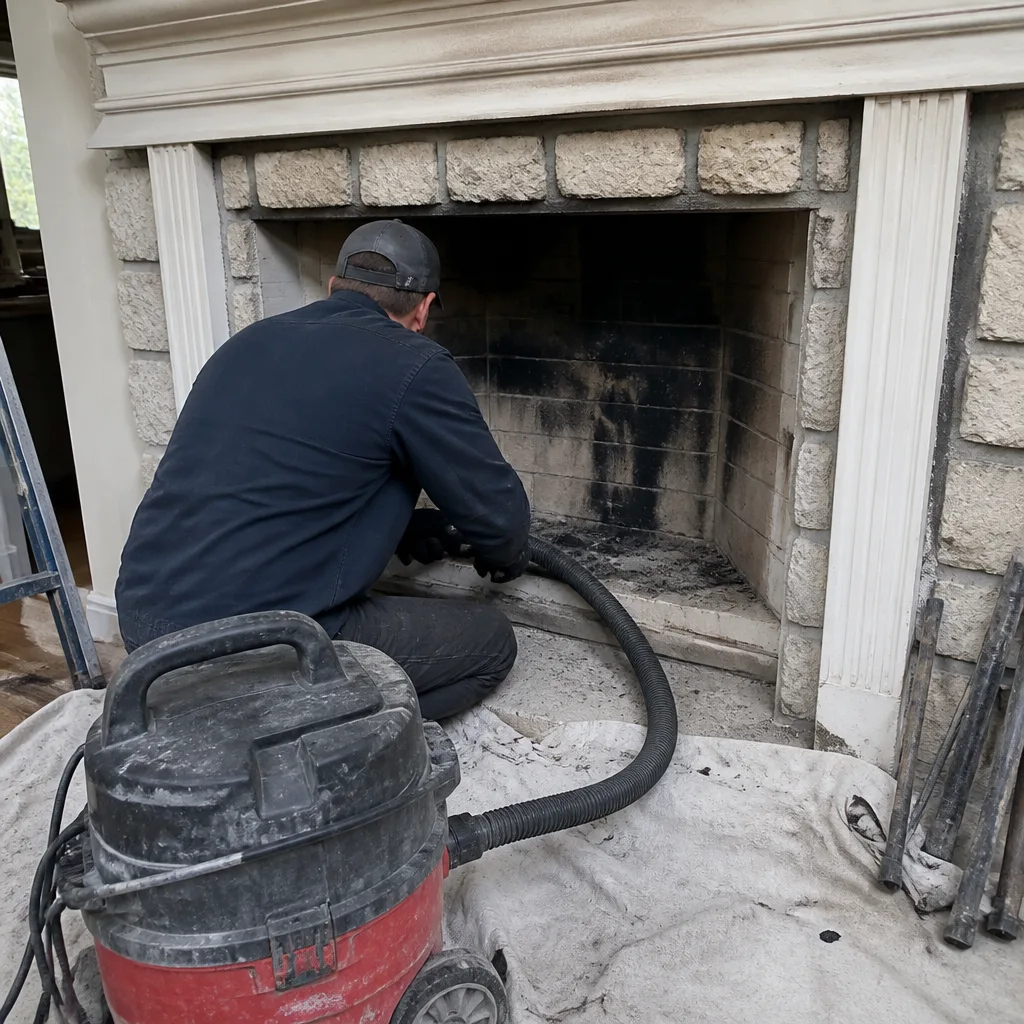 Before
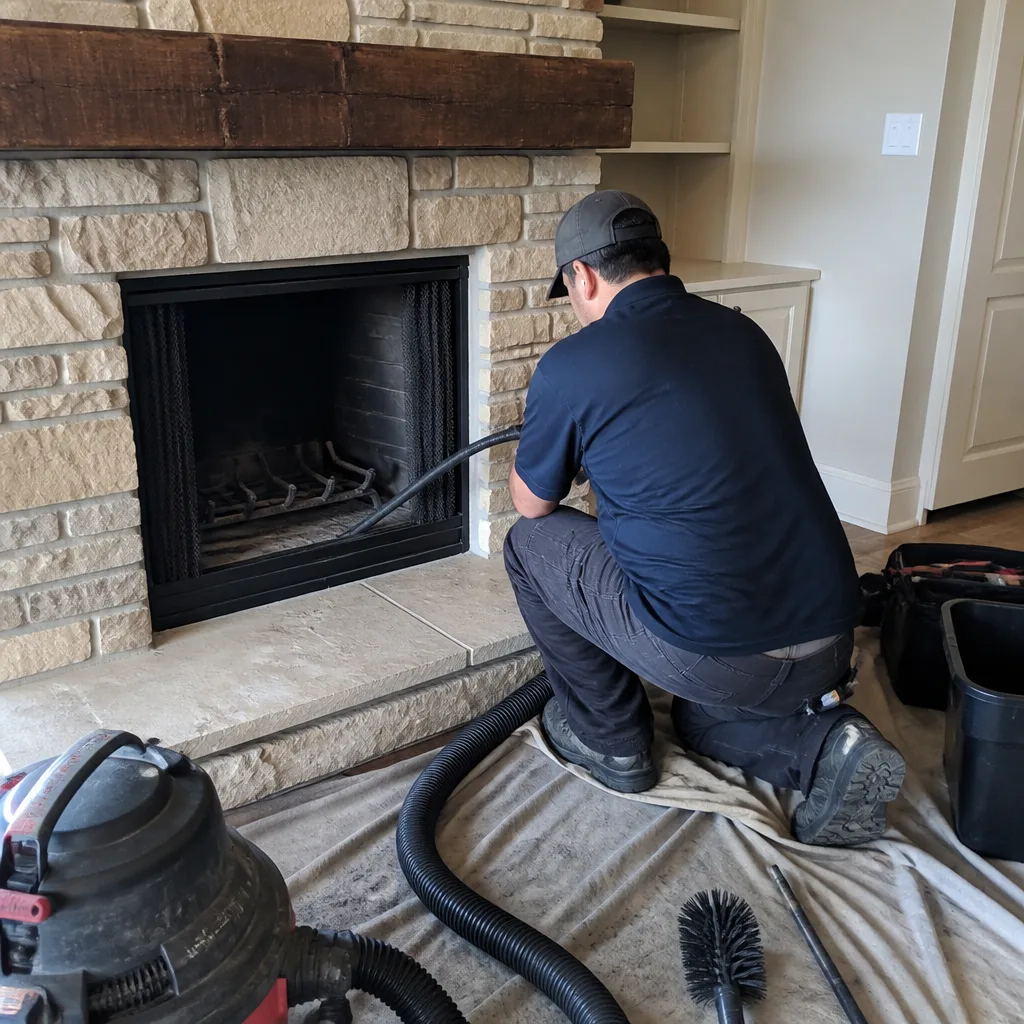 After
After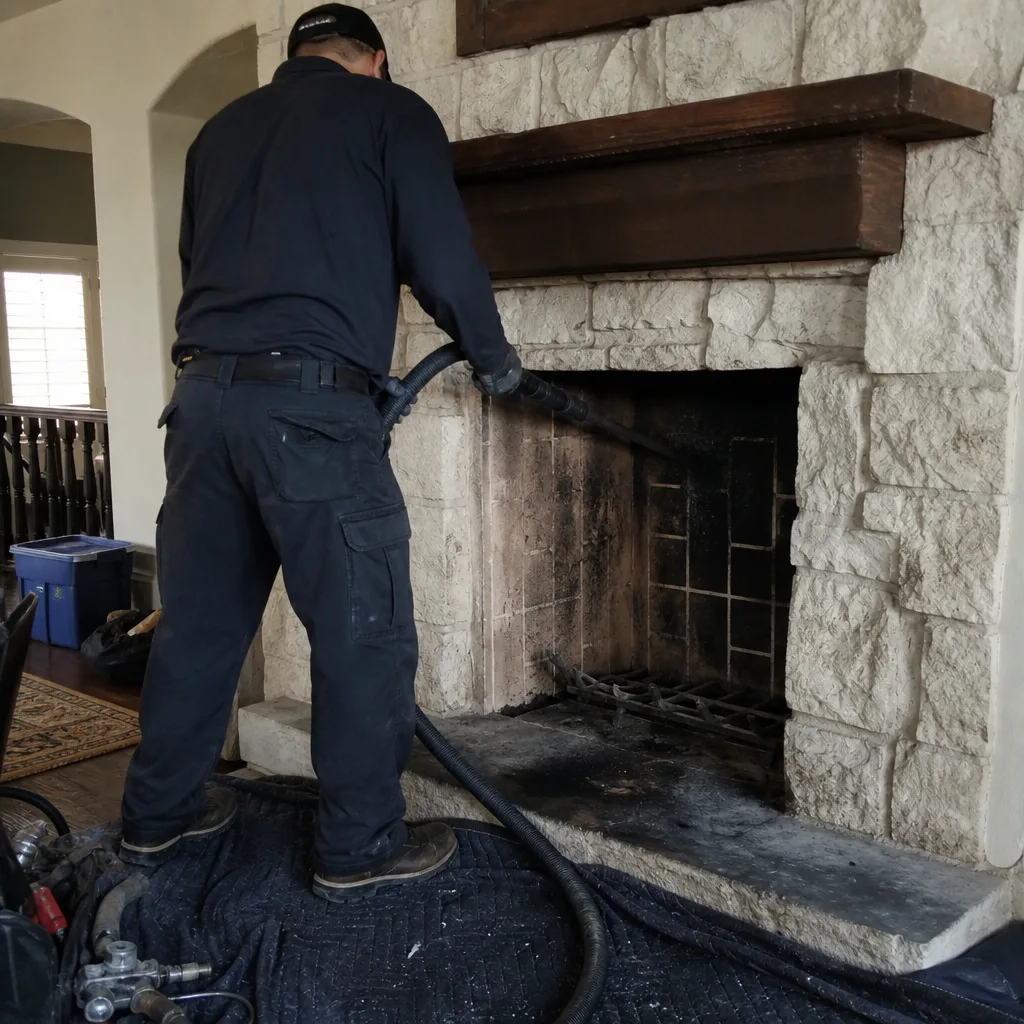 Before
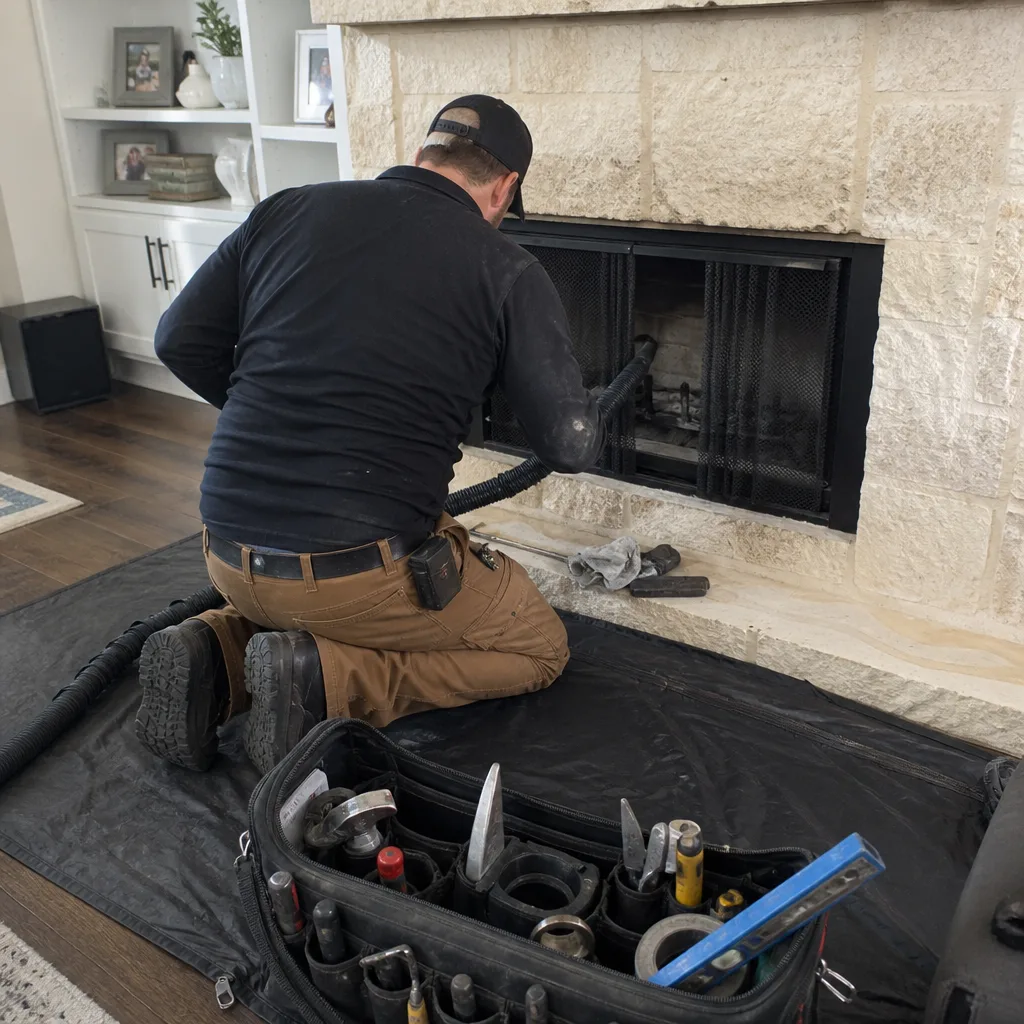 After
AfterChimney Cleaning Warning Signs: A Plano Homeowner’s Reference Guide
Smoke rolling back into your living room is not an early warning. It is a late one. In Plano, where our clay-heavy soils shift with seasonal moisture and our freeze-thaw cycles arrive fast in January, the real signals of a chimney in trouble show up six to eighteen months before anything dramatic happens. They’re at the firebox floor, the damper frame, and the exterior crown. Most guides recycle the same seven obvious symptoms. This reference is different. We’ll show you the subtle structural and combustion signals you can document yourself, what each stage of creosote actually looks like from the firebox opening, and the five warning signs specific to gas fireplaces that wood-burning guides never mention. You’ll leave with a photo-documentation protocol you can use before you ever call a sweep.
Quick Answer
The most important chimney cleaning warning signs in Plano fall into two categories: combustion signals (slow draw, smoke stains above the firebox, unusual odors during off-seasons) and structural signals (white efflorescence on exterior brick, spalling faces on the crown, cracked corbeling in the smoke chamber visible from below). If you notice any of these, schedule an NFPA 211 Level 2 inspection with camera documentation before the next burning season. In Plano’s climate, where summer humidity penetrates masonry and winter freezes expand those cracks, structural signs often precede combustion problems by a full year or more.
Table of Contents
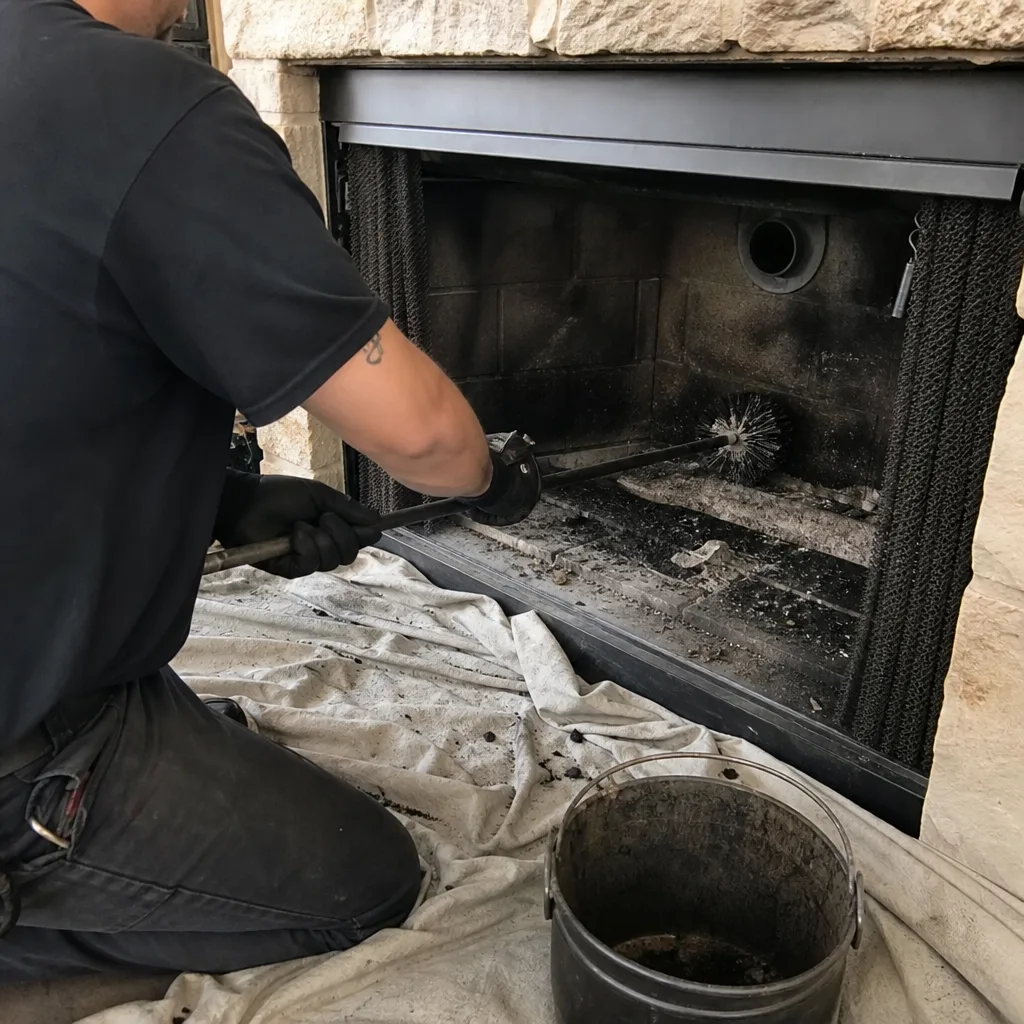
- Combustion Warning Signs vs. Structural Warning Signs
- What Creosote Looks Like at Each Stage (From the Firebox)
- Five Warning Signs Specific to Gas Fireplaces
- What a Damaged Smoke Chamber Looks Like Without Tools
- How Plano’s Climate Accelerates Chimney Deterioration
- The Photo-Documentation Protocol: What to Shoot Before Calling
- Common Mistakes to Avoid
- When to Call a Professional
- Frequently Asked Questions
BeforeAfterCombustion Warning Signs vs. Structural Warning Signs
Most chimney problems start in one of two places: the fire or the masonry. Knowing which you’re dealing with changes what you document, what you ask for when you call, and how urgent the timeline is.
Combustion warning signs relate to how smoke, gases, and heat move through the system. They tend to worsen quickly, sometimes within a single season, because every fire adds fuel to the problem. In Plano, where homeowners often burn from November through February and then let the system sit idle for seven months, combustion issues can escalate during the off-season when no one is watching.
Watch for these combustion signals:
- Slow draw or smoke lingering in the firebox after the fire is established. A healthy chimney pulls smoke upward within seconds of ignition. If you’re waving a newspaper to get things moving, the flue may be partially obstructed by creosote buildup or a bird nest, or the chimney may be too short for the house’s current roofline (common in Plano’s 1980s and 1990s subdivisions where second-story additions altered original proportions).
- Smoke stains on the face of the fireplace or the wall above it. These dark, greasy marks indicate smoke rollback, which means the chimney isn’t drafting properly. The stain location matters: stains high on the wall suggest a top-down draft problem; stains at the firebox opening suggest a smoke chamber or damper issue.
- Unusual odors during warm, humid days. In July and August, when Plano humidity climbs above 70%, creosote deposits absorb moisture and release acidic, tar-like smells. If your living room smells like a campground on a rainy day, you have active creosote deposits that need removal.
- Excessive smoke from the chimney top. Some smoke is normal, especially at startup. But dense, persistent smoke ten minutes into a hot fire suggests green or unseasoned wood, poor combustion air, or a flue that’s too cold or too narrow for the firebox output.
Structural warning signs are slower, more expensive, and easier to miss. They develop in the masonry, the liner, and the crown, often hidden from casual view. In Plano, our expansive clay soils cause subtle foundation movement that transfers stress to chimney structures. Our rapid temperature swings, summer highs above 100°F followed by winter lows in the teens, create thermal shock in mortar joints.
Watch for these structural signals:
- White, powdery staining on exterior brick or the chase cover. This is efflorescence, mineral salts pushed out by moisture migrating through the masonry. It means water is getting in, dissolving salts, and evaporating at the surface. In Plano, where summer thunderstorms drive water into hairline cracks, efflorescence often appears first on the north-facing side of the chimney where evaporation is slowest.
- Spalling brick faces or crumbling mortar. Spalling is when the outer surface of a brick flakes or pops off, exposing the porous interior. It happens when water freezes inside the brick, expanding by 9%. Plano’s January freeze events, often following rain, are prime conditions. Spalled brick loses structural strength and allows accelerated water penetration.
- Cracks in the chimney crown, especially at the edges where it meets the flue tile. The crown is the concrete cap that sheds water away from the flue. A cracked crown funnels water directly into the chimney’s interior, where it damages the liner, the smoke chamber, and the firebox back wall. In our market, we’ve found crown cracks in chimneys as young as eight years old, typically where the builder used a mortar mix instead of proper crown concrete.
- Rust stains on the exterior or inside the firebox. Rust means metal is wet. On the exterior, it suggests a failing chase cover or deteriorating flashing. Inside, it means water is reaching the damper frame or fire grate, which implies a breach somewhere above.
The timeline matters. Combustion signs can become hazardous within weeks. Structural signs typically allow months for proper diagnosis and repair planning, but only if you catch them before the next freeze-thaw cycle opens the cracks wider.
What Creosote Looks Like at Each Stage (From the Firebox)
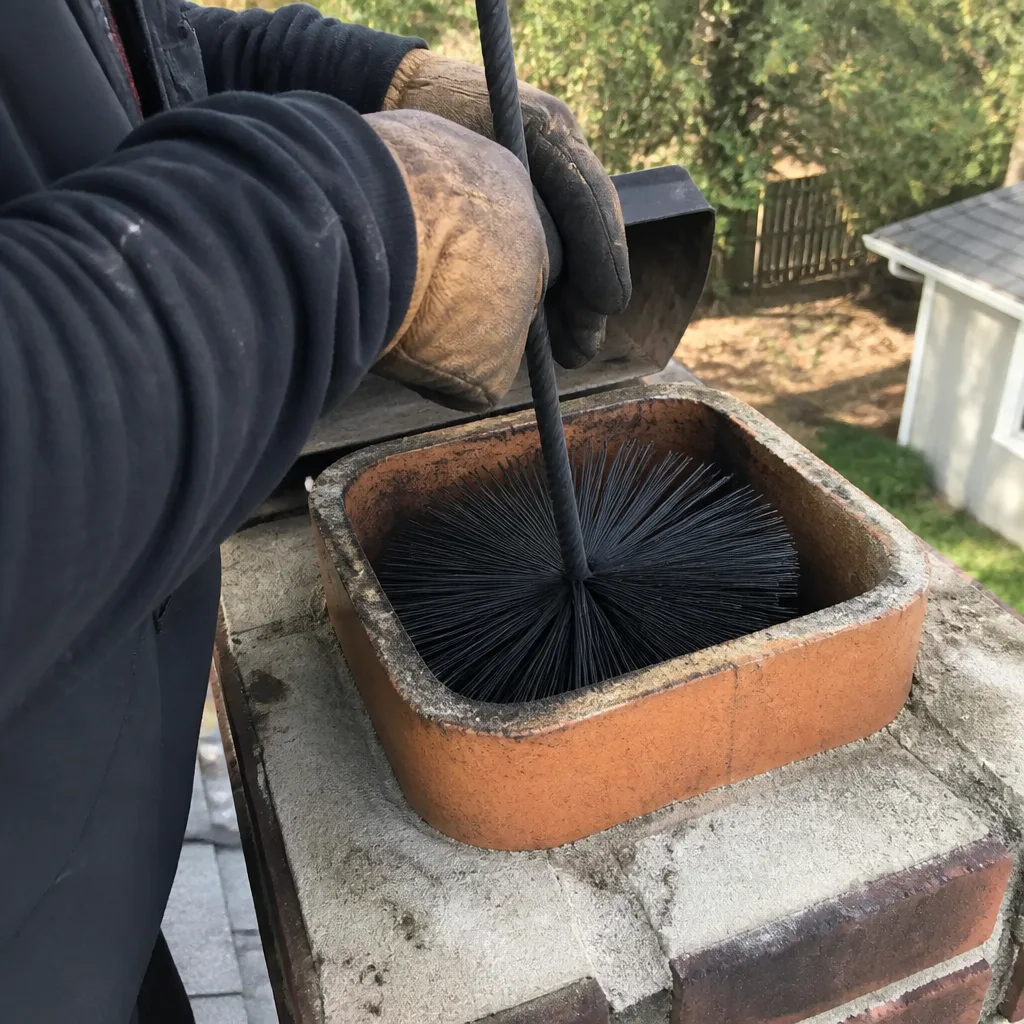
Every chimney sweep’s camera finds creosote the homeowner cannot see. But stages one and two, and sometimes early stage three, are visible from the firebox opening with a flashlight and a mirror. Knowing what you’re looking at helps you decide whether to schedule routine maintenance or urgent inspection.
Stage One: Soot and Fine Ash
Stage one creosote is a light, fluffy, black deposit that brushes off easily. From the firebox, you’ll see a thin, matte black coating on the firebrick and damper blade. It looks like fireplace makeup, not buildup. This is normal after a season of regular use. In Plano, where many homeowners burn oak and pecan from local tree services, stage one accumulates at roughly 1/16 to 1/8 inch per burning season with weekend use. A professional chimney cleaning and sweep in Plano removes this completely in under an hour.
Stage Two: Crunchy, Flaky Layers
Stage two creosote hardens into brittle, layered sheets that look like burnt peanut brittle or flaky tar. From below, you’ll see thicker, uneven black deposits with a slight sheen. The damper may stick or scrape when you open it. These flakes can detach and fall into the firebox, where they burn with intense, short-lived flames. This is the stage where chimney fires begin, and it’s where most Plano homeowners who skip annual sweeps find themselves by year two or three. Removal requires rotary chains or whip systems, not just brushes.
Stage Three: Glazed, Hardened Tar
Stage three creosote is a dense, shiny, rock-hard coating that looks like obsidian or hardened road tar. From the firebox, you may see a glassy black surface reflecting your flashlight, or you may see nothing at all because the buildup has narrowed the flue opening. This material is extremely combustible and burns at temperatures exceeding 2,000°F, which cracks flue liners and can ignite adjacent framing. Removal often requires chemical treatment to soften the deposit before mechanical removal. In our experience across Plano’s older neighborhoods like Old Towne and Haggard Park, chimneys with stage three creosote almost always also show liner damage from previous near-fire events the homeowner never noticed.
What to document: Shine a flashlight up the flue from the firebox. Note the color, texture, and whether the flue walls look uniform or narrowed. Stage one is maintenance. Stage two is urgent. Stage three is an active hazard until removed.
Five Warning Signs Specific to Gas Fireplaces
Gas fireplaces burn cleaner than wood, but “cleaner” does not mean “maintenance-free.” The warning signs are different, subtler, and almost never covered in generic chimney guides. In Plano, where gas log sets and direct-vent inserts outnumber wood-burning fireplaces in newer construction, these are the signals we wish homeowners recognized sooner. For help deciding whether to tackle maintenance yourself or call a pro, read DIY vs Professional Chimney Cleaning: The Plano Homeowner’s Decision Guide.
1. Pilot Light Outages That Increase in Frequency
A pilot that won’t stay lit, or that fails weekly instead of annually, often indicates draft problems, debris in the vent terminal, or negative pressure in the home. Modern Plano homes are tightly sealed for energy efficiency, and exhaust fans, range hoods, and HVAC systems can pull air down the chimney, extinguishing the pilot. The fix may be as simple as clearing a spider nest from the vent cap, or as involved as resizing the combustion air supply.
2. Soot Deposits on the Glass
Clean-burning gas should leave minimal residue. Black or brown soot on the viewing glass means incomplete combustion, which produces carbon monoxide. Causes include incorrect gas pressure, dirty burners, logs placed out of position, or a partially blocked vent. In Plano, we’ve traced this repeatedly to homeowners rearranging “ceramic” logs that are actually position-critical for flame pattern.
3. Unusual Odors During the Off-Season
Gas fireplaces should not smell when off. A rotten-egg odor indicates a gas leak, which requires immediate evacuation and utility notification. A chemical, sharp, or varnish-like smell suggests incomplete combustion products accumulating in the firebox or vent, or volatile compounds off-gassing from dust heated by the pilot. In Plano’s humid summers, microbial growth in unused fireboxes can also produce musty odors mistaken for gas problems.
4. Discoloration or Warping of Surrounding Wall Materials
Heat-damaged drywall, bubbling paint, or warped mantel edges above or beside the fireplace indicate heat escape from the firebox or vent system. This is not cosmetic. It means combustion gases or radiant heat are reaching combustible materials, creating a fire risk. Direct-vent systems have specific clearance requirements; if the installer used non-rated materials or the homeowner added built-ins too close, this damage appears within the first two years.
5. Moisture or Corrosion in the Firebox
Gas combustion produces water vapor. A properly venting system exhausts this moisture. If you find rust on the burner, standing water in the firebox, or white mineral deposits on the walls, the vent is not performing. In Plano, where summer humidity compounds the problem, we’ve replaced severely corroded burners in five-year-old fireplaces because the vent terminal was installed too low or too close to an adjacent wall, causing recirculation.
Gas fireplace inspection requires different expertise than wood-burning systems. The burner orifices, gas valves, and vent configurations are precision equipment. Our fireplace services in Plano include combustion analysis with digital CO readings, not just visual checks.
What a Damaged Smoke Chamber Looks Like Without Tools
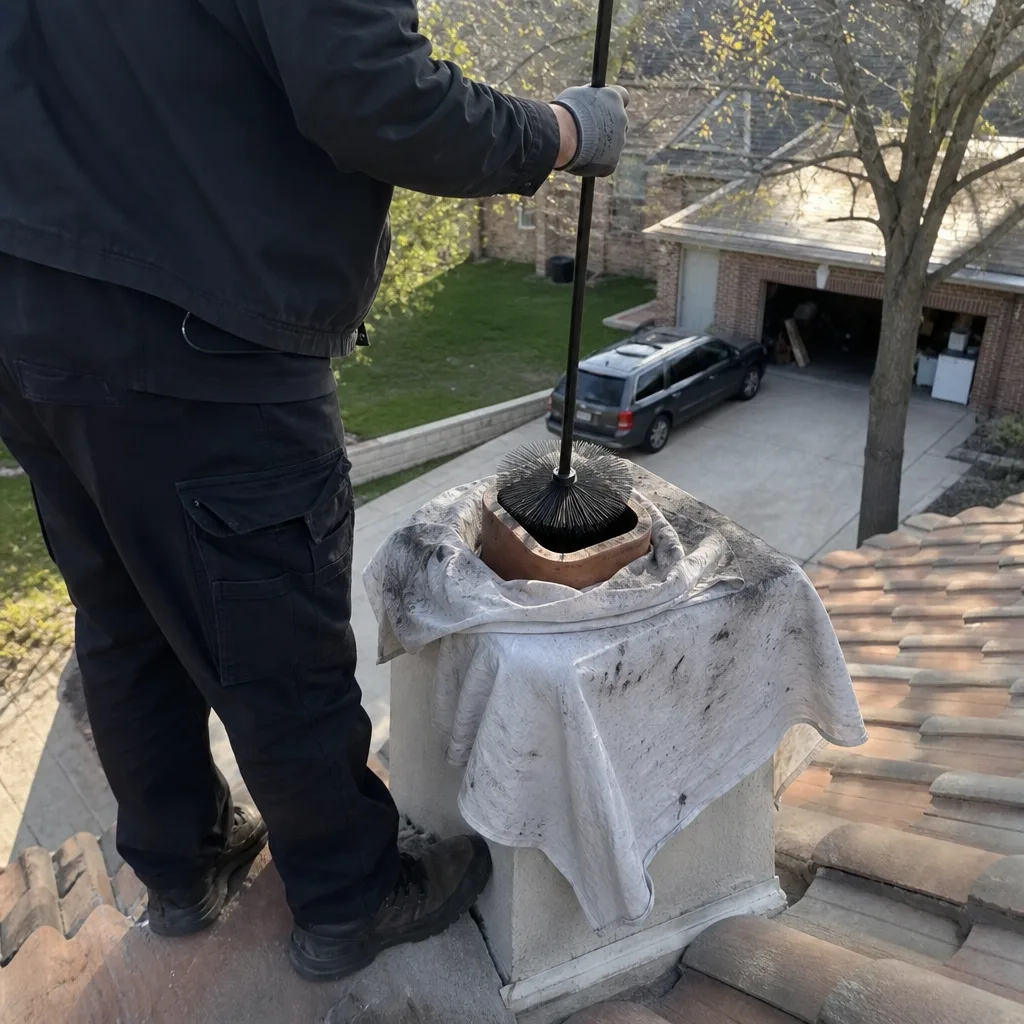
The smoke chamber is the inverted funnel above the damper that channels smoke from the firebox into the narrow flue. It’s the most abused part of the chimney, exposed to the highest temperatures and the most corrosive gases, yet it’s almost never seen by the homeowner. Until now.
With a flashlight and a hand mirror, you can inspect the smoke chamber from below. Here’s what to look for:
- Open the damper fully. The damper blade should move smoothly and seat flat when closed. If it hangs crooked or scrapes, the frame may be distorted from heat or the pivot pins may be corroded.
- Shine a flashlight upward at a steep angle. You’re looking at the chamber walls, which should slope smoothly inward like a funnel. The walls are typically brick or parged (smoothed with refractory mortar).
- Look for corbeling cracks. Corbels are the stepped brick courses that create the funnel shape. These step-lines often crack as the chimney settles or as heat cycles expand and contract the masonry. From below, corbeling cracks look like stair-step lines that have shifted or opened, sometimes with black staining in the gap from smoke leakage. Homeowners frequently mistake these for normal construction joints. They’re not. A crack that admits smoke admits heat, and heat against combustible framing is the leading cause of structure fires originating in chimneys.
- Check for missing or fallen parging. If the smoke chamber was originally parged smooth, chunks of this mortar may have fallen into the firebox or onto the damper blade. You’ll see rough, exposed brick where smooth mortar should be. Unparged corbeled chambers create turbulence that slows draft and deposits creosote at the shoulder of the flue.
- Note any shiny or glazed areas. These indicate sustained high heat, often from previous chimney fires or over-firing. The refractory materials begin to vitrify, losing porosity and cracking under thermal stress.
In Plano’s Willow Bend and Avignon Windhaven neighborhoods, we’ve found significant smoke chamber damage in homes built during the 1990s construction boom, when speed often trumped proper parging technique. The NFPA 211 Level 2 inspection includes camera documentation of this area, but catching it early from below can save you from discovering it during a failed real estate inspection.
Smoke chamber repair, when needed, typically involves parging with HeatShield refractory mortar or installing a stainless liner. Both are permanent solutions, but the diagnosis requires seeing the damage clearly. That’s why Clause 4 of the Haven Standard requires a photo record on every job, running continuously since 2009.
How Plano’s Climate Accelerates Chimney Deterioration
Chimneys in Plano fail differently than chimneys in Denver or Seattle. Our specific climate patterns create predictable damage modes that a homeowner can anticipate and monitor.
Expansive Clay Soils and Foundation Movement
Plano sits on the Blackland Prairie, where vertisol soils expand when wet and shrink when dry. This seasonal heaving transfers stress to chimney foundations, especially on pier-and-beam homes or where the chimney is built on a separate footing. The result is hairline vertical cracks in the firebox back wall, separation between the chimney and house siding, or tilted chimney crowns that no longer shed water properly. In the Legacy West and Russell Creek areas, we’ve documented chimney lean in homes less than fifteen years old where soil moisture management was neglected.
Rapid Freeze-Thaw Cycles
Plano’s winter cold snaps arrive fast. A January front can drop temperatures from 60°F to 20°F in twelve hours. Masonry saturated from autumn rains or condensation freezes, expands, and cracks. The damage is cumulative: each cycle widens cracks, admits more water, and sets up the next cycle. Crown cracks, spalled brick, and deteriorated mortar joints accelerate after just three to five Plano winters if the chimney was not properly sealed.
Intense Summer Heat and UV Exposure
Chimney crowns and chase covers in Plano bake for months. Standard crown mortar mixes degrade; metal chase covers thin and rust at the fastener holes. We’ve replaced chase covers in Plano homes where the original galvanized steel failed in seven years, versus fifteen to twenty years in cooler climates. Copperfield and Gelco stainless chase covers, properly installed, are the standard we specify for replacement.
High Humidity and Microbial Growth
From May through October, Plano humidity stays elevated. Unused chimneys become condensation chambers. Class III creosote, the glazed tar stage, absorbs moisture and becomes more acidic, accelerating metal liner corrosion. We’ve pulled failed DuraFlex liners in Plano where the homeowner burned wood for three seasons, skipped the sweep, and left the acidic deposit to work through two humid summers.
Hail Impact on Exterior Components
Plano’s position in Tornado Alley means regular hail events. Chase covers, caps, and spark arrestors dent, loosen, or dislodge. A cap knocked crooked by hail admits rain and animals while still looking intact from the ground. After any significant hail event, visual inspection from the roof or a drone photo is worthwhile.
The Photo-Documentation Protocol: What to Shoot Before Calling
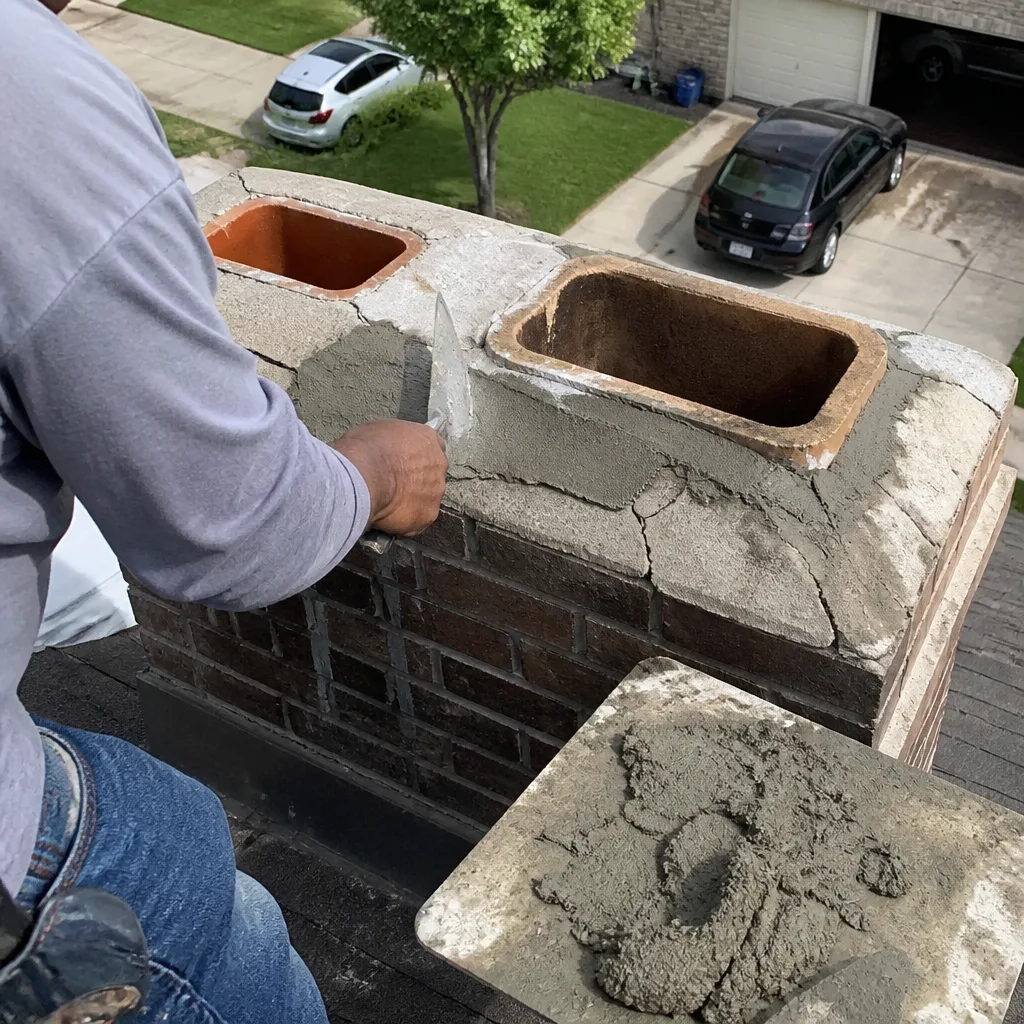
Most chimney companies ask you to describe your problem over the phone. You say “it’s smoking a little,” they hear “routine sweep,” and you both discover too late that the real issue is a cracked flue liner. A photo protocol fixes this. It gives the sweep diagnostic information before arrival, lets them bring the right equipment, and protects you from surprises.
Here’s what to photograph, in order of diagnostic value:
- The firebox, straight on, with flash. Include the full width and height. We’re looking for firebrick cracks, rust stains, mortar loss, and the condition of the back wall. If you have a gas fireplace, include the burner and log arrangement.
- The damper, open and closed. Two shots. Open: shows the smoke chamber entrance and damper blade condition. Closed: shows whether it seats flat and seals. Include the frame and pivot hardware.
- Up the flue from the firebox, with flashlight. This is the hardest shot. Rest your phone on the firebox floor, point upward, and use the timer so you don’t shake. Even a blurry image shows flue narrowing, blockage, or visible creosote stage.
- The exterior chimney, full height, from the ground. Stand back far enough to capture from roofline to top. We’re looking for lean, missing bricks, efflorescence patterns, and crown condition.
- The crown, close-up from a ladder or second-story window. If safe to access. Cracks, pooling, and edge deterioration are visible here. Do not climb an unsafe roof for this shot.
- The chase cover or cap, from above if possible. Rust patterns, denting, and proper overhang of the flue tile. A drone or pole camera helps here.
- Any interior stains near the fireplace. Smoke marks on the wall, water stains on the ceiling, or heat damage to mantel or surround materials.
- The roof area around the chimney base. Flashing condition, sealant integrity, and whether the chimney is properly counter-flashed into the roofing.
How to send: Text or email the full set to the company when you request your estimate. At Emberly Chimney Cleaners Plano, we review these during scheduling and often identify the likely issue before we load the truck. It means we arrive with the right liner camera, the right repair materials, or the right expectation-setting for what you’ll see on your own screen when we run the scan.
This practice, formalized as Clause 4 of the Haven Standard, is why our documented photo record begins with your photos, not ours. The archive runs continuously since 2009, now exceeding 38,000 chimney records.
Common Mistakes to Avoid
- Assuming a gas fireplace needs no inspection because it burns clean. Gas fireplaces require annual inspection of the venting system, burner orifices, and combustion air supply. The NFPA applies to all fuel types. In Plano, we’ve found blocked direct-vent terminals in homes where the homeowner skipped five years of “unnecessary” service.
- Using the chimney smell as a seasonal air freshener indicator. That campfire smell in July means active creosote deposits are off-gassing. It’s not nostalgic; it’s chemical decomposition of wood tar in humid conditions. Schedule a sweep before the next burning season.
- Buying a chimney cap at a hardware store and self-installing without inspecting the crown first. A cap on a cracked crown accelerates damage by concentrating runoff at the cracks. Fix the crown, then cap it properly.
- Hiring based on the lowest phone quote without a written scope. “Chimney sweep, $99” often means a brush run from the roof and no inspection. A proper NFPA 211 Level 2 inspection with camera documentation takes 60 to 90 minutes and includes a written report. Clause 1 of the Haven Standard requires a written price, written scope, and written warranty before work starts, never after the tech is in your home.
- Ignoring efflorescence as “just white stuff on brick.” It’s a moisture migration signal. In Plano’s climate, efflorescence today means spalled brick next winter if the water source isn’t found and sealed.
- Assuming a chimney fire is dramatic and obvious. Most chimney fires are slow, quiet events that crack the flue liner without alerting the homeowner. The damage is discovered years later during a real estate inspection or when the next fire breaches the compromised liner. Annual camera inspection finds this silent damage.
- Waiting for “the obvious signs” before calling. By the time smoke rolls into the room, you have multiple concurrent failures: obstructed flue, damaged liner, possibly compromised smoke chamber. The early signs described in this guide let you address single issues before they cascade.
When to Call a Professional
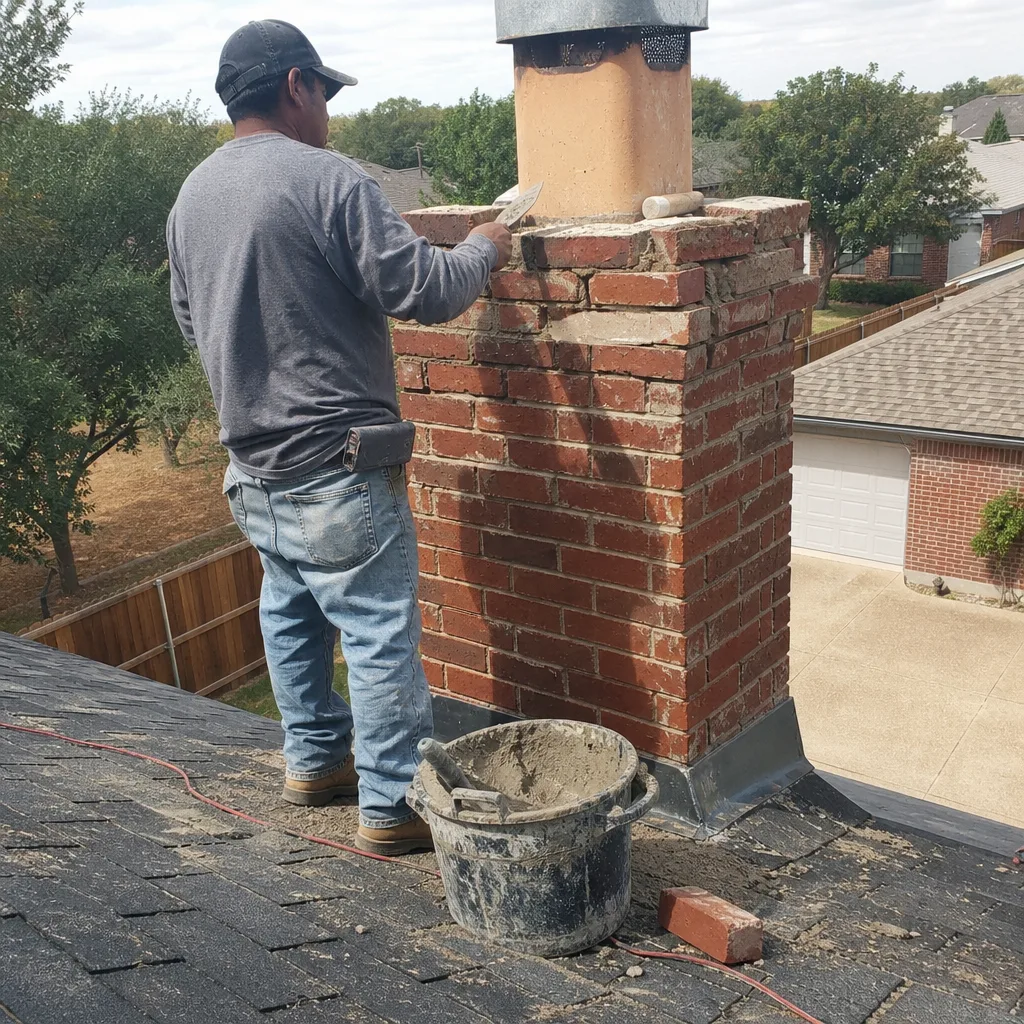
Call for an NFPA 211 Level 2 inspection if you’ve observed any structural warning sign, any stage two or three creosote indicator, any gas fireplace signal from the five listed above, or if your chimney has not been professionally inspected in the past twelve months. In Plano, where our climate accelerates deterioration, annual inspection is the minimum for actively used systems; every two years is the absolute maximum for unused or gas-only chimneys.
Call immediately if you smell gas near a fireplace, if you’ve had a known or suspected chimney fire (loud roaring, dense smoke, flames visible from the top), or if you can see daylight through cracks in the firebox or smoke chamber walls.
Emberly Chimney Cleaners Plano offers free estimates in Plano. Every estimate includes a written price, written scope, and written warranty before any work begins, under Clause 1 of the Haven Standard. Our background-checked, uniformed technicians arrive with license information, a documented photo record from every previous visit, and the camera equipment to show you your own flue in real time. Call (469) 240-3101 to schedule or to request a Free Second Opinion on any competitor’s written estimate.
Frequently Asked Questions
A professional chimney cleaning and NFPA 211 Level 2 inspection in Plano typically ranges from $199 to $349, depending on accessibility, creosote stage, and whether the system is wood-burning, gas, or a fireplace insert. Emberly Chimney Cleaners Plano provides a written price before any work starts, with no variance once the technician is on site. Call (469) 240-3101 for an exact quote; estimates are free.
You should never accept a liner replacement recommendation without camera evidence you can see for yourself. A damaged liner shows cracks, gaps, or spalled tile visible on the inspection monitor. At Emberly Chimney Cleaners Plano, we provide the camera footage, explain what you’re seeing, and note whether the damage requires immediate action or can be monitored with annual re-inspection. Our Free Second Opinion on any written estimate lets you verify competing recommendations. Call (469) 240-3101 to schedule.
The NFPA 211 standard calls for annual inspection of all chimney systems, with cleaning as needed based on creosote accumulation. In Plano, where our burning season runs roughly November through February, most wood-burning homeowners need annual sweeping. Gas systems typically need inspection every one to two years, depending on use. Homes in mature neighborhoods like Old Towne Plano with original masonry chimneys benefit from annual inspection regardless of fuel type, due to age-related deterioration accelerated by our climate.
Skipped maintenance leads to progressive creosote buildup, which increases chimney fire risk and can crack the flue liner. Cracked liners allow heat and combustion gases into wall cavities, creating structure fire risk and carbon monoxide exposure. In Plano’s climate, skipped maintenance also means undetected moisture intrusion that spalls brick, corrodes metal components, and degrades the chimney crown. The cost of deferred maintenance typically exceeds the cost of annual service by a factor of ten to twenty within five years.
We do not recommend DIY chimney cleaning. Proper removal of stage two and three creosote requires rotary mechanical systems and professional evaluation of liner condition during the process. More critically, the NFPA 211 Level 2 inspection, which includes camera documentation of the flue interior, smoke chamber, and accessible portions of the appliance and connection, cannot be performed adequately without training and equipment. For your safety and for insurance documentation, professional service is the appropriate standard. Emberly Chimney Cleaners Plano’s 365-Day Done Right Promise backs every job.
Summer chimney odors in Plano come from two sources: creosote deposits absorbing humidity and releasing acidic compounds, and negative air pressure in tightly sealed homes pulling downdrafts through the flue. The odor is stronger on humid days and in homes with continuous HVAC operation. A professional cleaning removes the creosote source, and a top-sealing damper or proper combustion air balancing can address pressure-related downdrafts. Call (469) 240-3101 for diagnosis specific to your home’s construction and HVAC configuration.
The Bottom Line
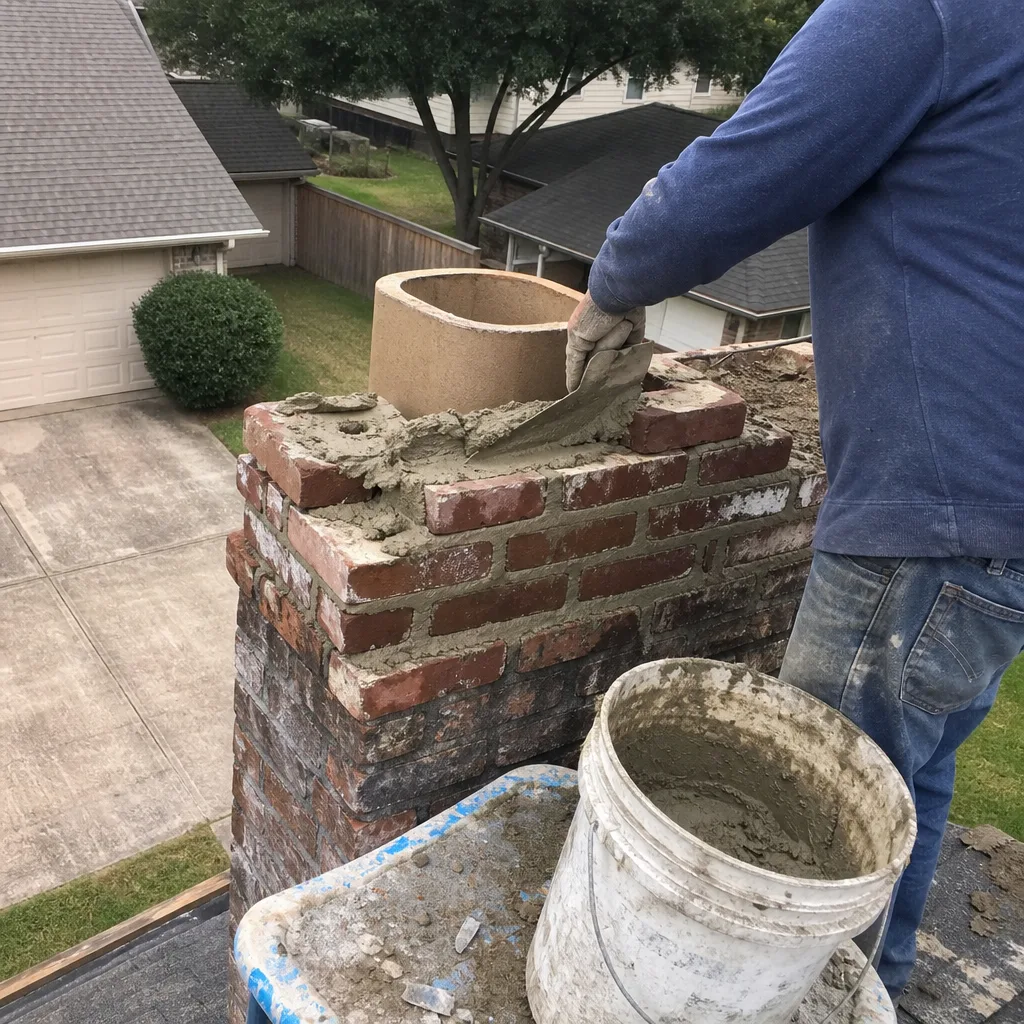
The chimney warning signs that matter most in Plano are the ones you can catch early: efflorescence before spalling, stage one creosote before stage three, pilot irregularities before CO risk, and corbeling cracks before smoke leakage. Document what you see, understand the timeline, and schedule professional evaluation before the next burning season or freeze cycle. For more guides & resources, visit our blog. The cost of early detection is a fraction of the cost of late repair, and the documentation you gather protects your decision-making at every step.
Written by Corrine Halstead, Owner at Emberly Chimney Cleaners Plano, serving Plano since 2009.