
Last updated September 22, 2026
Level 1 sweep and inspection to the NFPA 211 annual standard - flue, crown, cap, and flashing checked and photographed
Chimney sweep logs do not sweep chimneys. They loosen some creosote - which then falls where a brush and vacuum still have to collect it.
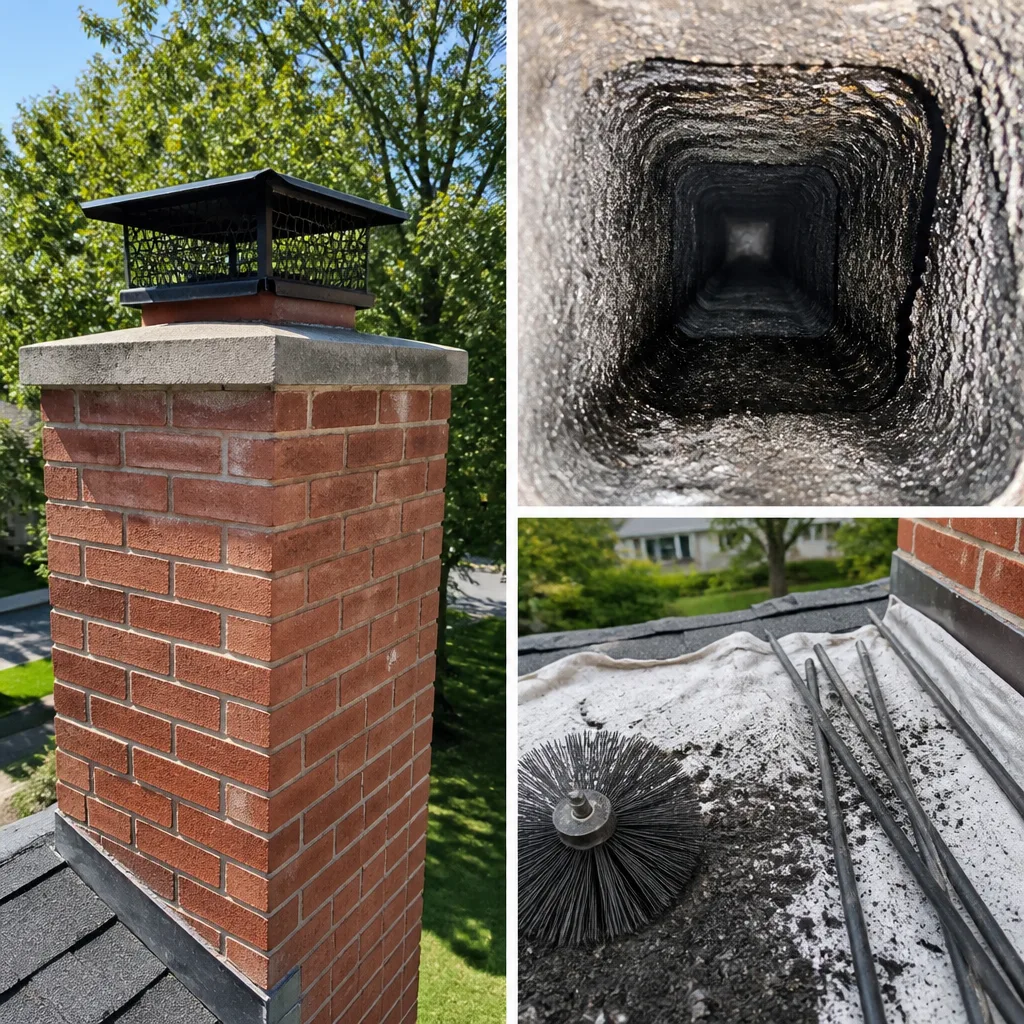
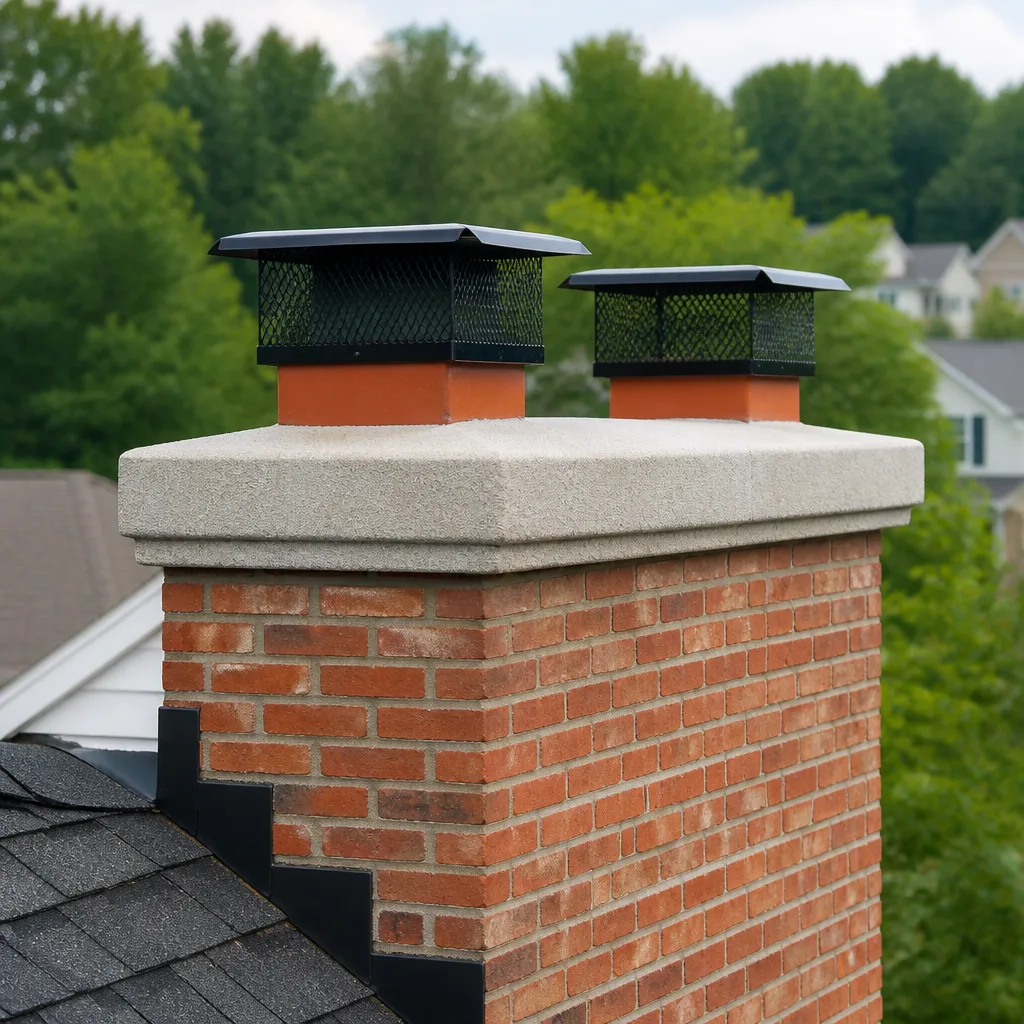
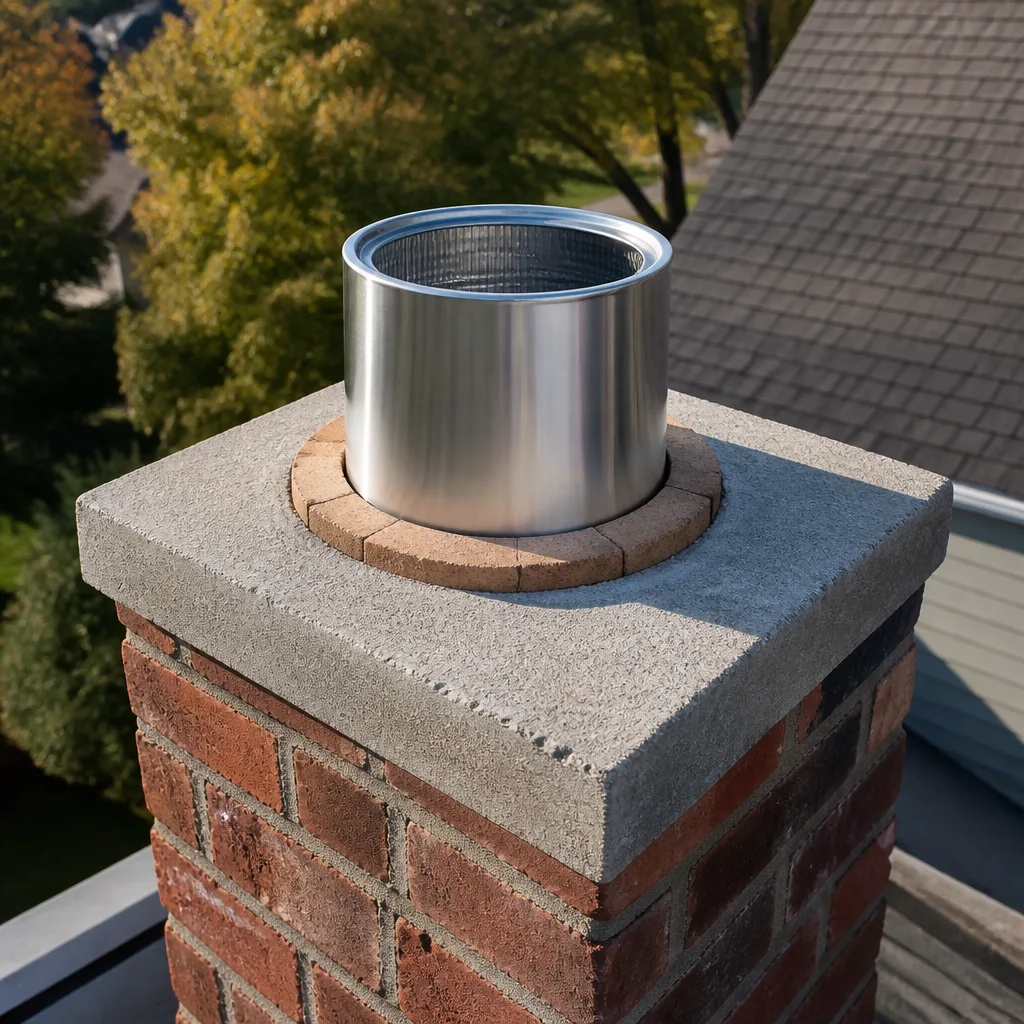
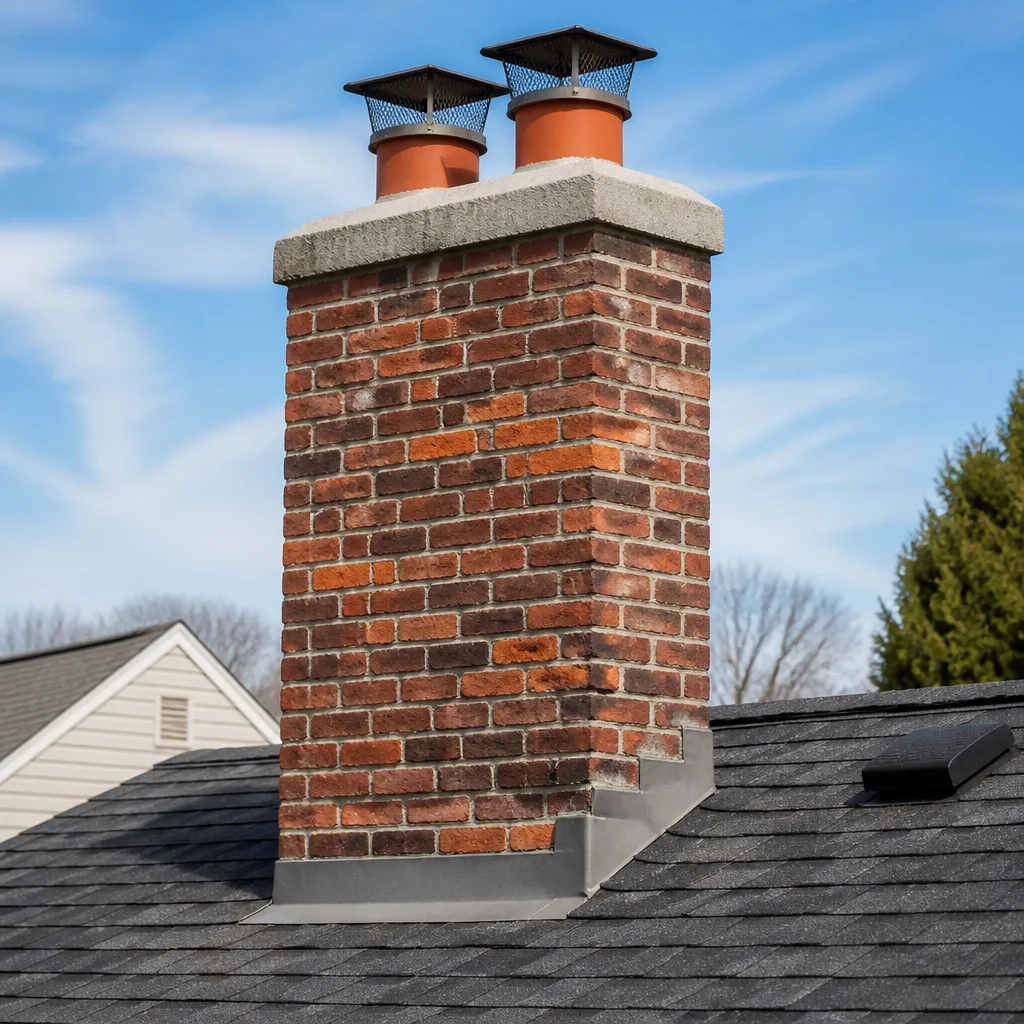
 Before
 After
After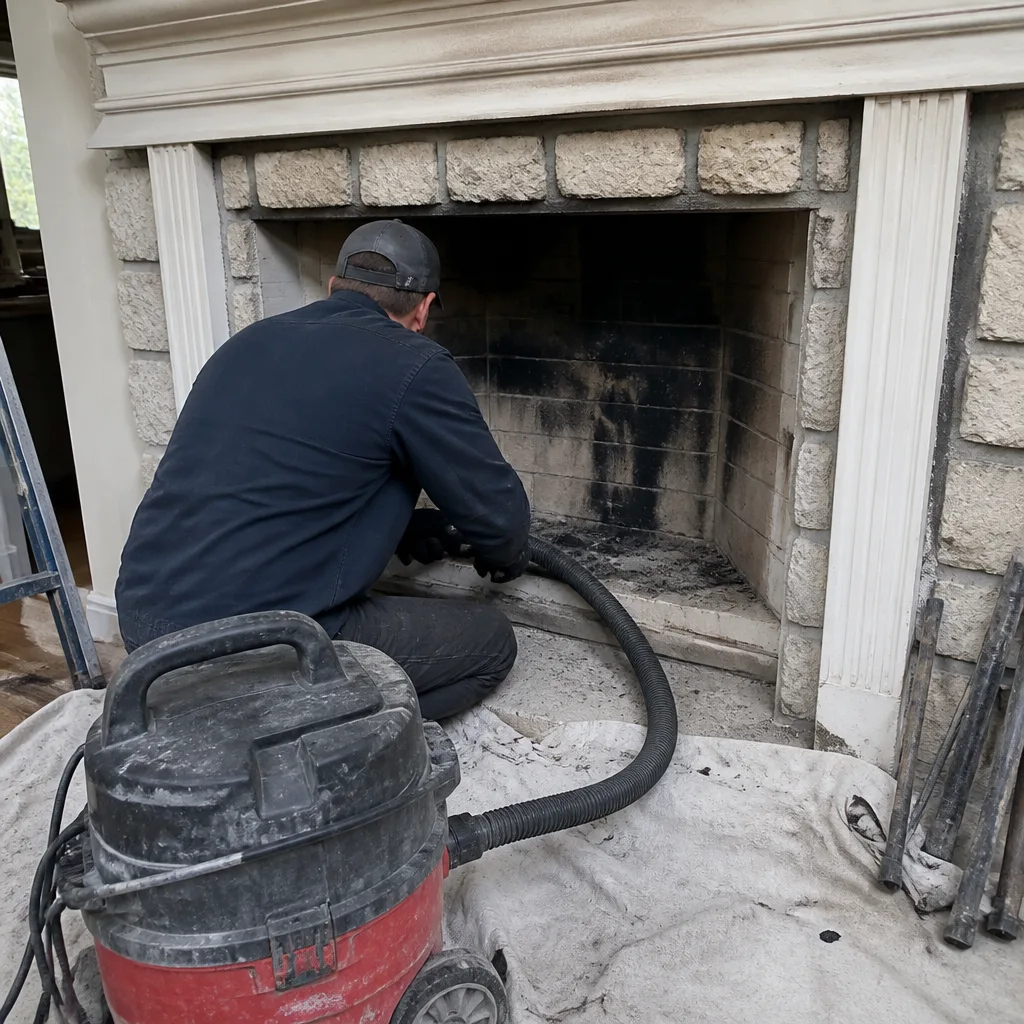 Before
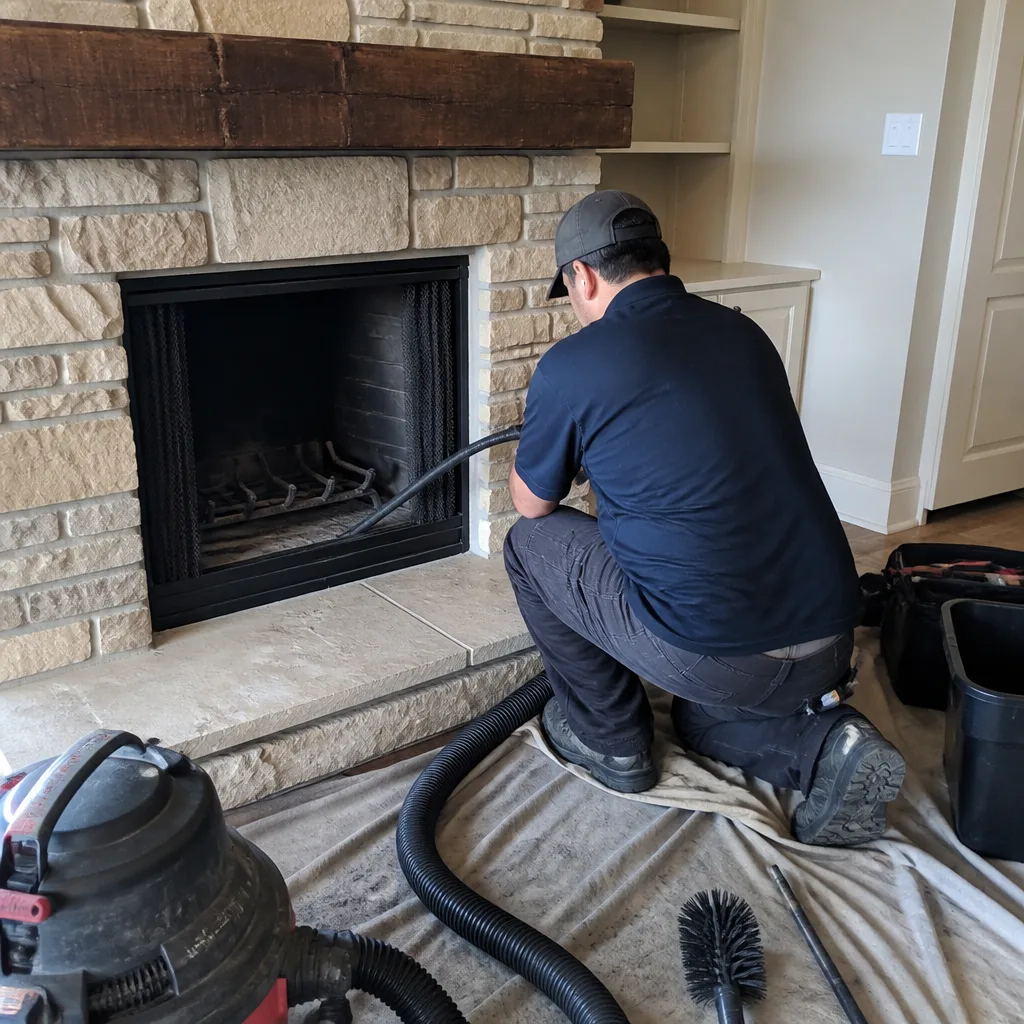 After
After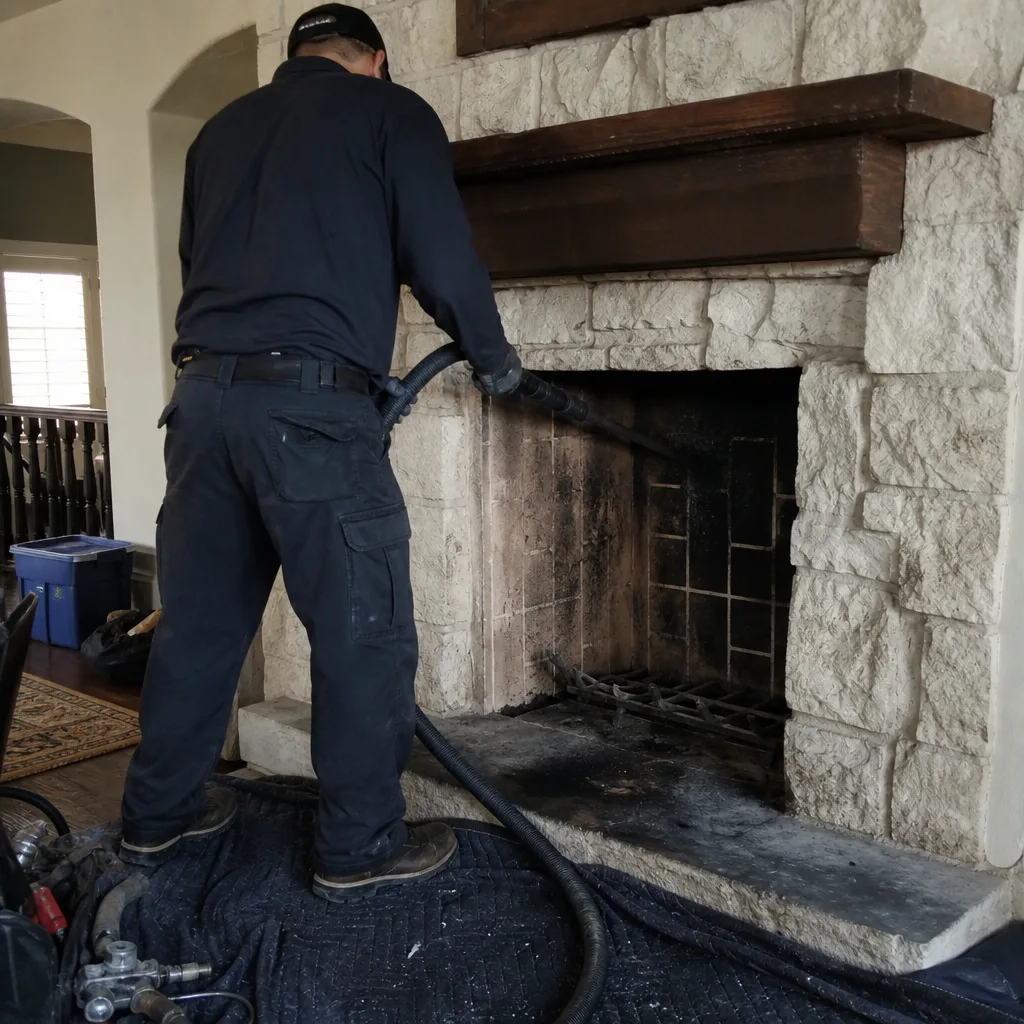 Before
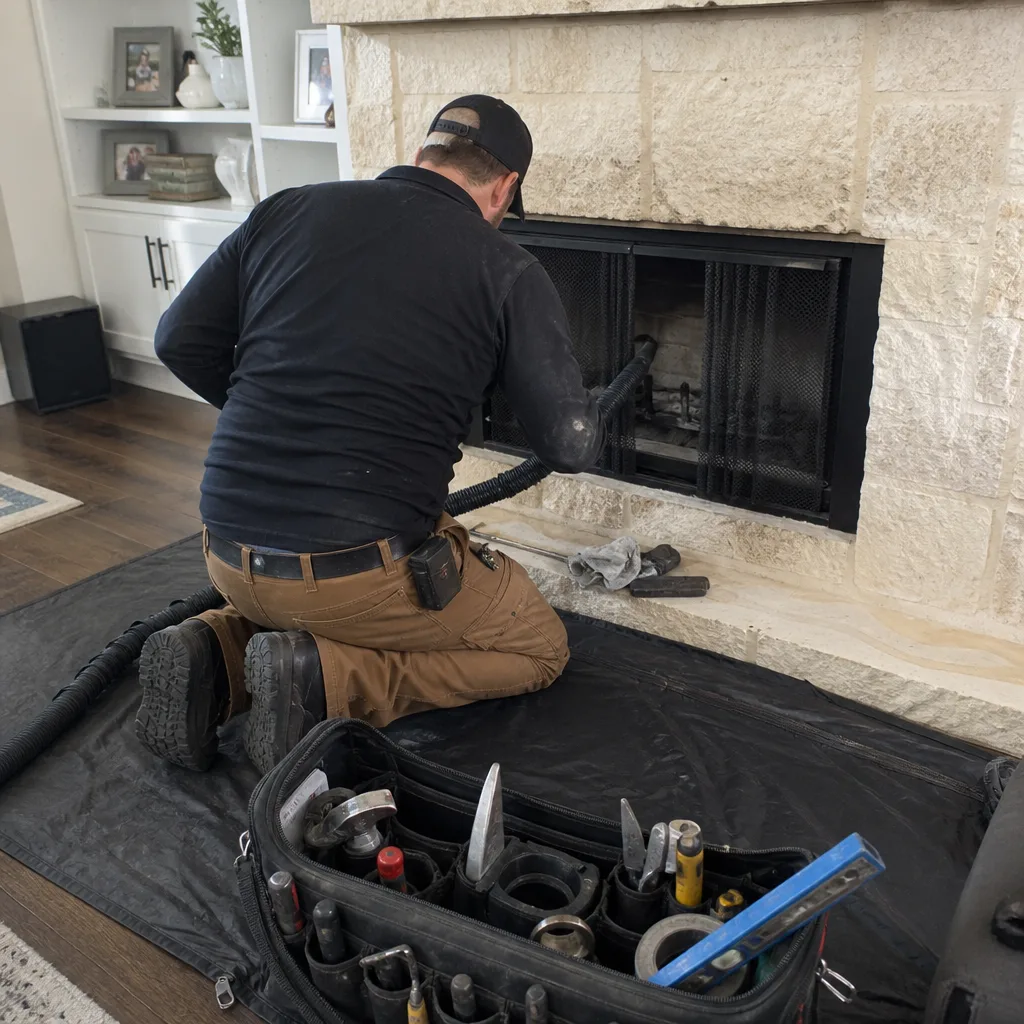 After
AfterDIY vs Professional Chimney Cleaning: The Plano Homeowner’s Decision Guide
Here’s the uncomfortable truth most Plano homeowners discover too late: a $45 brush kit and a Saturday afternoon will absolutely remove soft creosote from a straight flue. The brush exits the chimney, the homeowner feels accomplished, and the $4,000 liner crack six feet down goes completely undetected. In our 38,000 inspections since 2009, we’ve documented thousands of chimneys that were “cleaned” by hand the season before - and still contained hazards that brushing alone cannot reach or reveal. This guide walks you through exactly what DIY chimney cleaning accomplishes, what it cannot, and how to decide which path fits your situation, with more guides & resources available on our blog.
Quick Answer
DIY chimney cleaning removes Stage I (soft, flaky) creosote from accessible, straight flues but cannot inspect, document, or warranty the work. Professional chimney cleaning in Plano includes a camera-scan inspection, written report, and documented photo record that satisfies insurance, warranty, and real estate requirements - learn more in our How to Hire a Chimney Cleaning Contractor in Plano: A Step-by-Step Guide. For most homeowners, the gap between “looks clean” and “certified safe” costs far more than the $150-$250 price difference.
Table of Contents
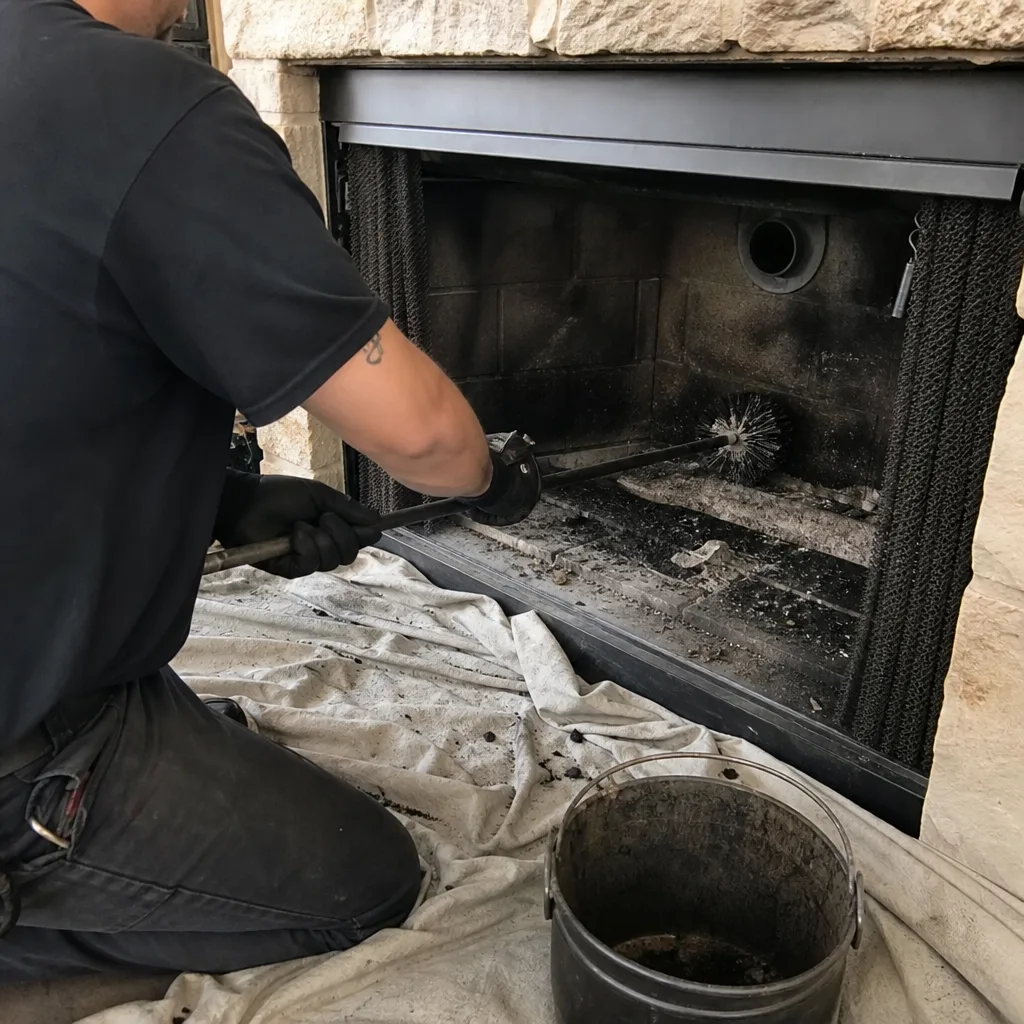
- What DIY Chimney Cleaning Actually Accomplishes
- The Real Cost of a Legitimate DIY Setup
- What a Brush Cannot Reach, Measure, or Document
- The Documentation Gap: What Missing Records Cost You
- When DIY Brushing Is Appropriate - and When It Creates Liability
- What Our Camera Scan Finds That DIY Misses
- Plano-Specific Factors: Climate, Codes, and Market Conditions
- Making Your Decision: A Framework
BeforeAfterWhat DIY Chimney Cleaning Actually Accomplishes
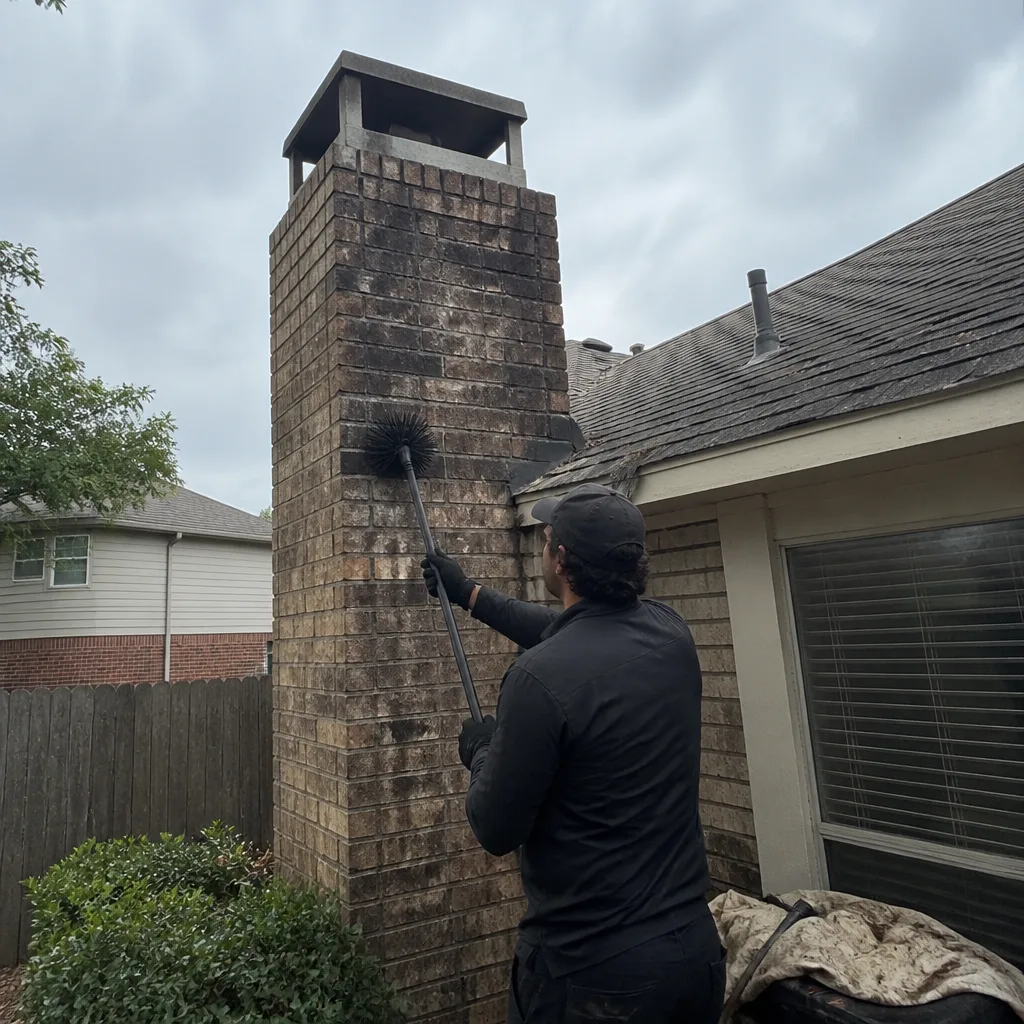
Let’s be precise about what happens when a homeowner runs a brush up a flue. The tool - typically a polypropylene or wire brush on flexible fiberglass rods - scrapes the interior surface of the flue liner. If the creosote is Stage I, soft and flaky, and the flue is straight and unobstructed, the brush knocks it loose. A shop vacuum with a HEPA filter collects the debris. The chimney looks cleaner. The fireplace smells less like old smoke.
This is not nothing. In a perfectly maintained system with dry hardwood, regular small fires, and annual attention, DIY brushing can reduce buildup between professional inspections. We see this most often in Plano’s older neighborhoods like Old Towne and Hunter’s Glen, where homeowners with masonry fireplaces and consistent burning habits have established routines; see our Seasonal Chimney Cleaning Care for Plano: Year-Round Homeowner’s Guide for maintenance timing tips.
But the accomplishment has hard boundaries:
- Stage I creosote only. Stage II (shiny, tar-like) and Stage III (glazed, hardened) require mechanical or chemical treatment. A brush skates over them.
- Straight flues only. Offset flues, common in homes built between 1985 and 2005 in Plano’s east-side developments, have bends that rods cannot navigate without aggressive force that risks liner damage.
- No diagnostic capability. The brush tells you nothing about liner integrity, crown condition, or smoke chamber construction.
- No documentation. No photo, no report, no warranty, no timestamped record.
We are not dismissive of capable homeowners. We’ve met many in Plano who maintain their homes meticulously. The question is not competence. The question is whether the tool in hand matches the full scope of the task.
The Real Cost of a Legitimate DIY Setup
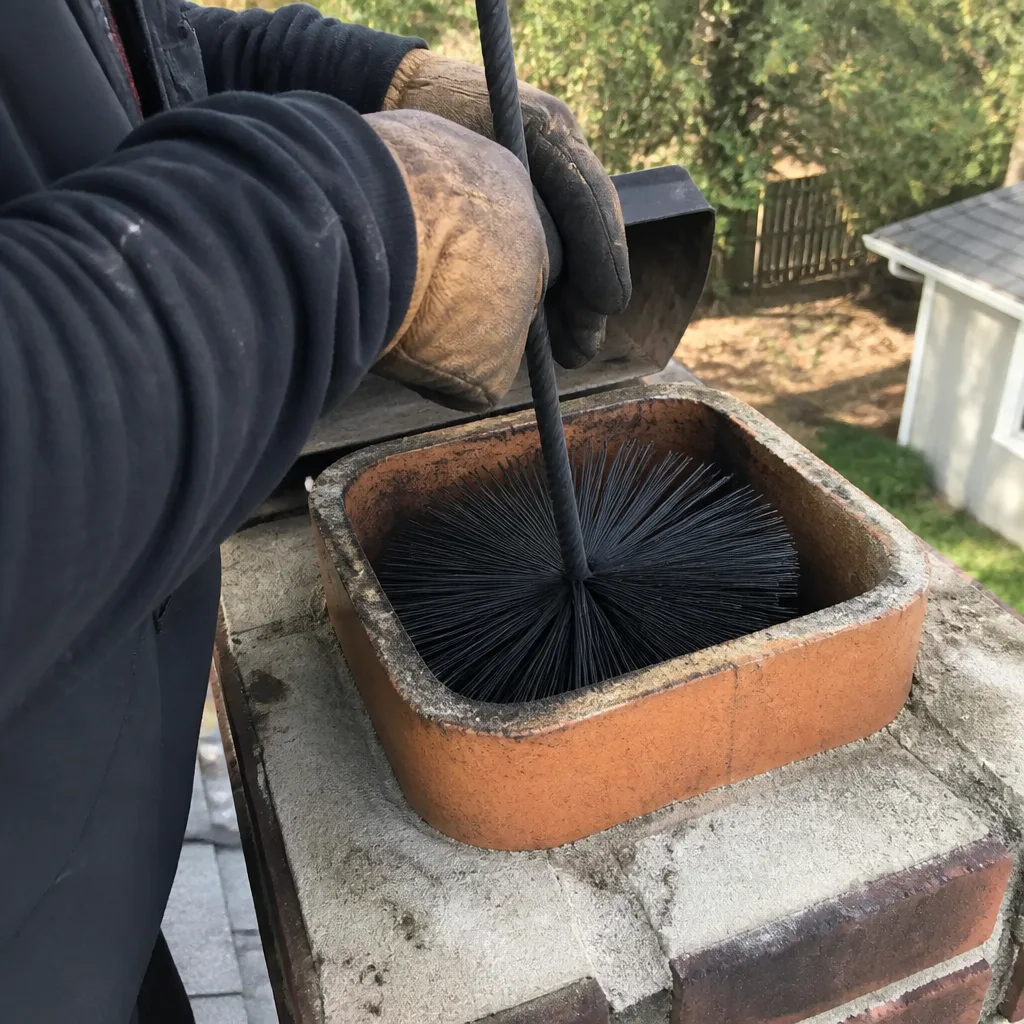
The internet is full of “$45 and you’re done” promises. A legitimate DIY chimney cleaning setup costs more, and the gap narrows faster than most homeowners expect when they price a professional sweep with inspection included.
Here’s the actual equipment list for work we’d consider responsible:
- Brush and rod set sized to your flue. A single brush does not fit all. A 6-inch round flue needs a 6-inch brush; an 8-by-12-inch rectangle needs a different head. Expect $35-$75 per brush, $40-$80 for a rod set of sufficient length (most Plano two-story homes need 20+ feet).
- Drop cloths and sealing materials. Plastic sheeting, tape, and containment for the firebox opening. $25-$40.
- HEPA vacuum or dedicated ash vacuum. Standard shop vacs blow fine particulate through the exhaust. A true HEPA vacuum rated for ash and soot starts around $150. The cheap alternative is a lungful of respirable crystalline silica and creosote particles.
- Respiratory protection. N95 minimum; P100 preferred for extended work. $15-$30.
- Eye protection and work gloves. $15-$25.
- Inspection mirror and flashlight. Basic visual check of the firebox and damper. $20-$40.
- Ladder or roof access equipment. If you’re brushing from the top down (the preferred method), you need safe roof access. Many Plano homes in Windsong Ranch and similar communities have steep-pitch architectural shingles. Fall risk is real and serious.
Total first-year investment: $300-$430 for equipment you’ll use once annually. A professional chimney cleaning and sweep in Plano, including camera inspection, runs $150-$250 for a standard masonry fireplace - detailed in our Chimney Cleaning Cost Breakdown: The Plano Homeowner’s Reference for 2026. On the first use, professional service costs less. On the second use, you’ve spent $600-$860 on DIY versus $300-$500 on professional work that includes documentation.
The math shifts only if you own multiple fireplaces or plan to clean for neighbors. For a single Plano home, the economic argument for DIY is weaker than it first appears.
What a Brush Cannot Reach, Measure, or Document
This is where the real decision lives. A brush is a cleaning tool, not an inspection tool. The hazards that cause chimney fires, carbon monoxide intrusion, and structural failure are almost entirely invisible to brushing.
Offset flue sections. Many Plano homes built during the 1990s construction boom used clay flue tiles with intentional offsets to navigate around framing. A brush rod bends at these points, often failing to make contact with the upper section. Creosote accumulates above the offset. Worse, the offset itself can separate, creating a gap that channels heat directly into combustible framing. We’ve found separated offsets in Plano’s Deerfield and Park Forest neighborhoods where the homeowner had brushed faithfully for years, never knowing the gap existed.
Smoke chamber. The smoke chamber is the area above the damper and below the flue liner. It is typically corbeled brick, sloped to funnel smoke into the flue. NFPA 211 requires parging (smoothing) of rough smoke chamber surfaces, but many older Plano homes have never had this work. A brush never enters the smoke chamber. Parging failures, exposed mortar joints, and creosote accumulation there are invisible to DIY cleaning.
Connector pipe integrity. Factory-built fireplaces and wood stoves use metal connector pipes between the appliance and the flue. These pipes can corrode, separate at joints, or be improperly sized. A brush runs through them without revealing wall thinning or joint gaps.
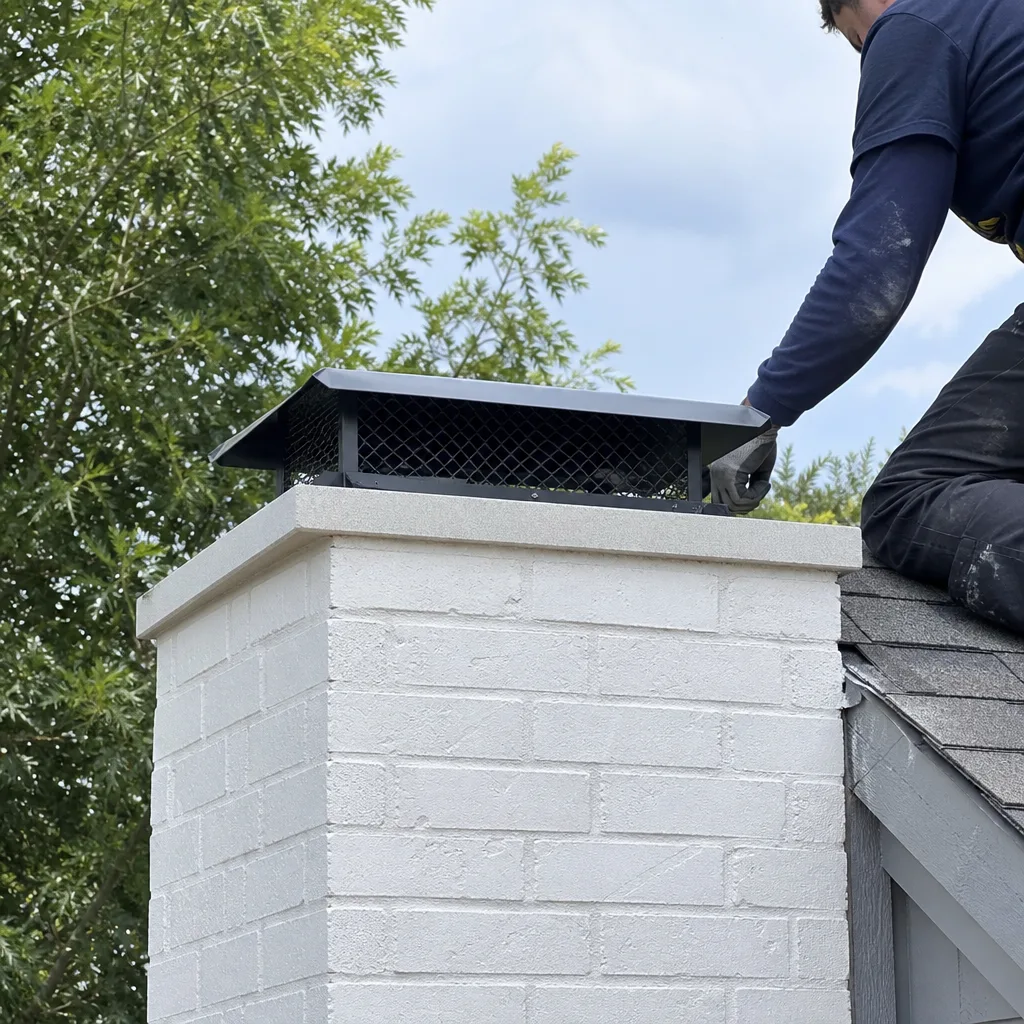
Crown and cap condition. Water intrusion destroys chimneys from the top down. Spalling brick, deteriorated mortar, and rusted flue liners start with crown cracks or missing caps. You cannot evaluate these from inside the firebox with a brush.
Clearance to combustibles. NFPA 211 specifies minimum clearances between chimney components and framing. These can be compromised by improper original construction, modifications, or deterioration. No brush measures clearance.
The professional distinction is not the brush. It is the camera, the training to interpret what it shows, and the documentation that creates a record.
The Documentation Gap: What Missing Records Cost You
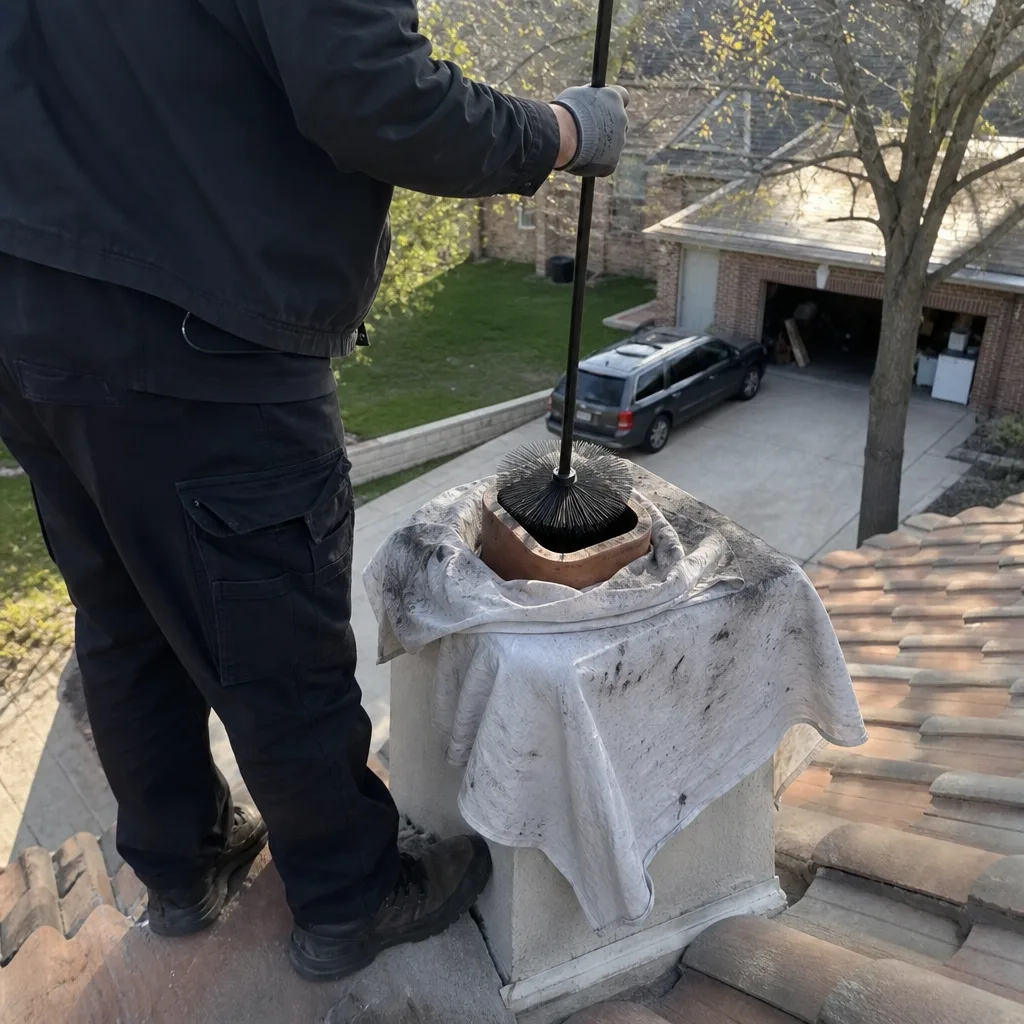
A DIY sweep produces no written record. This gap becomes expensive in three specific scenarios we encounter regularly in Plano.
Home sale. Plano’s real estate market moves fast, but buyers and their insurers increasingly request Level 2 inspection documentation. A seller who cannot produce a dated, photo-documented inspection report faces either a rushed professional inspection (often at premium pricing) or a price concession. The $200 saved on DIY cleaning becomes a $2,000 negotiation point.
Insurance claims. After a chimney fire or related structural damage, insurers ask for maintenance records. “I clean it myself every year” carries no documentary weight. Without a professional inspection report, coverage disputes arise. We’ve been called to document conditions for claims in Plano’s Willow Bend and Gleneagles areas where the homeowner’s maintenance history was verbal only.
Appliance warranty validation. Manufacturers of high-efficiency inserts and factory-built fireplaces (brands like HeatShield and DuraFlex systems we install) require professional installation and annual professional inspection to maintain warranty terms. DIY cleaning voids this protection.
Clause 4 of the Haven Standard requires a documented photo record on every job - not as an upsell, but as standard practice since 2009. Our customers receive timestamped images, written scope, and written warranty. This is not paperwork. It is evidence that protects their investment.
When DIY Brushing Is Appropriate - and When It Creates Liability
We do not oppose all homeowner maintenance. There are two scenarios where DIY brushing is genuinely appropriate, and two where it creates significant liability.
Appropriate: Gas fireplace pilot and burner cleaning. Homeowners can safely clean ceramic logs, vacuum burner ports, and check pilot flame color. This is maintenance, not inspection, and the consequences of error are limited to poor performance.
Appropriate: Brush-only touch-up between professional inspections. If you’ve had a Level 2 inspection within 12 months and burn lightly with dry hardwood, a mid-season brush-down of a straight, known-good flue is reasonable. The key phrase is “known-good” - established by recent professional camera inspection.
Inappropriate: After any chimney fire or suspected over-firing event. Even a small chimney fire can crack clay flue tiles, damage mortar joints, or compromise liner integrity. These damages require camera inspection and often repair. Brushing after a fire without inspection is like washing a car after a collision to check for frame damage.
Inappropriate: Before any real estate transaction. Whether you’re buying or selling in Plano, DIY cleaning provides no documentation and no liability protection. The cost of professional inspection is trivial compared to transaction risk.
We’ve been called to Plano homes where a well-meaning homeowner brushed diligently, then discovered at closing that the buyer’s inspector found separations the brush had passed over for years. The DIY work was not wrong. It was simply incomplete for the situation.
What Our Camera Scan Finds That DIY Misses
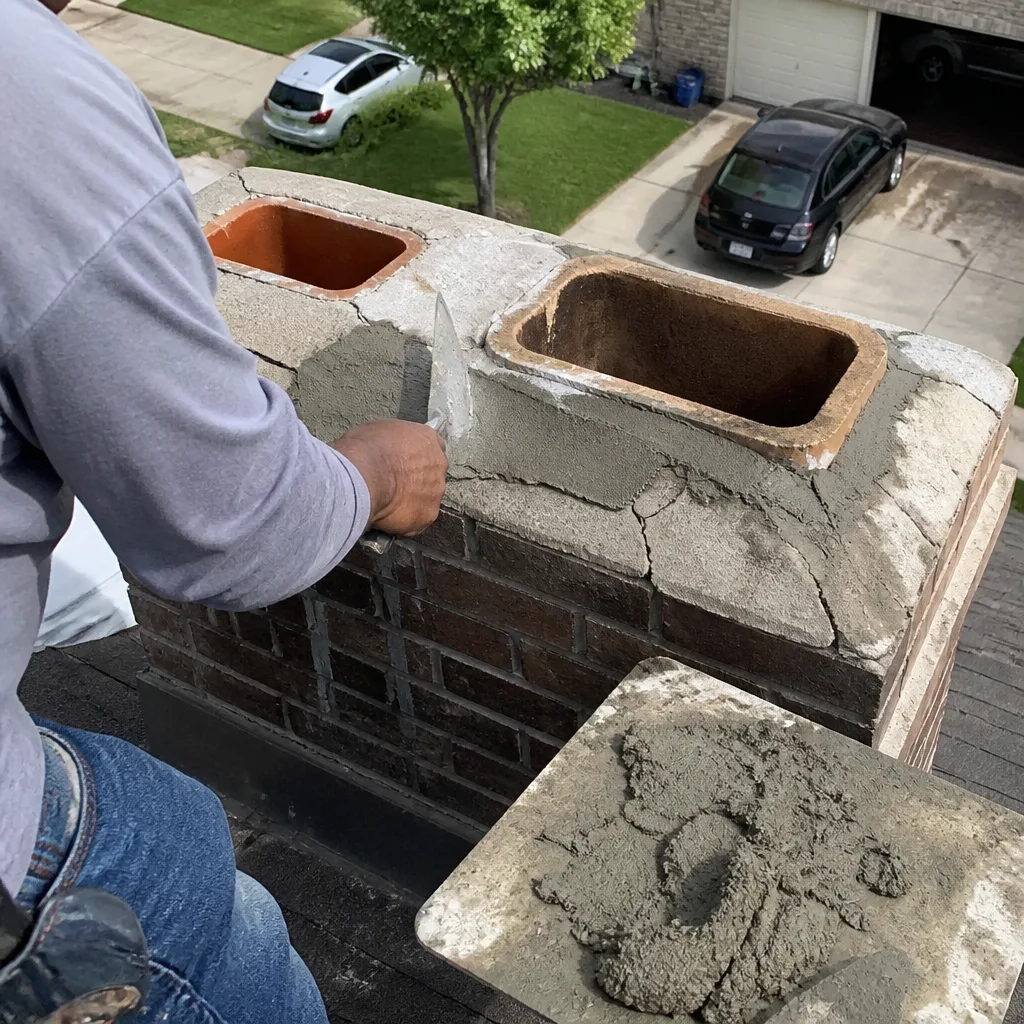
Since 2009, we’ve archived photo records from every inspection. Here are real categories of findings, not hypotheticals, that a brush would have missed and our camera revealed.
Offset separations in clay tile liners. In a 2019 inspection in Plano’s Russell Creek area, the camera revealed a 3/4-inch gap between flue tiles at an offset, with creosote packed into the gap. The homeowner had brushed annually for eight years. The gap channeled combustion gases against combustible framing. Repair required HeatShield cerfractory foam application and a new connector pipe.
Glazed secondary creosote. Stage III creosote forms a hard, glossy layer that brushes cannot remove. It requires chemical treatment or mechanical removal. The camera identifies the glazing and measures its thickness. Without this identification, the homeowner believes the flue is clean while a significant fuel load remains.
Corbeling fractures in smoke chambers. The stepped brick of a corbeled smoke chamber can crack from thermal cycling. These cracks allow heat transfer to framing members. A brush never sees them. The camera does, and NFPA 211 provides specific repair criteria.
Liner displacement and spalling. Clay flue tiles can shift from thermal expansion, foundation settling, or lightning strike. The camera reveals vertical displacement, horizontal cracks, and spalling (surface flaking) that reduces liner thickness. In Plano’s expansive clay soils, foundation movement is common; we’ve found displaced liners in homes less than ten years old.
Animal nesting and obstruction. Birds, squirrels, and raccoons access chimneys through damaged caps or uncapped flues. A brush might break up a nest without fully removing it, or worse, compact it into a more complete obstruction. The camera identifies the species, the extent, and the access point.
These are not rare findings. They are routine. The camera does not make us better brush operators. It makes us competent inspectors, which is the actual requirement for safe chimney operation.
Plano-Specific Factors: Climate, Codes, and Market Conditions
Plano’s environment shapes chimney conditions in ways that affect the DIY versus professional decision.
Climate and burning patterns. North Texas has mild winters with intermittent cold snaps. Many Plano homeowners use fireplaces for ambiance on cool evenings rather than primary heating. This intermittent use pattern - short, cooler fires rather than sustained hot burns - produces more creosote per cord than continuous heating use. The fires don’t get hot enough to dry and combust volatiles fully. Stage II and III creosote forms faster than homeowners expect.
Expansive clay soils. Plano sits on the Blackland Prairie’s vertisols, which shrink and swell dramatically with moisture changes. Foundation movement stresses chimney structures, especially on older homes with shallow footings. We’ve documented crown separation, flue liner displacement, and exterior brick cracking that correlates with seasonal soil movement. A brush does not detect these structural issues.
Local code and enforcement history. Plano adopted the International Residential Code with local amendments, but enforcement depth has varied by era. Homes built during rapid growth periods (late 1990s through mid-2000s) sometimes have chimney construction that meets minimum code but creates maintenance challenges - tight clearances, unlined chase structures, or improper crown slopes. Professional inspection identifies these original construction conditions.
Neighborhood-specific construction. In Plano’s west-side developments like Avignon Windhaven and Kings Ridge, many homes feature factory-built fireplaces in exterior chases. These systems have specific manufacturer maintenance requirements and shorter service lives than masonry. DIY brushing of a factory-built system without understanding its venting configuration can damage delicate components or miss chase deterioration.
Real estate market pressure. Plano’s competitive market means inspection contingencies are often short. A seller with pre-existing professional documentation moves faster than one scrambling to arrange inspection after buyer request. The documentation gap has real transaction costs.
Making Your Decision: A Framework
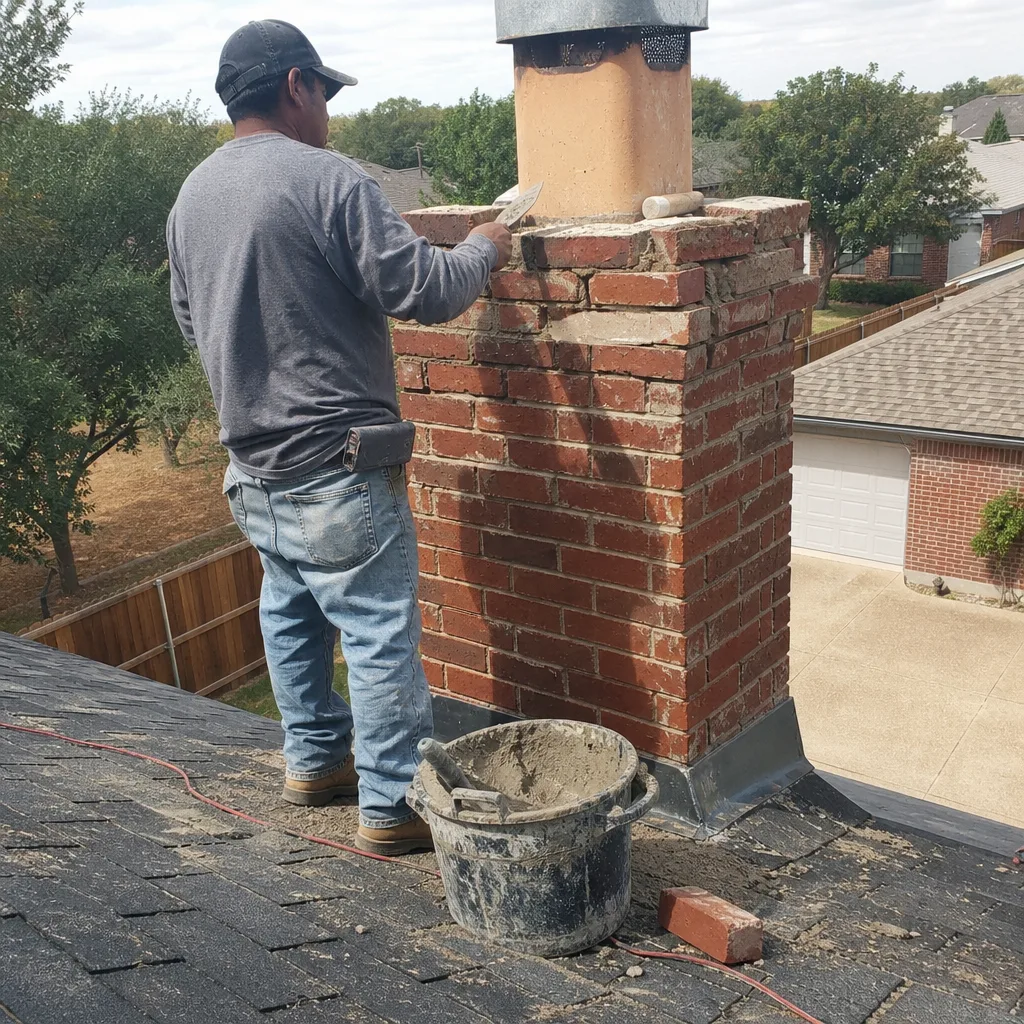
Use this sequence honestly. We have no interest in selling service to homeowners who genuinely don’t need it.
- When was your last Level 2 camera inspection? If never, or more than 12 months ago, professional inspection precedes any cleaning decision. You cannot know if your flue is “known-good” without it.
- What is your burning pattern? Occasional ambiance fires with softwood or unseasoned wood? Professional service is warranted - creosote type and accumulation rate likely exceed DIY capability. Sustained hardwood heating with known dry fuel? Light DIY brushing between inspections may suffice.
- What is your flue configuration? Straight, single-story masonry with no offsets? DIY is mechanically possible. Two-story with offsets, factory-built chase, or recent construction with unknown details? Professional navigation and inspection are required.
- What documentation do you need? Home sale, insurance compliance, or warranty maintenance? DIY cannot produce required documentation. Personal use only, with no transaction anticipated? Documentation is less critical, though still valuable for your own liability protection.
- What is your risk tolerance for the undetected? This is ultimately personal. Some homeowners accept that a $45 brush kit leaves gaps, trusting probability. Others want certainty. Neither position is wrong if chosen consciously.
For Plano homeowners who reach step five and want the camera’s certainty, our chimney cleaning and sweep service includes NFPA 211 Level 2 inspection as standard, not an upgrade.
Common Mistakes to Avoid
- Using a brush that’s the wrong size or material for your flue liner. An oversized wire brush in a stainless steel liner scores the metal; an undersized brush in a clay flue leaves two inches of creosote untouched on each side. Measure before you buy.
- Brushing from the bottom up without roof access verification. The top-down method is safer for the operator and more effective for debris removal. Bottom-up brushing in a tall Plano two-story often leaves debris in the flue that obstructs draft.
- Using a standard shop vacuum without HEPA filtration. Creosote particles and crystalline silica from masonry are respirable carcinogens. The vacuum that handles your garage will distribute these through your home’s air.
- Assuming “no smell, no problem.” Carbon monoxide is odorless. A blocked or damaged flue can vent CO into living space without any smoke or odor warning. This is why camera inspection matters more than cleanliness appearance.
- Cleaning after a chimney fire without professional inspection. The thermal shock of even a small fire can crack liners and damage mortar. Brushing afterward polishes the damage without revealing it. We’ve found this scenario in Plano’s Liberty Park and Independence neighborhoods.
- Neglecting the crown, cap, and exterior during “cleaning day.” Water intrusion causes more chimney damage in North Texas than creosote. If you’re on the roof with a brush, inspect the crown. If you’re not qualified to evaluate crown slope and cap condition, you’re not qualified to assess chimney safety.
- Trusting “chimney cleaning logs” as primary maintenance. Chemical logs can modify creosote properties but do not remove buildup and provide zero inspection value. They are a supplement, never a replacement, for mechanical cleaning and camera evaluation.
When to Call a Professional
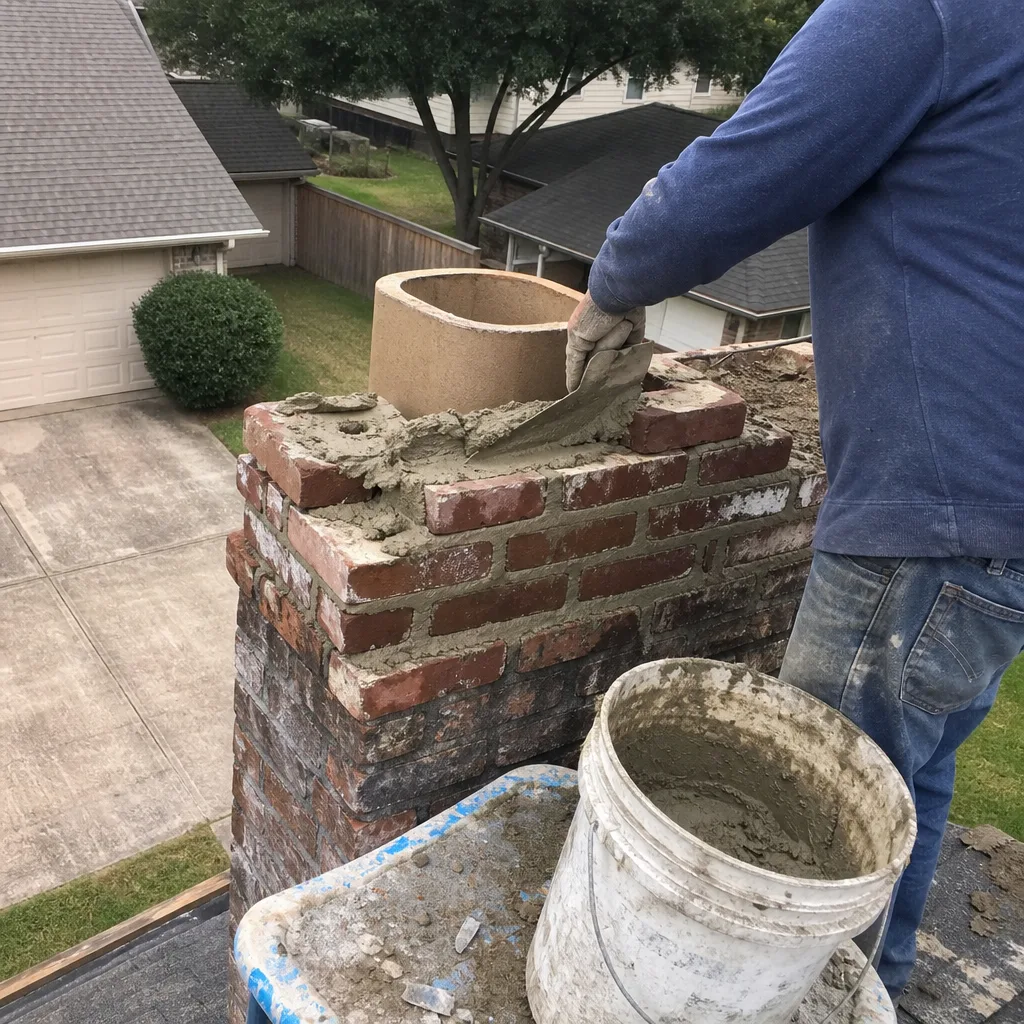
Call a professional when the stakes exceed your ability to verify results. This includes any real estate transaction, any suspected chimney fire or over-firing event, any new home purchase where chimney history is unknown, any factory-built or insert system still under warranty, and any situation where your insurance or liability exposure depends on documented maintenance.
Emberly Chimney Cleaners Plano offers free estimates in Plano. Our technicians arrive in uniform with background verification, perform NFPA 211 Level 2 camera inspection as standard on every visit, and deliver a written price before any work begins. Call (469) 240-3101 to schedule. If you have a competitor’s written estimate, our Free Second Opinion will review it against what our camera finds.
Frequently Asked Questions
A standard chimney cleaning and sweep with Level 2 camera inspection in Plano typically runs $150-$250 for a masonry fireplace, with factory-built systems and multi-flue structures ranging higher. Emberly Chimney Cleaners Plano delivers a written price before any work starts, with no surprise add-ons. Call (469) 240-3101 for an exact quote - estimates are free.
A legitimate liner recommendation follows visible evidence: cracks, gaps, spalling, or displacement documented by camera and shown to you. At Emberly Chimney Cleaners Plano, nothing is recommended without photo evidence you can see yourself, and we will plainly tell you when work can safely wait. Bring us any competitor’s written estimate for a Free Second Opinion.
NFPA 211 recommends annual inspection for all chimneys, with cleaning frequency determined by creosote accumulation. Most Plano homeowners who burn intermittently need cleaning every 1-2 years; heavy users or those burning softwood may need annual service. The camera inspection reveals your actual accumulation rate.
Skipped maintenance allows creosote accumulation that increases chimney fire risk and can obstruct draft, causing carbon monoxide intrusion or smoke backup. In Plano’s climate, water intrusion from uncapped or damaged chimneys causes structural damage that accelerates with each season. The cost of deferred maintenance typically exceeds regular service by multiples. Call (469) 240-3101 for an exact quote - estimates are free.
Gas fireplaces require different maintenance: pilot and burner cleaning, log placement verification, and venting inspection. DIY cleaning of ceramic logs and visible components is appropriate, but the venting system requires professional inspection for condensation damage, corrosion, or obstruction. We inspect gas systems as part of our fireplace services in Plano.
A professional sweep using proper containment - drop cloths, HEPA vacuum, and sealed access - leaves no trace. Emberly Chimney Cleaners Plano technicians use the same containment protocol on every job, documented in our pre-arrival text and arrival checklist. Background-checked, uniformed crews treat your home with the care they’d want in their own.
The Bottom Line
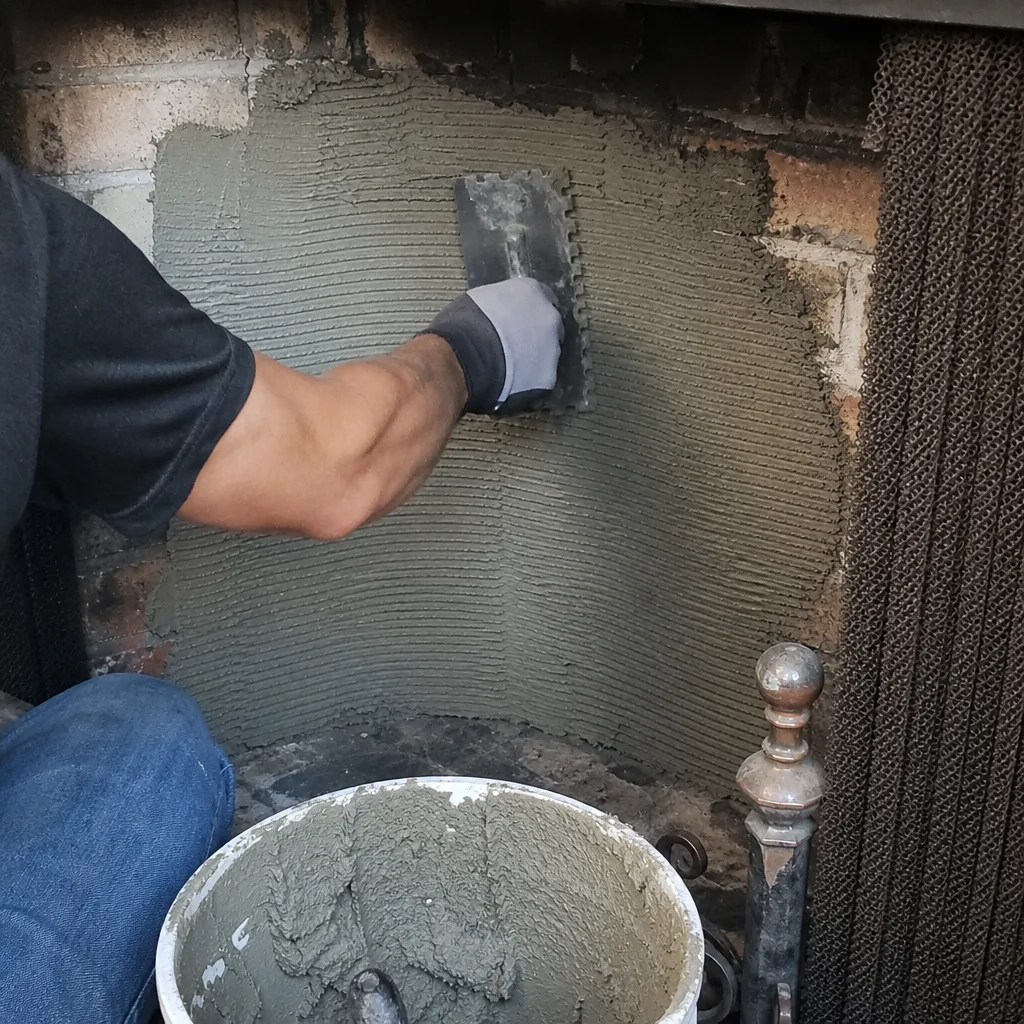
DIY chimney cleaning is mechanically possible for limited situations: straight flues, light Stage I creosote, and homeowners with proper equipment and physical ability. It is not equivalent to professional service. The gap is not in brushing competence but in inspection capability, documentation, and warranty protection. For most Plano homeowners, especially those in active real estate markets or with factory-built systems, professional service with camera inspection provides value that exceeds the price difference. The $120 saved on DIY becomes expensive when it misses the $4,000 problem the camera would have found.
Written by Corrine Halstead, Owner at Emberly Chimney Cleaners Plano, serving Plano since 2009.