
Last updated September 22, 2026
Level 1 sweep and inspection to the NFPA 211 annual standard - flue, crown, cap, and flashing checked and photographed
Chimney sweep logs do not sweep chimneys. They loosen some creosote - which then falls where a brush and vacuum still have to collect it.
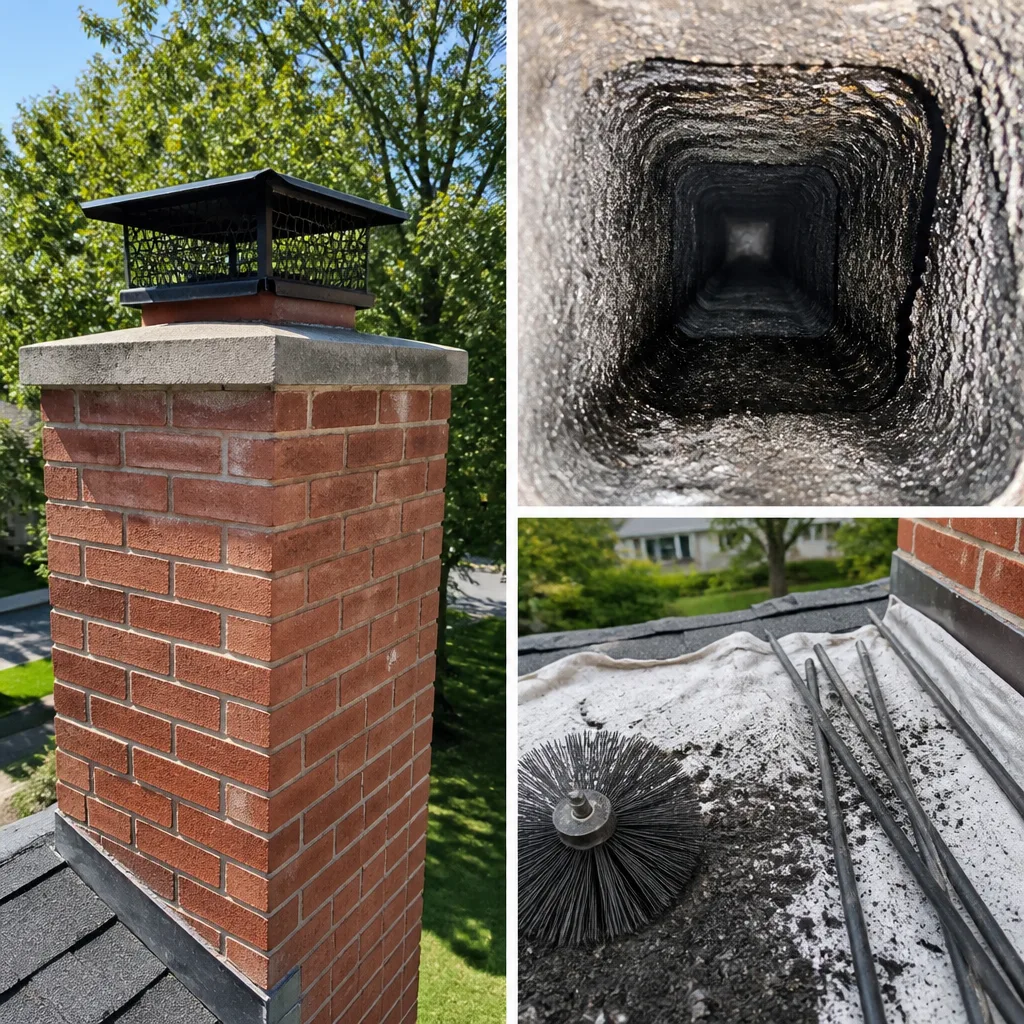
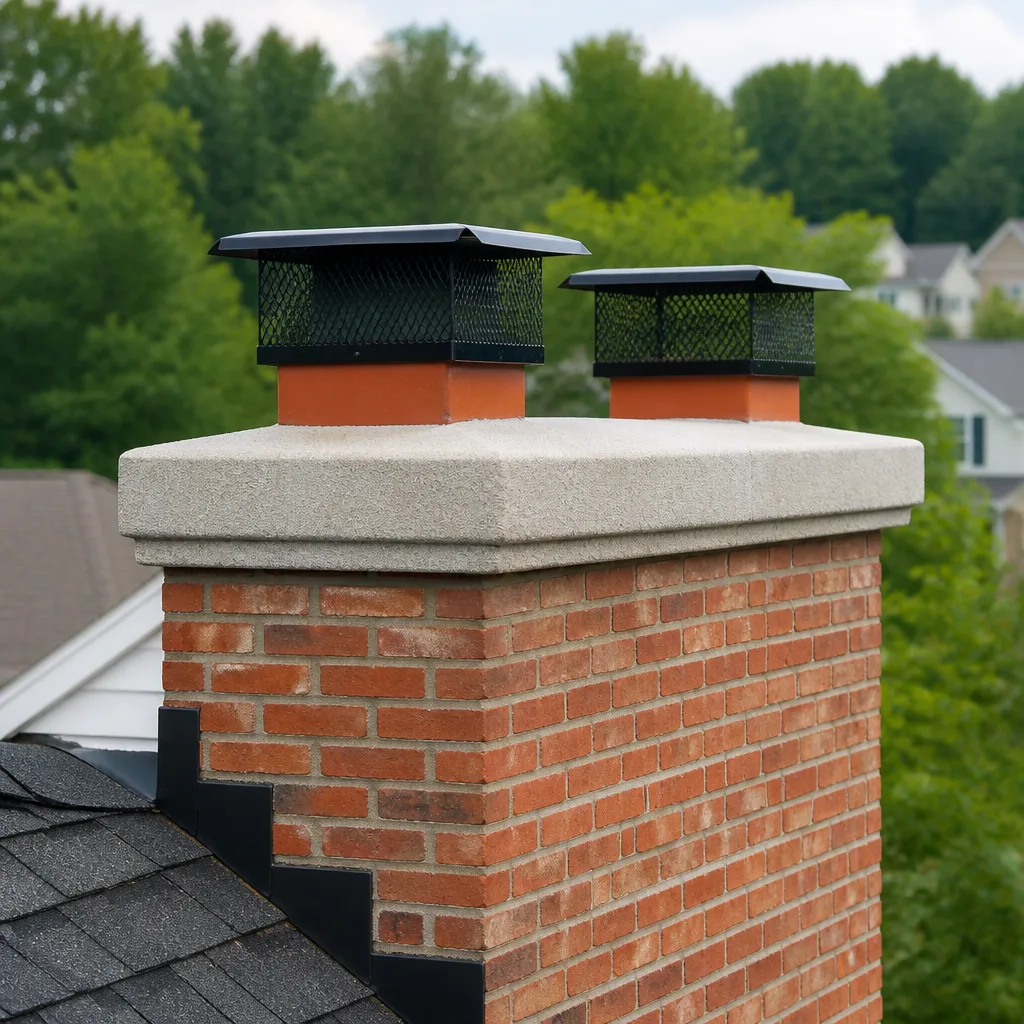
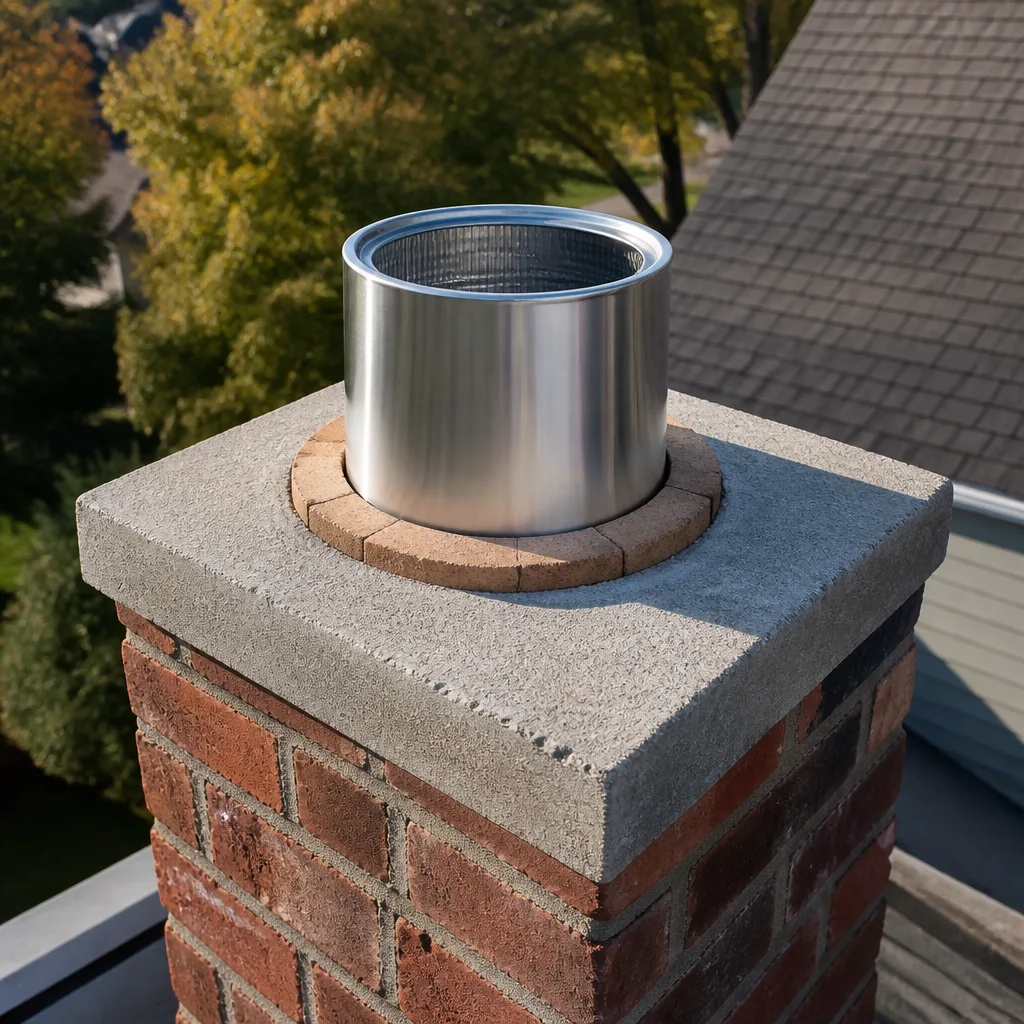
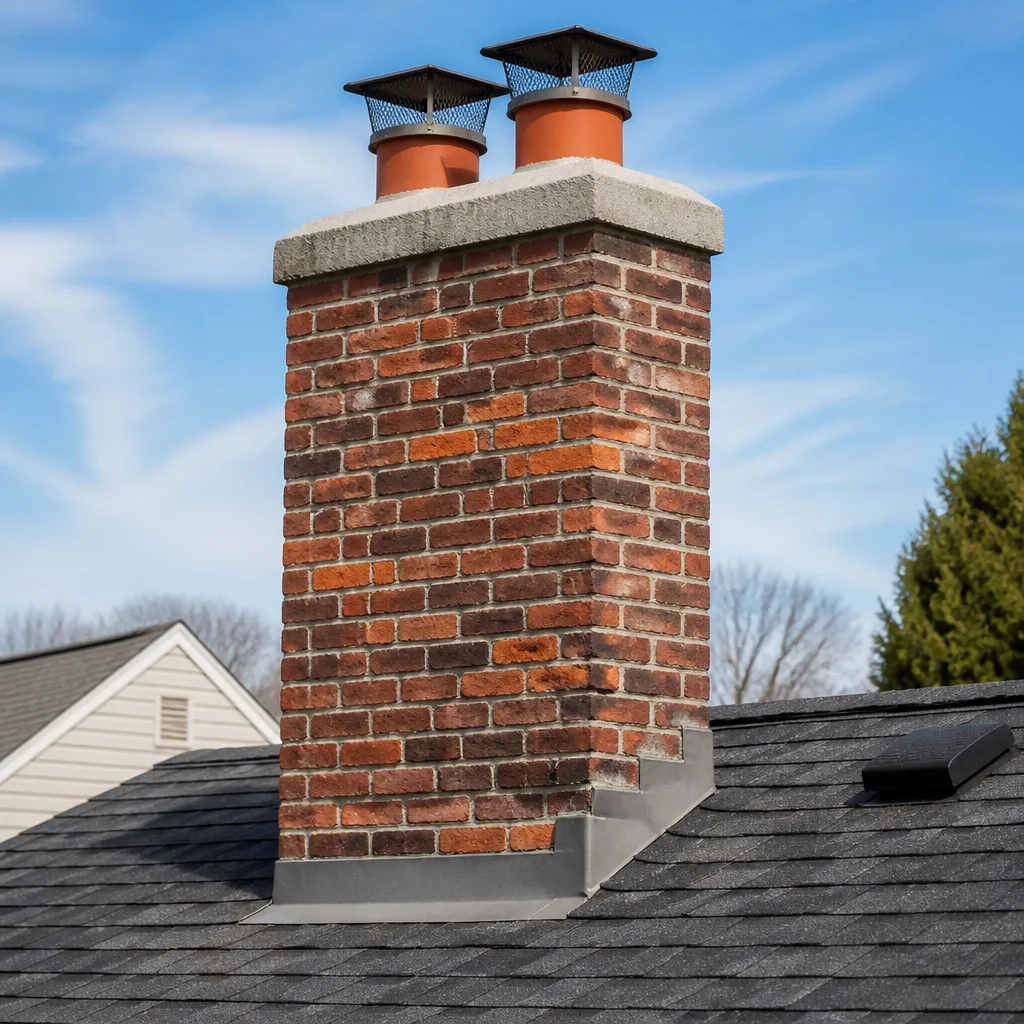
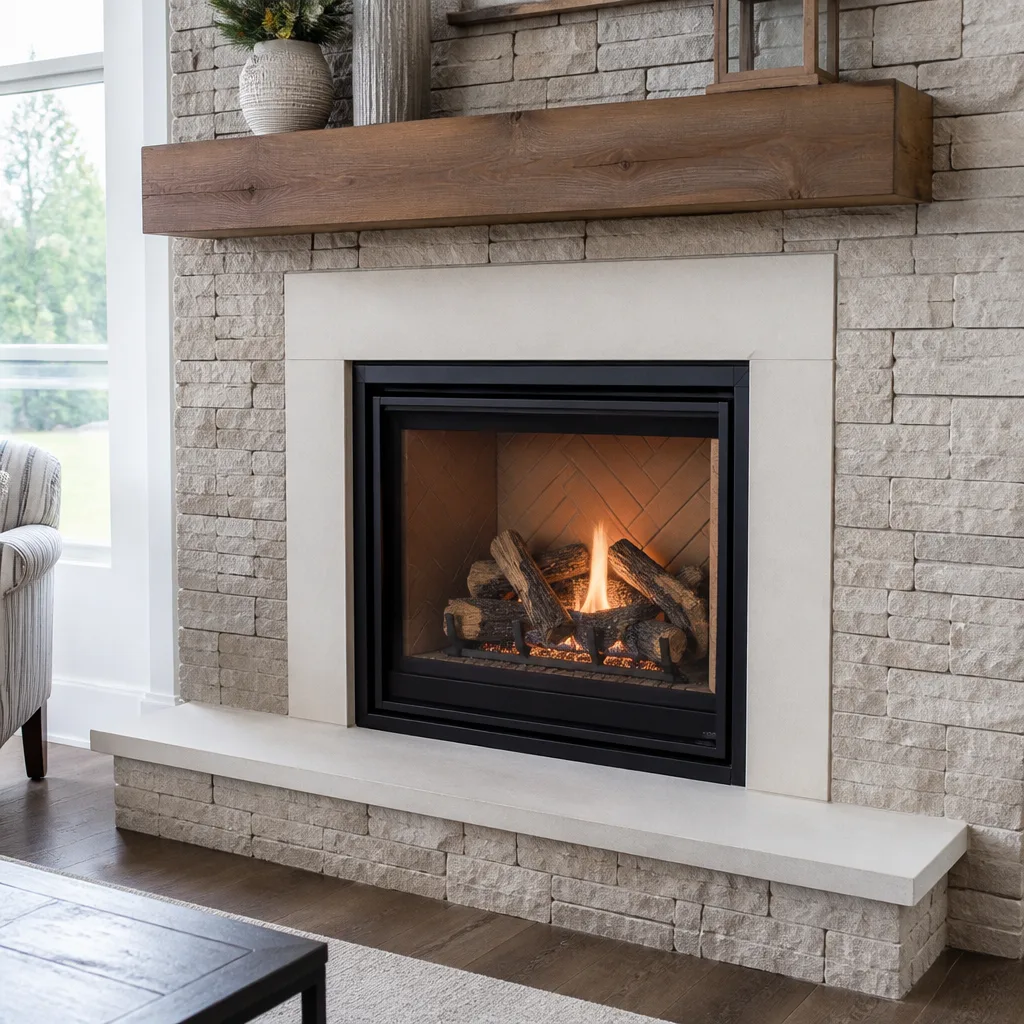
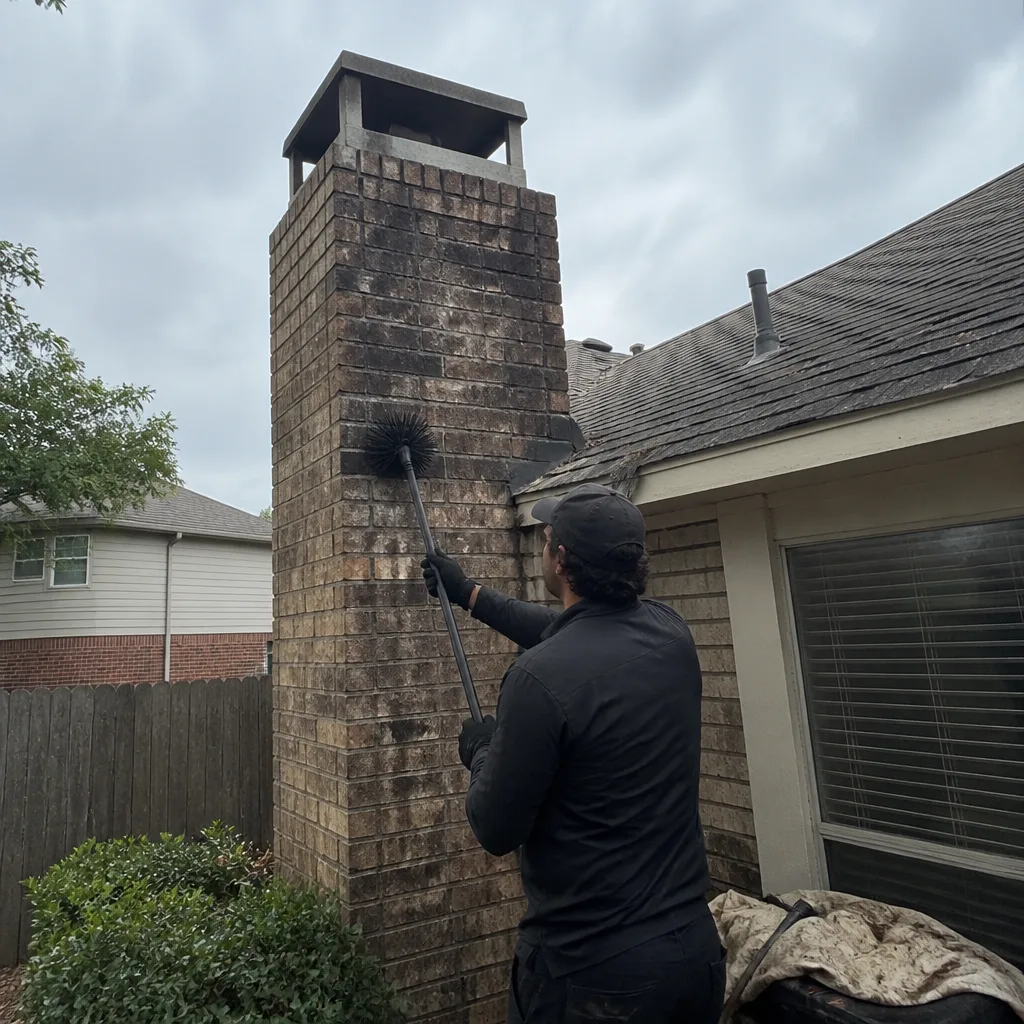 Before
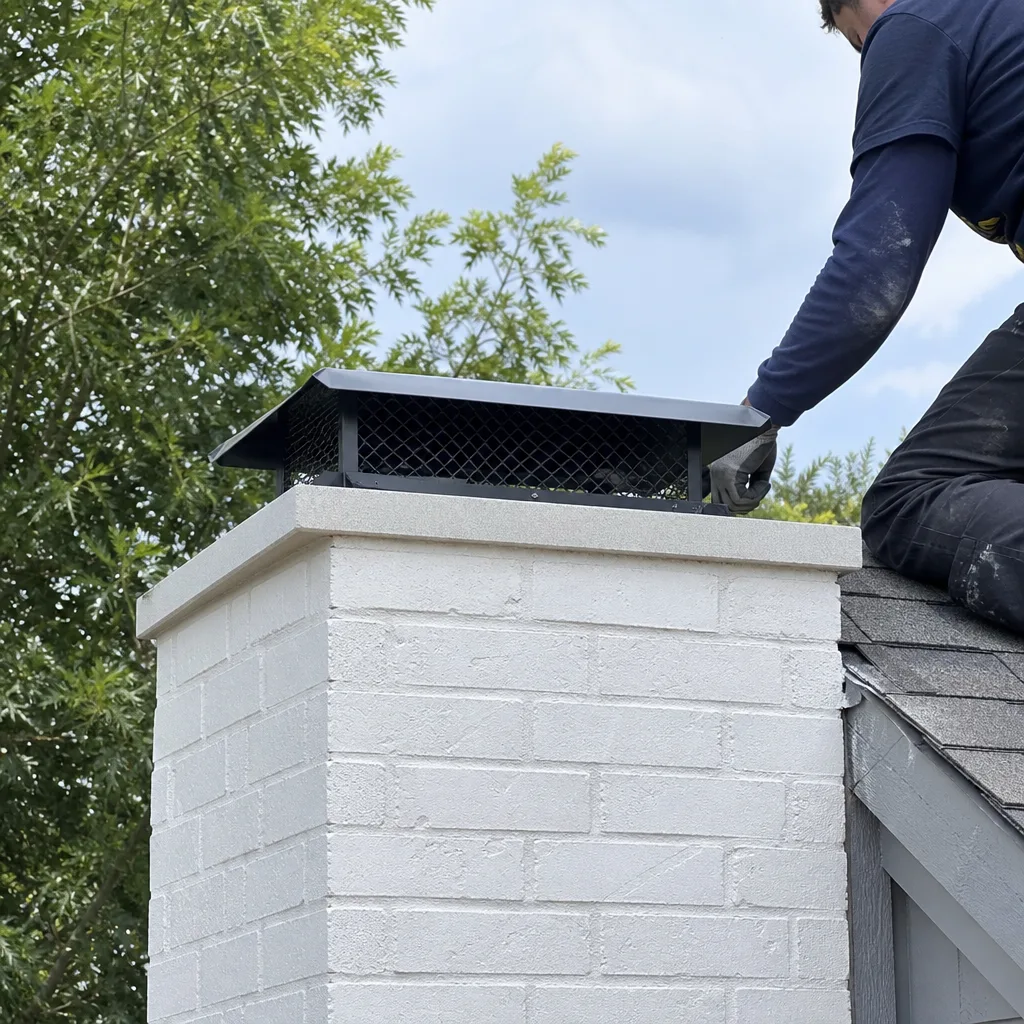 After
After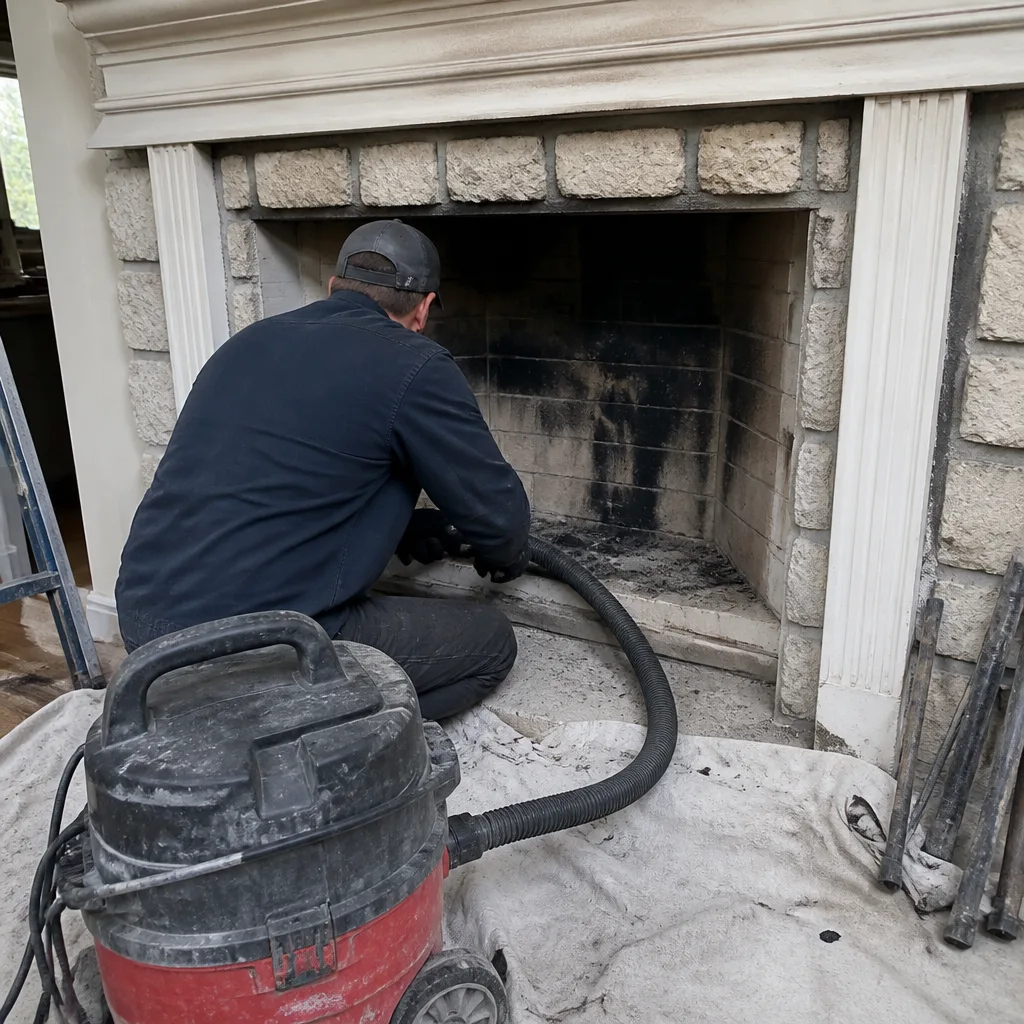 Before
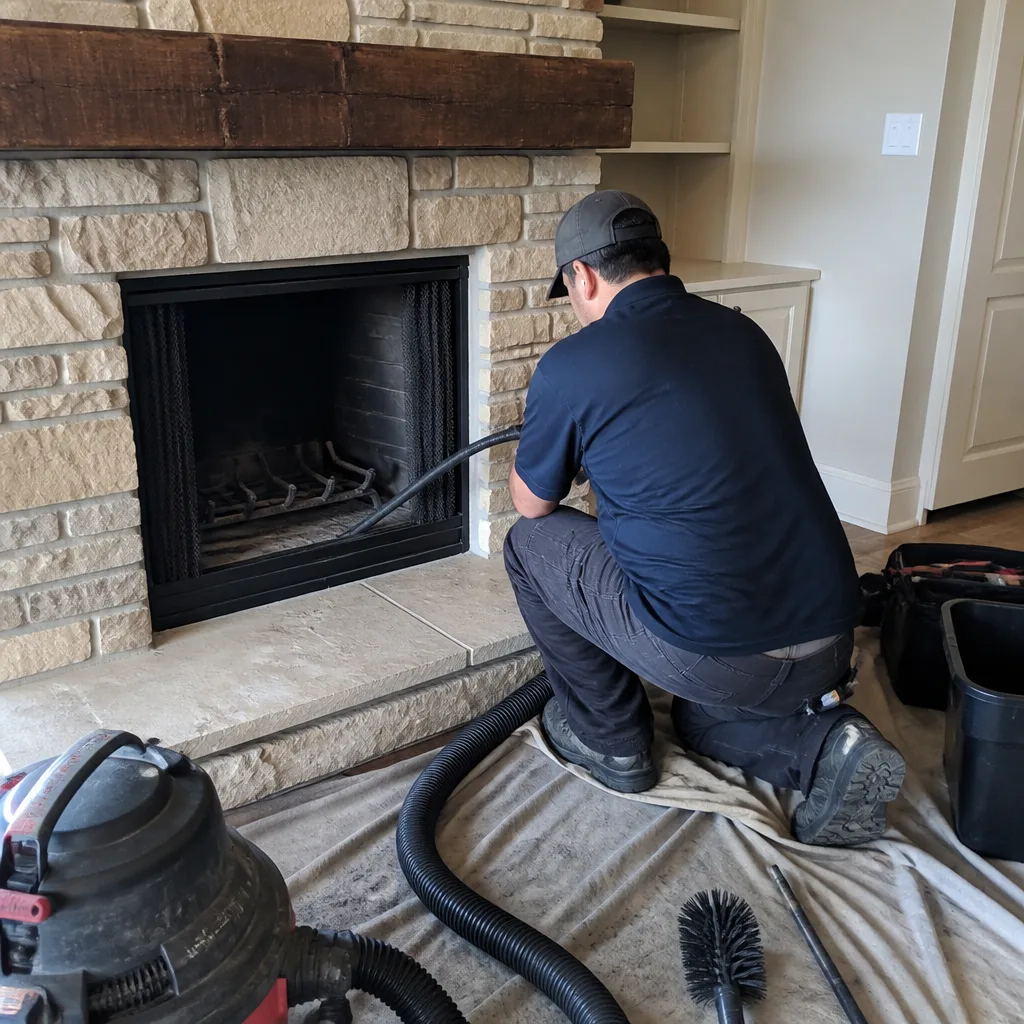 After
After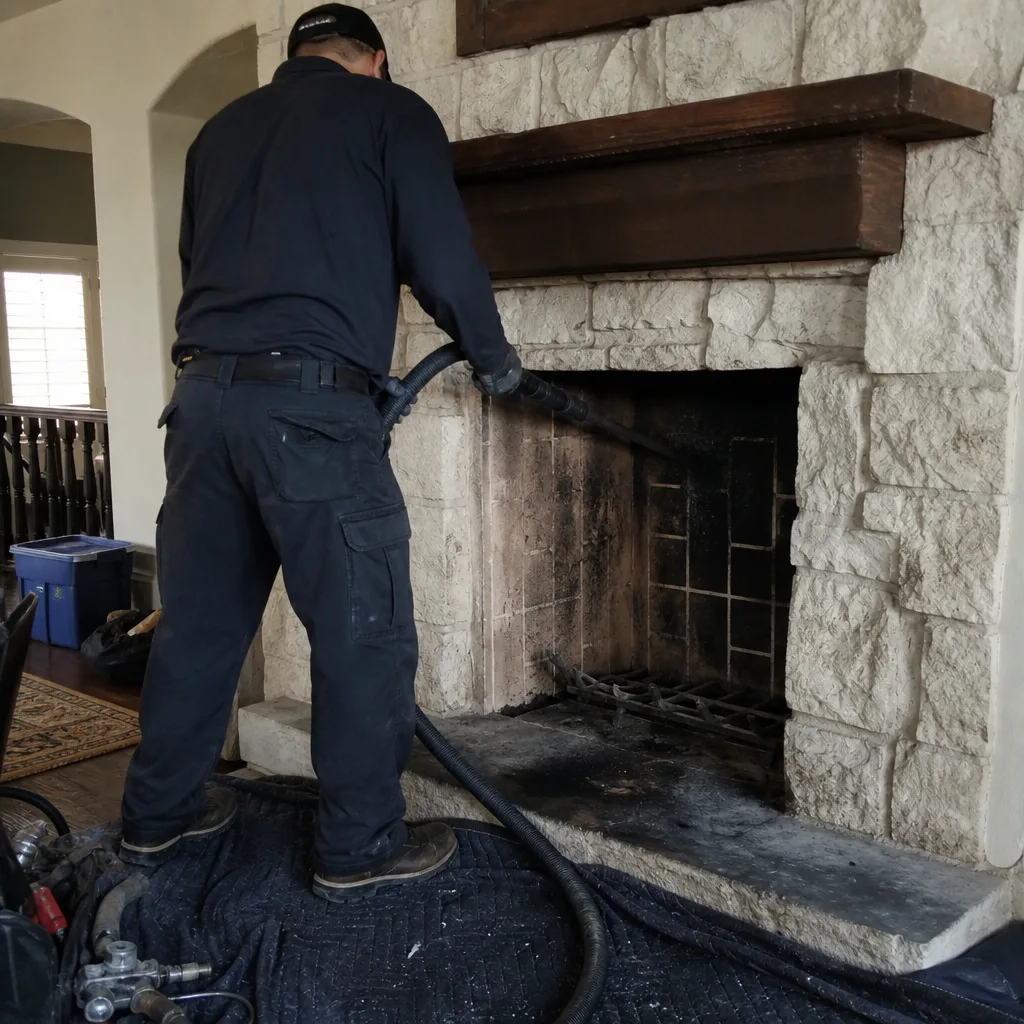 Before
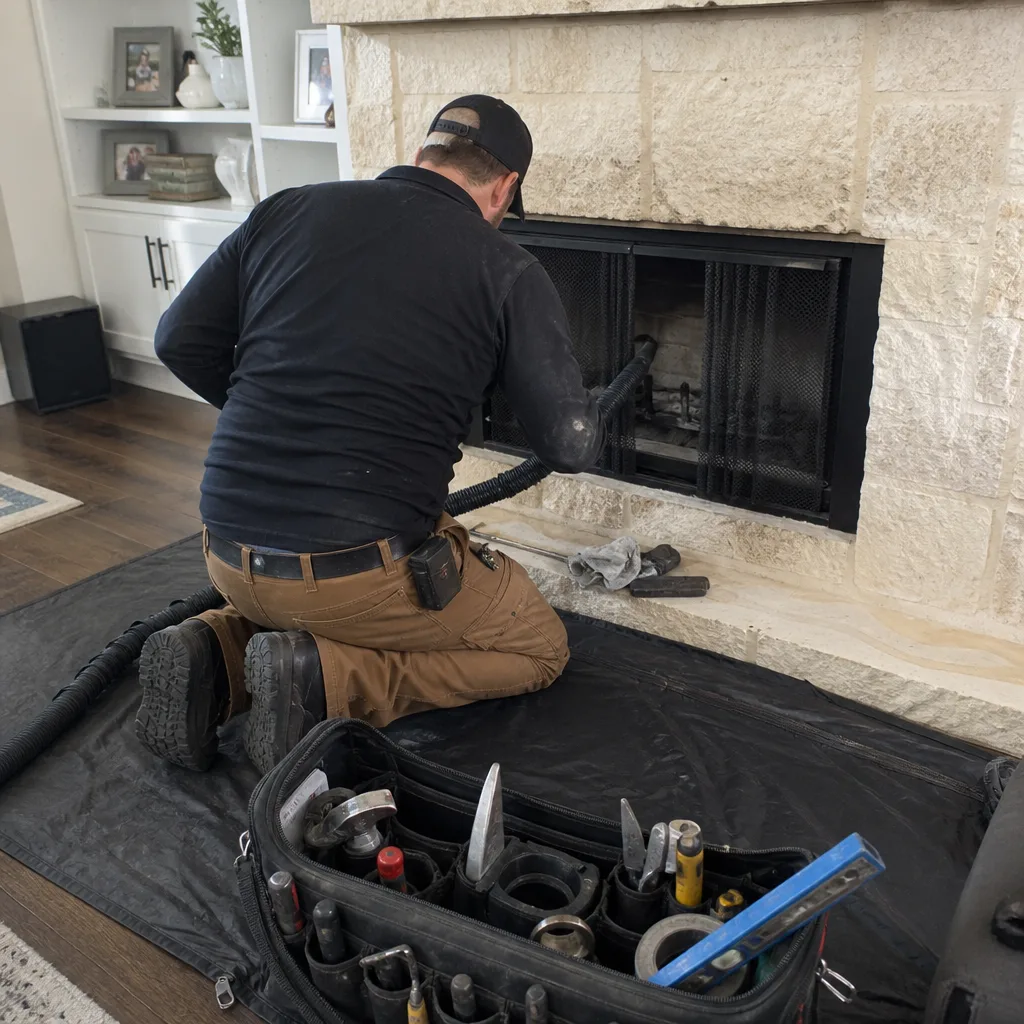 After
AfterHow to Hire a Chimney Cleaning Contractor in Plano: A Step-by-Step Guide
The Plano chimney sweep market has no licensing floor. Anyone with a brush kit and a truck can legally call themselves a sweep in Texas, which means the screening burden falls entirely on you, the homeowner. We’ve been called to homes in Willow Bend and Kings Ridge where a “$99 special” left the flue half-cleared and the homeowner facing a $2,400 liner replacement that could have been prevented with a proper camera inspection. This guide walks you through the five questions that eliminate roughly 70% of Plano listings before they ever park in your driveway. You’ll learn how to spot the “free inspection” trap, what a legitimate written estimate looks like, and how to verify credentials that actually matter.
Quick Answer
Hiring a chimney cleaning contractor in Plano starts with five verification steps: confirm active CSIA or NFI certification, demand a camera-down-the-flue inspection policy, require a written estimate before any work begins, get warranty terms in writing, and verify liability insurance. Contractors who pass all five typically charge $180-$340 for a standard sweep with Level 2 inspection in the Plano market. Those who fail one or more often rely on flashlight looks and verbal quotes that inflate on arrival.
Table of Contents
- Why Plano Has No Licensing Floor for Chimney Sweeps
- The Five Pre-Hire Questions That Eliminate Unqualified Contractors
- How the “Free Inspection” Trap Works
- What a Legitimate Written Estimate Contains
- CSIA vs. NFI: Which Certification Matters for Your Job
- How to Verify Documented History, Not Just Reviews
- Plano-Specific Considerations: Climate, Codes, and Neighborhoods
- Common Mistakes to Avoid
- When to Call a Professional
- Frequently Asked Questions
- The Bottom Line
BeforeAfterWhy Plano Has No Licensing Floor for Chimney Sweeps
Texas does not require a state license to operate as a chimney sweep. The city of Plano does not maintain a separate chimney contractor registry. This puts us in a small minority of major U.S. metros where the barrier to entry is literally a vehicle and basic equipment.
What this means for Plano homeowners:
- No government body verifies training before someone advertises “chimney sweep” services
- A contractor can carry general liability insurance today and let it lapse tomorrow with no automatic notification to customers
- The Chimney Cleaning & Sweep in Plano market includes everything from CSIA-certified technicians to weekend operators who learned from YouTube
- Collin County has seen a 23% increase in chimney service complaints to the Better Business Bureau since 2021, with “incomplete work” and “price inflation on arrival” as the top two categories
We’ve responded to calls in Legacy West and Russell Creek where homeowners paid for a “sweep” that never included a flue inspection. The creosote was partially removed, but a cracked terra cotta liner went undetected until smoke began backing up into the living room. In one case on the east side of Plano near Parker Road, a homeowner used an uncertified contractor for three consecutive years before we found a partially detached flue liner that had been deteriorating since the first visit.
The absence of regulation is not a reason to avoid chimney maintenance. It’s a reason to become your own regulator for the 45 minutes it takes to vet a contractor properly.
The Five Pre-Hire Questions That Eliminate Unqualified Contractors
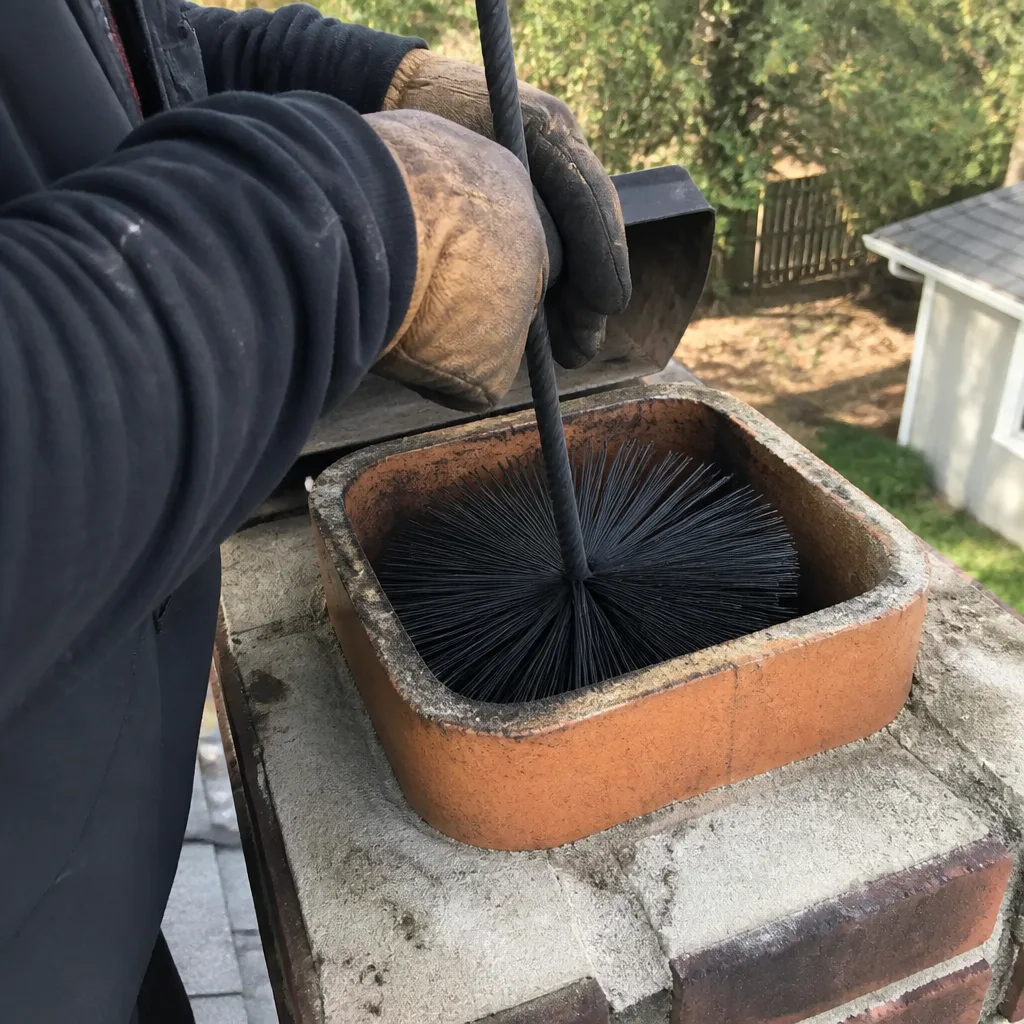
These five questions filter out the majority of unqualified operators in the Plano market. Ask them in this order, by phone or email, before scheduling. Document the answers.
Question 1: What is your active CSIA or NFI certification number?
The Chimney Safety Institute of America (CSIA) and the National Fireplace Institute (NFI) are the two credentialing bodies that matter. A legitimate technician provides a certification number without hesitation. You can verify CSIA numbers at csia.org and NFI numbers at nficertified.org. If the response is “I’m certified” without a number, or “My boss is certified,” end the conversation. Certification is individual, not transferable.
In our experience across Plano, roughly 40% of advertised sweeps cannot produce an active certification number when asked directly. Many rely on expired credentials or company-level memberships in trade associations that do not require individual testing.
Question 2: Does your standard inspection include a camera scan of the flue interior?
A flashlight look down the flue from the top or bottom is not an inspection. It’s a visibility check. The NFPA 211 Level 2 standard, which we adopted as our baseline in 2009, requires a camera scan of the flue interior to document liner condition, joint alignment, and creosote classification.
Clause 4 of the Haven Standard requires a documented photo record on every job. We do not perform a sweep without it. If a contractor says camera inspection “costs extra” or “isn’t necessary for a cleaning,” you are not getting a complete evaluation. In Plano’s clay-heavy soils, lateral shifting can crack liners without visible exterior damage. Only a camera reveals this.
Question 3: Will you provide a written estimate before any work begins?
Verbal quotes are not estimates. They are opening offers. A legitimate written estimate contains:
- Line-item labor costs
- Material specifications and brands
- Warranty duration and conditions
- What voids the warranty
- Total with no open-ended “plus materials” clauses
Haven Standard Clause 1 requires a written price, written scope, and written warranty before any work starts. We’ve maintained this practice across 38,000+ jobs since 2009. Contractors who resist written estimates typically plan to adjust pricing once inside your home.
Question 4: What are your warranty terms, and do I receive them in writing?
A verbal “we guarantee our work” means nothing enforceable. Request the actual warranty document. Read what voids it. Common voiding conditions include: using the fireplace before repairs are completed, failure to schedule recommended follow-up maintenance, or work performed by another contractor on the same system.
Our 365-Day Done Right Promise is stamped on every job under the Haven Standard. If it’s not done right, we make it right. The terms are in writing before we start, not after we finish.
Question 5: Can you provide proof of current liability insurance?
Request a certificate of insurance (COI) naming you as additional insured for the day of service, or at minimum verify coverage directly with the insurer. General liability for chimney work typically runs $1 million per occurrence. Uninsured contractors are common in the Plano market, particularly those advertising through neighborhood social media groups.
Rooftop work, ladder placement on two-story homes common in Willow Bend and Shoal Creek, and soot containment all carry genuine risk. If a technician falls or damages your roof, you want coverage that exists and is current.
How the “Free Inspection” Trap Works
The “free chimney inspection” offer is the most effective customer acquisition tool in the uncertified segment of the Plano market. It works because it feels low-risk. It is not low-risk. It is a structured sales process designed to create obligation and urgency.
Here’s the typical sequence:
- The offer: A postcard or social media ad promises a “free safety inspection” or “free chimney check.” No certification is mentioned. No standard is cited.
- The arrival: A technician in an unmarked vehicle performs a 10-15 minute flashlight look. No camera is produced. No photos are taken. The “inspection” is visual only from accessible points.
- The finding: The technician reports “concerns” about creosote buildup, liner condition, or crown integrity. Specific measurements are absent. No classification system (Class I, II, or III creosote) is used.
- The pivot: A verbal quote for immediate work is provided, often with a “today only” discount. The original “free” inspection is now a high-pressure sales call.
- The documentation gap: The homeowner receives no photos, no written scope, and no warranty document. The work, if performed, cannot be verified or compared.
We’ve reviewed dozens of these cases from Plano homeowners. The pattern is consistent. In one instance near Prestonwood, a homeowner was told their “liner was failing” and quoted $4,200 for replacement. Our camera inspection found minor spalling on two flue tiles, repairable with HeatShield for under $800. The “free inspection” contractor had no camera and no ability to distinguish repairable damage from replacement-level failure.
How to identify the trap before scheduling:
- The offer does not specify NFPA 211 Level 1 or Level 2 inspection standard
- No certification numbers are listed in the advertisement
- The company has no searchable history of documented photo records
- Online reviews mention “pushy,” “upsell,” or “different price than quoted”
- The technician arrives without a camera system visible
A legitimate inspection has a cost because it requires time, equipment, and trained interpretation. Our standard Chimney Cleaning & Sweep in Plano includes the Level 2 camera inspection as integrated service, not a separate upsell. The price reflects the full scope.
What a Legitimate Written Estimate Contains
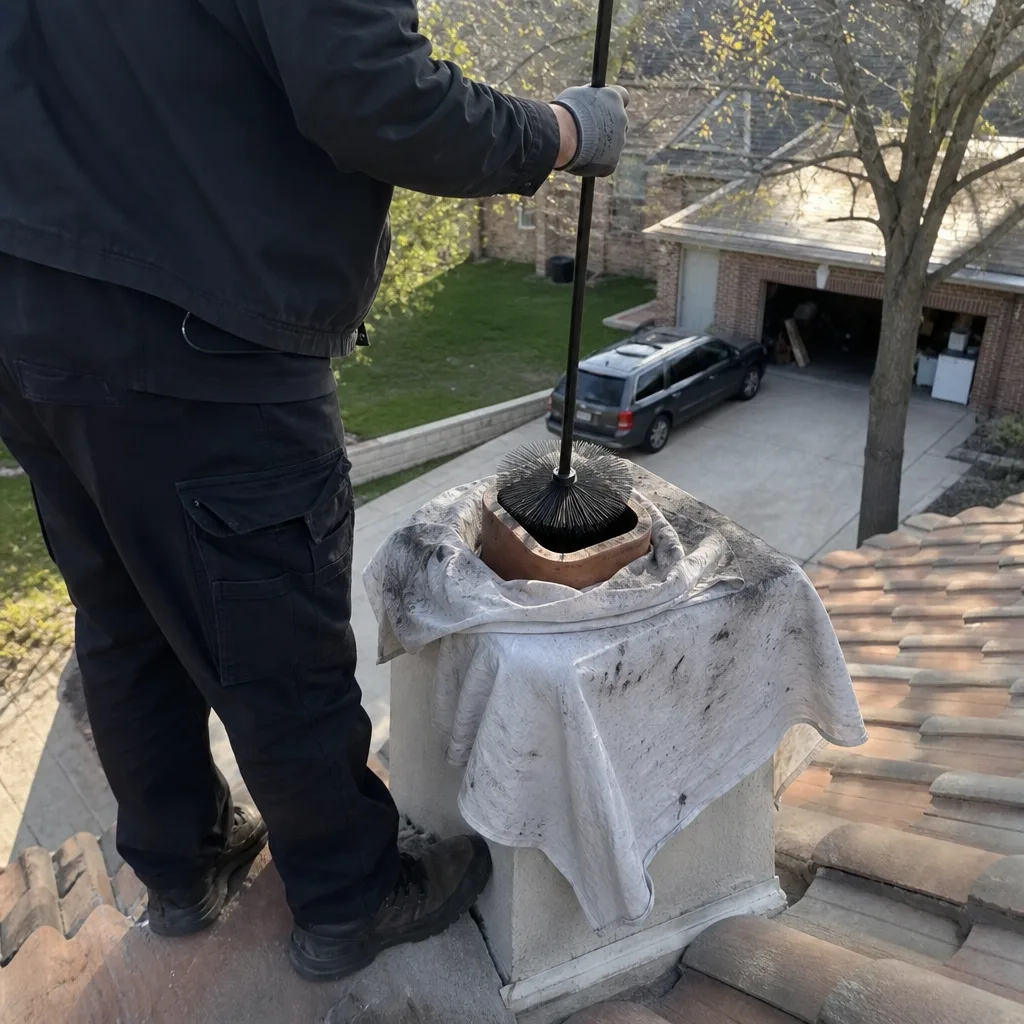
The difference between a verbal quote and a written estimate is the difference between a handshake and a contract. In Plano’s competitive sweep market, some contractors resist written estimates because they limit price adjustment on arrival. Here’s what you should receive and what each element protects.
Line-item labor
Each discrete task is listed separately: sweep, inspection, repair, cap installation. This prevents bundling that obscures actual costs. If crown repair is $340 and cap installation is $280, you see both numbers, not a single “$620 exterior work” line.
Material specifications and brands
The estimate names what will be installed. “Stainless steel chimney cap” is insufficient. “Gelco 5/8″ mesh stainless steel cap, model [specific], with lifetime warranty” is verifiable. We source materials through our Haven buying network from DuraFlex, HeatShield, Gelco, Olympia Chimney, Famco, and Copperfield specifically to keep customer prices honest and specifications transparent.
Warranty duration and conditions
How long? What covers? What voids? Our 365-Day Done Right Promise is explicit. Some competitors offer “lifetime” warranties with voiding conditions so broad they are effectively unclaimable.
Total with completion criteria
The estimate states what “done” means. For a sweep: flue cleared to NFPA standard, debris removed from smoke chamber and firebox, damper serviced, documented photo record provided. Without completion criteria, “sweep” is undefined.
Here’s how legitimate Plano pricing typically structures for common services:
| Service | Typical Range | What Affects Price |
|---|---|---|
| Standard sweep with Level 2 inspection | $180-$340 | Number of flues, roof accessibility, creosote class |
| Crown repair (minor) | $280-$650 | Crown size, crack pattern, accessibility |
| Cap installation (stainless steel) | $220-$480 | Flue count, mesh specification, brand |
| HeatShield liner resurfacing | $1,800-$3,200 | Flue length, damage extent, access |
| Full liner replacement | $2,800-$5,500 | Liner material, flue configuration, labor access |
These ranges reflect Plano’s market specifically. Costs run slightly higher than rural Texas due to labor rates and travel time in the Dallas-Fort Worth metro, but competitive pressure among established companies keeps pricing transparent.
CSIA vs. NFI: Which Certification Matters for Your Job
Homeowners often encounter both acronyms and assume they are interchangeable. They are not. Understanding the distinction helps you match the right credential to your actual needs.
CSIA (Chimney Safety Institute of America) certifies chimney sweeps and chimney inspectors. The CSIA Certified Chimney Sweep credential focuses on:
- NFPA 211 code compliance
- Chimney system inspection and evaluation
- Creosote identification and removal
- Fireplace, stove, and insert venting
For routine sweeping, annual inspection, and standard repair evaluation in Plano, CSIA certification is the relevant credential. It is what you want for the contractor who maintains your system year to year.
NFI (National Fireplace Institute) certifies hearth specialists in three tracks: gas, woodburning, and pellet. NFI certification focuses on:
- Appliance installation and venting design
- Factory-built fireplace systems
- Gas line connections and combustion analysis
- Clearance and combustible protection
If you are installing a new gas insert, converting from wood to gas, or replacing a factory-built fireplace unit in your Plano home, NFI certification in the relevant fuel type matters more than CSIA. For a full system rebuild or new installation, both credentials together are ideal.
We maintain both CSIA-certified sweeps and NFI-certified hearth specialists on our team. For a routine Chimney Cleaning & Sweep in Plano, you’ll work with CSIA certification. If your inspection reveals need for Fireplace Services in Plano involving appliance replacement or fuel conversion, NFI certification becomes relevant.
The key verification step: ask which specific certification the technician who will perform your work holds, then verify it independently. Do not accept “our company is certified” as an answer.
How to Verify Documented History, Not Just Reviews
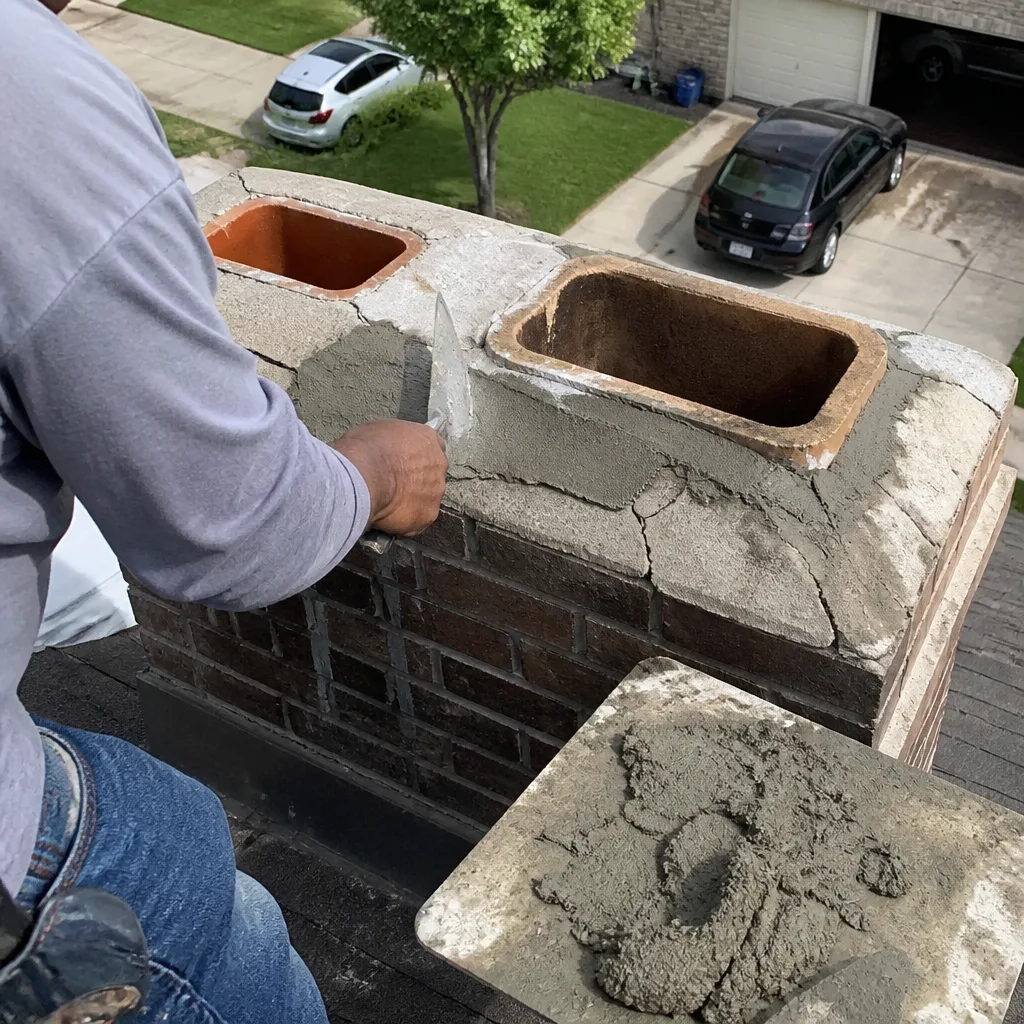
Online reviews measure customer sentiment. They do not measure technical competence. A friendly technician who performs incomplete work can accumulate five-star reviews while leaving chimneys unsafe. Here’s how to verify the actual work history that matters.
Request sample documentation
Ask to see a redacted example of a previous inspection report. A legitimate contractor has hundreds or thousands of these. Look for:
- Date-stamped photos of the flue interior
- Written description of findings using trade terminology (spalling, delamination, Class III creosote)
- Clear before-and-after documentation for repairs
- Warranty document tied to specific work
Since 2009, we’ve produced a documented photo record on every one of our 38,000+ jobs. Clause 4 of the Haven Standard requires this archive practice. We can show you examples from Plano homes with similar construction eras and fireplace types to yours.
Ask about warranty claim history
A contractor with a meaningful warranty has honored it. Ask directly: “When did you last perform warranty work, and what was the circumstance?” The answer reveals whether the warranty is operational or decorative. Our 365-Day Done Right Promise is invoked periodically, typically for minor adjustments to cap alignment or damper operation. We document these as we document original work.
Verify supplier relationships
Contractors who source materials from established manufacturers (DuraFlex, HeatShield, Gelco, Olympia Chimney, Famco, Copperfield) can demonstrate purchase history and product training. Fly-by-night operators use generic or mislabeled materials. Ask what brand of liner or cap will be installed, then verify that brand’s dealer locator includes your contractor.
Check for pattern in complaints
The Better Business Bureau, Texas Attorney General Consumer Protection, and Collin County court records show patterns that reviews obscure. Look for repeated complaints about the same issue: incomplete cleaning, price inflation, no-shows. A single complaint is noise. Three or more with similar details is signal.
Plano-Specific Considerations: Climate, Codes, and Neighborhoods
Plano’s specific conditions affect chimney performance and contractor selection in ways that generic guides miss.
Clay soils and lateral shifting
Plano sits on expansive clay soils that swell with moisture and contract in drought. This lateral movement stresses chimney structures, particularly on homes built during the 1980s and 1990s construction boom. We’ve found cracked flue liners in Hunters Glen and Park Forest that correlate with soil movement patterns, not age or use. A contractor unfamiliar with North Texas geology may attribute these cracks to “normal wear” without recognizing the underlying cause.
Wind-driven rain and crown deterioration
Plano’s spring storm season brings wind-driven rain from the south and southwest. Poorly constructed or deteriorated chimney crowns allow water penetration that accelerates liner damage. In neighborhoods like Willow Bend with mature tree coverage, crown inspection is particularly critical because overhanging branches obscure visual assessment from the ground.
Neighborhood construction eras and common issues
| Plano Area | Typical Construction Era | Common Chimney Issues |
|---|---|---|
| Old Town Plano, Haggard | 1960s-1970s | Unlined or terra cotta-lined flues, deteriorated mortar, improper clearances |
| Park Forest, Plano East | 1970s-1980s | Factory-built metal chimneys at end of service life, crown cracking |
| Willow Bend, Kings Ridge | 1980s-1990s | Clay liner shifting, smoke chamber corbelling issues, cap absence |
| Legacy West, Russell Creek | 2000s-2010s | Builder-grade caps, minimal maintenance history, gas conversion needs |
| Seabrook, Windhaven | 2015-2025 | New construction defects, improper initial installation, warranty disputes |
Local burn patterns
Plano’s mild winters mean many homeowners use fireplaces intermittently, often for atmosphere rather than primary heat. This pattern produces Class II glazed creosote, a hard, tar-like deposit that standard brushing alone won’t remove. It requires rotary chain equipment or chemical treatment. Contractors who treat every job as “standard” miss this distinction and leave hazardous deposits in place.
Code and permit context
Plano follows the 2021 International Residential Code with local amendments. Wood-burning fireplace installations and significant repairs require permits through the City of Plano Development Center. A contractor who suggests “no permit needed” for liner replacement or structural repair is either uninformed or evading oversight. We pull permits when required and provide documentation to the homeowner.
Common Mistakes to Avoid
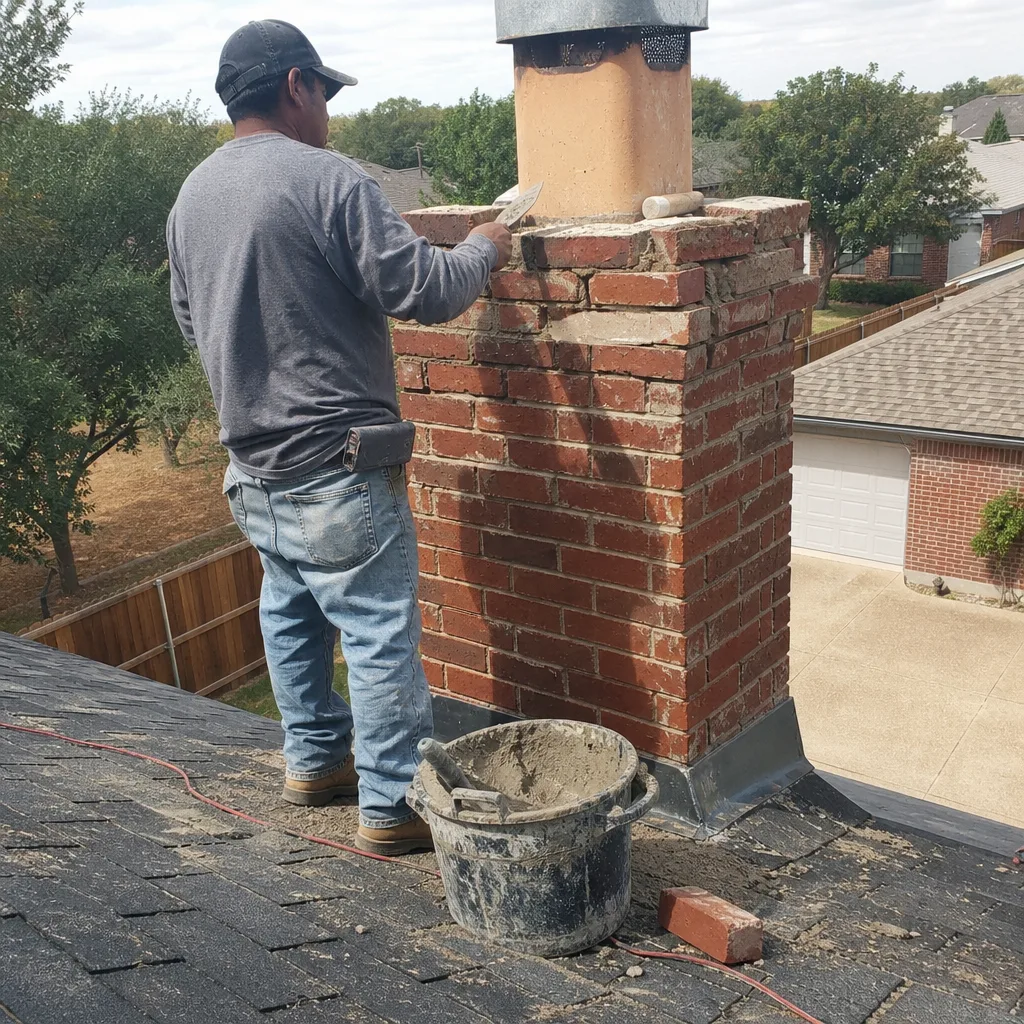
- Hiring based on lowest price alone. The $99 Plano sweep special typically excludes camera inspection, excludes the smoke chamber, and funds itself through repair upsells discovered during the visit. Total cost often exceeds the established company’s upfront price.
- Accepting “we’ll email the estimate” without receiving it. Verbal promises to follow up with written documentation often disappear after the technician leaves. Do not authorize work until the written estimate is in your hand.
- Assuming certification is current. CSIA certification requires continuing education units every three years. An expired certification is common. Verify the number independently at csia.org before scheduling.
- Neglecting to ask about creosote classification. Not all creosote is equal. Class I (fluffy), Class II (glazed), and Class III (hard, tar-like) require different removal approaches. A contractor who cannot classify what they found did not perform a complete inspection.
- Ignoring the smoke chamber. The smoke chamber is the area above the damper and below the flue. NFPA 211 requires it be cleared of deposits. Many low-cost sweeps skip this inaccessible space entirely. In Plano’s older homes near Haggard Park, smoke chamber buildup is a common fire pathway.
- Failing to verify insurance directly. A certificate of insurance can be fabricated or expired. Call the insurer listed to confirm coverage is active for the date of your service.
- Booking without asking who arrives. Some companies subcontract to uncertified day laborers without disclosing this. Ask: “Will the certified technician named be the person performing the work?” Background-checked, uniformed technicians with license numbers displayed are the standard we maintain under Haven Standard Clause 3.
When to Call a Professional
Certain conditions require immediate professional evaluation, not scheduled maintenance. Call a certified chimney contractor if you notice smoke backing up into the room, a strong odor of creosote during humid weather, visible cracks in the exterior masonry, pieces of tile or debris in the firebox, or rust stains on the chimney exterior indicating cap failure or liner breach.
Carbon monoxide is the silent risk. A deteriorated liner or blocked flue can force combustion gases into living spaces without visible warning. If your CO detector activates and you have a fuel-burning fireplace or appliance, evacuate and call for emergency evaluation.
Emberly Chimney Cleaners Plano offers free estimates in Plano. We’ll provide a written scope, written price, and documented photo record before any work begins. Call (469) 240-3101 to schedule.
Frequently Asked Questions
A standard chimney sweep with NFPA 211 Level 2 camera inspection in Plano typically costs $180-$340, depending on flue count, roof accessibility, and creosote classification. Additional services like crown repair, cap installation, or liner work are quoted separately in writing before any work begins. Call (469) 240-3101 for an exact quote on your specific system.
You need a new liner only if the existing liner is cracked, separated, or missing, and only if camera inspection confirms this. We do not recommend liner replacement without photo evidence you can see for yourself. In many Plano homes, minor liner damage can be repaired with HeatShield resurfacing at roughly half the cost of full replacement. Bring us any competitor’s written recommendation for a free second opinion.
NFPA 211 recommends annual inspection for all chimney systems, with sweeping frequency based on use and fuel type. A wood-burning fireplace used regularly during Plano’s heating season typically needs annual sweeping. Gas systems need less frequent cleaning but still require annual inspection for venting integrity and debris obstruction. The specific interval for your system depends on what the camera inspection finds.
Skipped maintenance leads to creosote accumulation, which increases chimney fire risk, and undetected liner damage, which increases carbon monoxide exposure risk. In Plano’s intermittent-burn pattern, glazed creosote builds slowly and is often ignored until odor or performance issues appear. By then, removal requires more aggressive (and more expensive) treatment. Annual inspection catches deterioration before it becomes hazardous or costly.
A Level 1 inspection is a visual examination of accessible portions of the chimney exterior and interior, appropriate for systems with no changes and continued normal use. A Level 2 inspection adds a camera scan of the flue interior, accessible areas in attics and crawl spaces, and evaluation of clearances from combustibles. It’s required for real estate transactions, after chimney fires, or when any change is made to the system. We perform Level 2 as our standard on every visit because flashlight looks miss what cameras catch.
Chimney sweeping involves working at height on roofs, handling creosote (a known carcinogen), and evaluating structural conditions that affect safety. We do not recommend DIY chimney cleaning. The risk of incomplete removal, undetected liner damage, or personal injury outweighs the cost savings. For Chimney Repair in Plano involving liner, crown, or structural work, professional evaluation is essential. If you choose to perform basic firebox cleaning yourself, never attempt flue access without proper fall protection and respiratory equipment.
The Bottom Line
Hiring a chimney cleaning contractor in Plano requires active screening because the market has no licensing floor. The five questions, CSIA/NFI certification, camera inspection policy, written estimate, warranty terms, and insurance verification, eliminate most unqualified operators before they reach your door. Avoid the “free inspection” funnel. Demand documentation you can verify independently. Match the certification to your actual job scope. And recognize that Plano’s clay soils, wind-driven rain patterns, and neighborhood construction eras create specific conditions a competent contractor addresses directly.
The contractor who passes this screening will charge transparently, document thoroughly, and stand behind the work with enforceable terms. That combination is not expensive. It is the only kind of service that actually protects your home.
Written by Corrine Halstead, Owner at Emberly Chimney Cleaners Plano, serving Plano since 2009.